
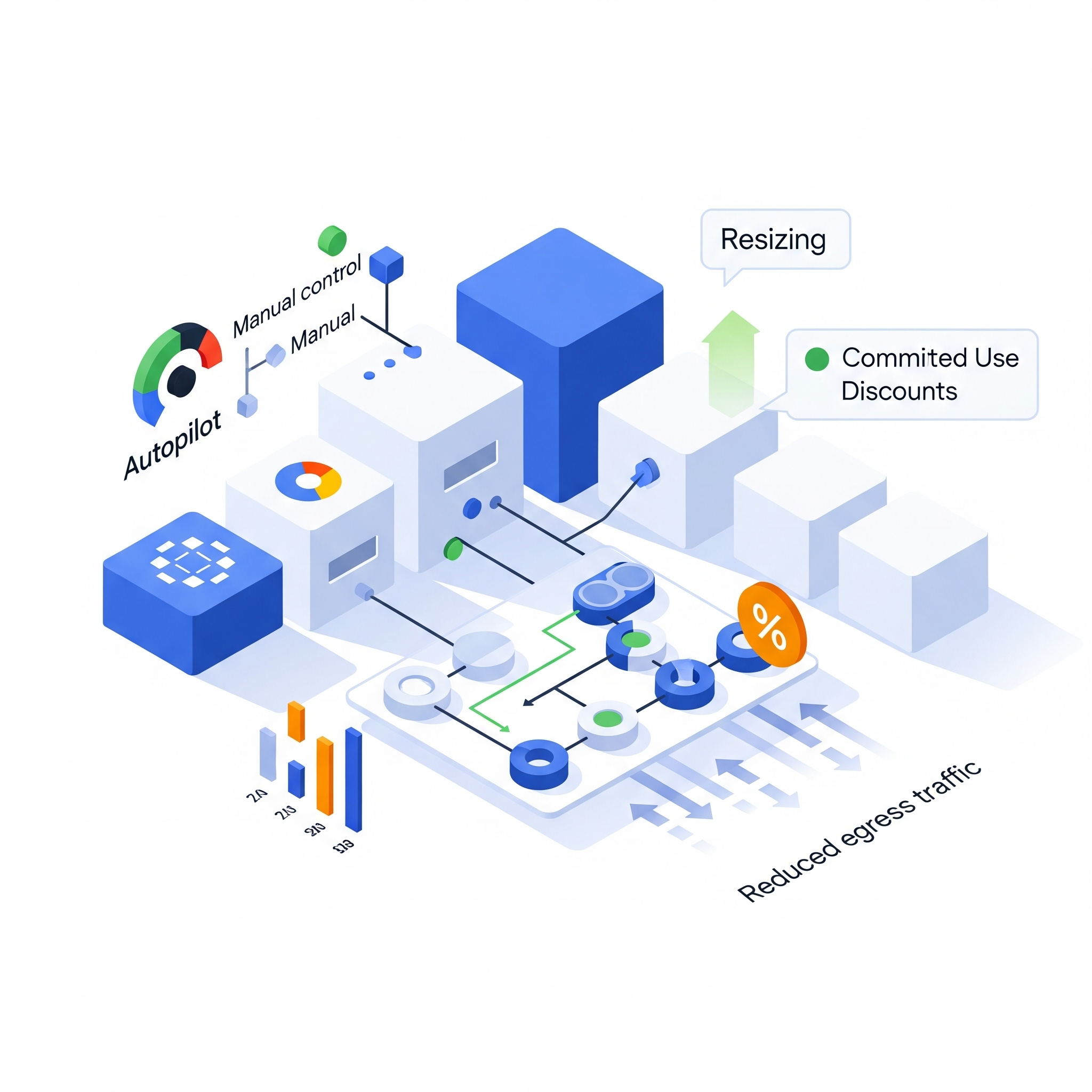
Google Kubernetes Engine (GKE) is a powerful platform for running containerized applications, but its dynamic nature can lead to complex and often surprising costs. Implementing a few targeted GKE cost optimization strategies can significantly reduce your Google Cloud bill. Here are five practical tips for getting your GKE spending under control.
Master GKE Autopilot vs. Standard: GKE offers two modes of operation. Standard gives you full node control but means you pay for all provisioned resources, even if they're idle. Autopilot manages the underlying nodes for you, and you only pay for the CPU, memory, and storage your pods actually request. For many workloads, switching to Autopilot can instantly eliminate costs from idle resources.
Implement Cluster Rightsizing: In GKE Standard, it's crucial to right-size your node pools. Use a Kubernetes cost visibility tool to analyse the actual resource consumption of your workloads over time. This will help you choose the most cost-effective machine types and avoid paying for oversized nodes.
Leverage Committed Use Discounts (CUDs): If you have steady, predictable GKE workloads, CUDs are Google Cloud's version of Reserved Instances. Committing to a 1 or 3-year term for a certain amount of vCPU and memory can provide discounts of up to 57% compared to on-demand pricing.
Use GKE Cost Allocation: Activate GKE's native cost allocation feature. This automatically tracks the resource requests and usage of your GKE workloads and exposes that data in your Google Cloud Billing export. While it's not a complete solution on its own, it's a critical data source for any third-party cloud cost analysis tool.
Monitor Network Egress Costs: A common "hidden" cost in GKE is data transfer between different zones or out to the internet. Be mindful of how your services communicate. Keeping traffic within a single zone where possible and using a CDN for serving content to users can dramatically reduce these networking fees.
All in One Place
Atler Pilot decodes your cloud spend story by bringing monitoring, automation, and intelligent insights together for faster and better cloud operations.