
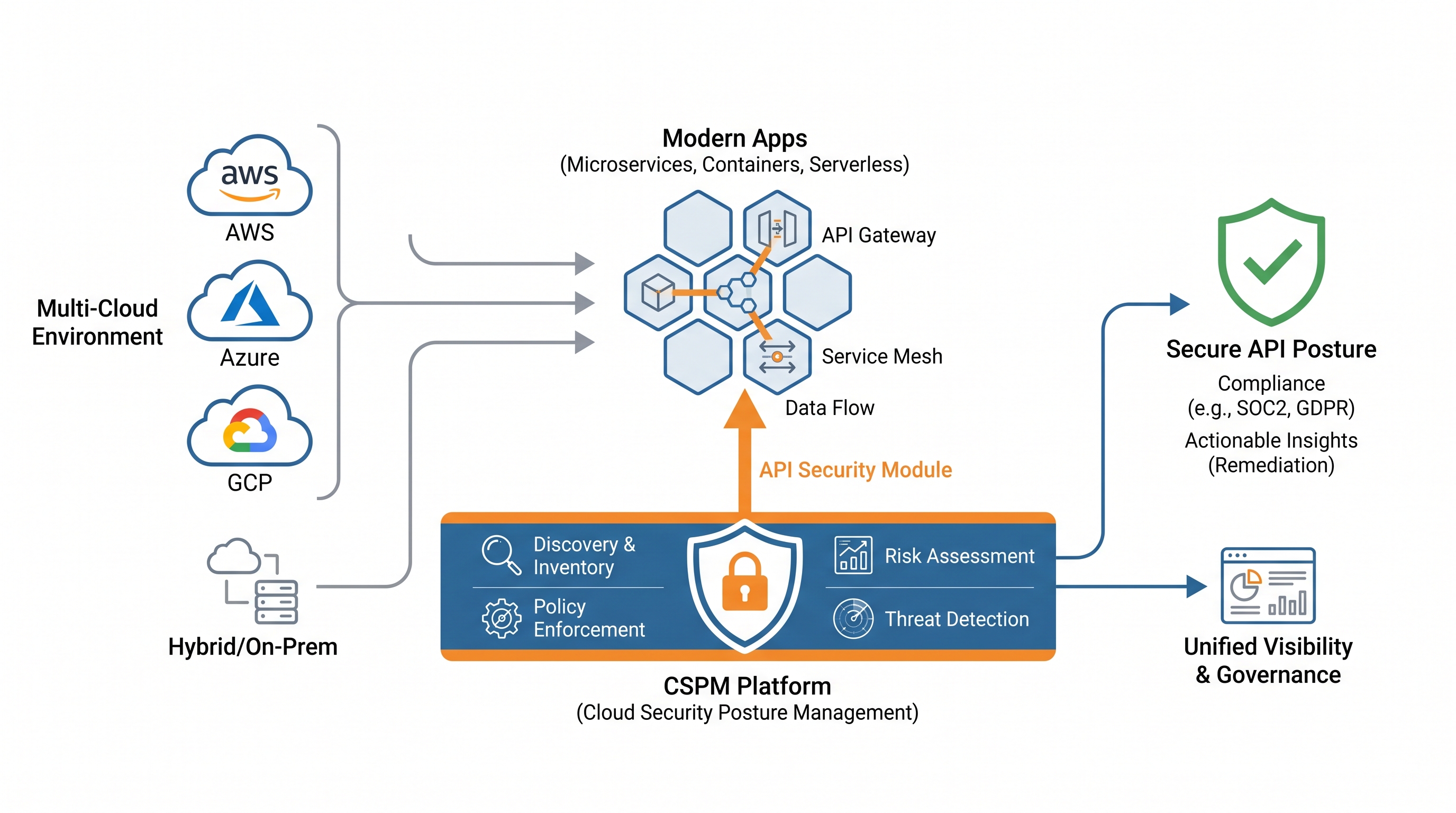
In the contemporary enterprise landscape, applications are no longer monolithic entities residing within a single data center. They are distributed, microservices-driven, and intrinsically reliant on Application Programming Interfaces (APIs) to facilitate communication, data exchange, and functionality across a diverse ecosystem. This architectural evolution is further complicated by the widespread adoption of multi-cloud strategies, where organizations leverage the distinct strengths of AWS, Azure, Google Cloud Platform (GCP), and Oracle Cloud Infrastructure (OCI) simultaneously. While multi-cloud promises unparalleled resilience, agility, and cost optimization, it also introduces a labyrinth of security complexities, particularly concerning API endpoints.
APIs are the digital arteries of modern business, exposing core logic and data to internal, partner, and public consumers. A single vulnerability in an API can cascade into a catastrophic data breach, service disruption, or financial loss. In a multi-cloud environment, the challenge is amplified by inconsistent security controls, fragmented visibility, and disparate compliance requirements across cloud providers. This is precisely where a robust Cloud Security Posture Management (CSPM) solution becomes not merely beneficial, but absolutely critical. A CSPM offers the centralized intelligence and automated governance necessary to maintain a secure and compliant API footprint, ensuring that security posture is continuously monitored, assessed, and remediated across all cloud estates.
The Evolving Threat Landscape for APIs in Multi-Cloud
The ubiquity of APIs has made them a prime target for attackers. The OWASP API Security Top 10 provides a perennial reminder of common vulnerabilities, ranging from Broken Object Level Authorization (BOLA) and Broken User Authentication to Mass Assignment and Security Misconfiguration. In a multi-cloud context, these vulnerabilities are often exacerbated by the sheer scale and complexity of distributed systems.
Common API Vulnerabilities Amplified by Multi-Cloud:
Broken Object Level Authorization (BOLA / IDOR): This is arguably the most critical API vulnerability. Attackers manipulate API requests to access resources they are not authorized for by changing the ID of an object in the URL or request body. In multi-cloud, inconsistent authorization logic across different microservices hosted on various cloud platforms can create numerous BOLA entry points. A service on AWS might have robust authorization, while a legacy service migrated to Azure might lack granular controls, creating a weak link.
Broken User Authentication: Weak authentication mechanisms, poor credential management, or insufficient brute-force protection can lead to account takeovers. Multi-cloud environments often feature multiple identity providers (IDPs) and authentication flows, leading to potential inconsistencies or misconfigurations that attackers can exploit.
Excessive Data Exposure: APIs frequently return more data than necessary, assuming the client will filter it. An attacker can intercept these responses and gain access to sensitive information not intended for them. In a multi-cloud setup, data schemas and API contracts might differ between services, leading to unintentional over-exposure across different cloud-specific data stores.
Lack of Resources & Rate Limiting: Without proper rate limiting, an attacker can bombard an API with requests, leading to Denial of Service (DoS) or brute-force attacks. Implementing consistent rate limiting across diverse API Gateways (e.g., AWS API Gateway, Azure API Management, GCP Apigee) in a multi-cloud setup requires careful orchestration.
Security Misconfiguration: This broad category includes default insecure configurations, unenforced security headers, verbose error messages, or overly permissive CORS policies. Multi-cloud environments inherently increase the surface area for misconfigurations due to the number of services, configurations, and human operators involved across different cloud provider consoles.
Improper Assets Management: The challenge of tracking all deployed APIs, their versions, and their lifecycle across multiple cloud providers is significant. This can lead to "shadow APIs" – undocumented or forgotten endpoints – that remain unpatched and unprotected, serving as backdoors for attackers.
From a FinOps perspective, the cost of a single API breach can be astronomical. Beyond direct financial losses from data theft, organizations face regulatory fines (GDPR, CCPA), reputational damage, customer churn, and extensive remediation costs. Investing in proactive API security through a comprehensive CSPM is not merely a security expenditure; it is a critical FinOps optimization tactic that mitigates potential financial catastrophes and ensures business continuity.
Bridging the Gap: How Multi-Cloud Exacerbates API Security Challenges
The inherent design philosophies and operational models of leading cloud providers (AWS, Azure, GCP, OCI) differ significantly. While each offers robust security primitives, their implementation, nomenclature, and integration patterns can vary wildly. This divergence creates several critical challenges for API security in a multi-cloud context.
Inconsistent Security Paradigms and Tools:
Each cloud provider offers its own suite of security services designed to protect APIs and web applications. For example:
AWS: AWS WAF, AWS Shield, Amazon API Gateway, AWS IAM.
Azure: Azure Front Door, Azure Application Gateway (with WAF), Azure API Management, Azure AD.
GCP: Google Cloud Armor, Apigee API Management, GCP IAM.
OCI: OCI Web Application Firewall, OCI API Gateway, OCI IAM.
While functionally similar, configuring and managing these services uniformly across a multi-cloud estate is a monumental task. A security policy defined for AWS WAF cannot be directly translated or enforced on Azure Front Door without significant manual effort or custom tooling. This leads to configuration drift, security gaps, and an increased likelihood of misconfigurations.
Fragmented Identity and Access Management (IAM):
Securing API access fundamentally relies on robust IAM. In a multi-cloud environment, organizations often contend with multiple, disconnected IAM systems. AWS IAM, Azure Active Directory, GCP IAM, and OCI IAM each manage identities, roles, and permissions within their respective ecosystems. While federated identity solutions (like Okta, Azure AD Connect, or even self-managed identity brokers) can help centralize user authentication, service-to-service authorization and fine-grained access control for APIs across clouds remain a complex challenge. Ensuring the principle of least privilege is consistently applied to API consumers and producers across all clouds requires a unified approach to policy definition and enforcement.
Data Sovereignty and Compliance Complexities:
Modern applications often process sensitive data that is subject to various regulatory frameworks such as GDPR, CCPA, PCI DSS, and industry-specific regulations. In a multi-cloud setup, data might traverse different cloud regions, jurisdictions, and even reside in different cloud provider data centers. Each cloud provider has its own set of compliance certifications and features. Ensuring that API data flows and storage comply with all applicable regulations across every cloud requires meticulous planning, architectural rigor, and continuous monitoring. A misconfigured API endpoint that exposes data to an unauthorized region can instantly trigger compliance violations and severe penalties.
Visibility Gaps and Shadow APIs:
One of the most insidious threats in multi-cloud API security is the lack of comprehensive visibility. Development teams, driven by agility, might deploy APIs rapidly across different cloud accounts without proper registration or security reviews. These "shadow APIs" often bypass corporate security controls and become highly attractive targets for attackers. Without a unified inventory of all API endpoints, their associated resources, and their security posture across AWS, Azure, GCP, and OCI, organizations are operating in the dark. This fragmented visibility makes it impossible to assess the true attack surface, identify vulnerabilities, or enforce consistent security policies.
The CSPM Imperative: Unifying API Security Posture Across Clouds
Given the multi-faceted challenges of API security in a multi-cloud world, a robust Cloud Security Posture Management (CSPM) solution is not just an advantage; it's a necessity. A CSPM provides the overarching framework to gain comprehensive visibility, enforce consistent security policies, and automate remediation across disparate cloud environments. For CloudAtler, our approach integrates FinOps and security to ensure that security measures are not only effective but also cost-efficient.
Automated Discovery and Inventory: The Foundation of Control
The first step in securing any environment is knowing what you have. A multi-cloud CSPM must be capable of automatically discovering all API endpoints, API Gateways, load balancers, WAFs, and associated compute resources (e.g., Lambda functions, Kubernetes services, VMs running API servers) across AWS, Azure, GCP, and OCI. This includes identifying both managed API Gateway services and custom-built API servers. CloudAtler's platform excels at this, providing a single, consolidated inventory that eliminates blind spots and identifies shadow IT. This foundational visibility allows organizations to understand their complete API attack surface, regardless of where individual components are hosted.
Continuous Configuration Auditing and Misconfiguration Detection:
Once assets are inventoried, the CSPM continuously monitors their configurations against established security benchmarks (e.g., CIS Benchmarks), industry best practices (e.g., OWASP API Security Guidelines), and internal corporate policies. For API security, this translates to auditing:
API Gateway Policies: Are authentication and authorization mechanisms correctly configured? Are API keys managed securely? Is mutual TLS (mTLS) enforced where required?
WAF Rules: Are WAFs deployed in front of all public-facing APIs? Are rulesets updated and configured to protect against common OWASP Top 10 API threats?
IAM Policies: Do API-consuming services or users have overly permissive roles? Are service accounts rotated regularly?
Network Security Groups/Firewalls: Are API ports exposed only to necessary sources?
Data Encryption: Are API payloads encrypted in transit (TLS 1.2+ enforced) and at rest (disk encryption, KMS integration)?
CloudAtler provides continuous configuration auditing across all major cloud providers, ensuring that any deviation from the desired secure state for API-related resources is immediately flagged.
Compliance and Governance Automation:
A multi-cloud CSPM simplifies the complex task of demonstrating compliance. It maps detected configurations and vulnerabilities to specific controls required by regulatory frameworks (GDPR, HIPAA, PCI DSS, ISO 27001). This automated mapping significantly reduces the manual effort involved in compliance audits. Furthermore, a robust CSPM enables organizations to define and enforce custom governance policies that ensure all API deployments adhere to corporate security standards, irrespective of the underlying cloud provider. This is crucial for maintaining a consistent security baseline and reducing the administrative overhead associated with multi-cloud governance.
Risk Prioritization and Automated Remediation:
Identifying thousands of potential misconfigurations across a vast multi-cloud estate can lead to alert fatigue. A critical feature of an advanced CSPM is its ability to prioritize risks based on their potential impact and exploitability. CloudAtler leverages Atler AI to analyze contextual information, such as whether an API is publicly exposed, handles sensitive data, or is part of a critical business workflow. This intelligent prioritization allows security teams to focus on the most pressing threats first. Furthermore, for common misconfigurations, CloudAtler can facilitate automated remediation, either directly or by generating actionable playbooks for security and operations teams, significantly reducing the mean time to repair (MTTR) and bolstering overall security posture.
FinOps Synergy: Optimizing Security Spending and Impact
A modern CSPM isn't just about security; it's also about FinOps. Security misconfigurations often lead to inefficient resource utilization or costly breaches. By identifying and remediating these misconfigurations proactively, a CSPM helps avoid unnecessary expenditures associated with incident response, compliance fines, and reputational damage. CloudAtler's platform goes further by providing insights into the financial impact of security vulnerabilities and proposed remediations. This allows security and finance teams to make data-driven decisions, ensuring that security investments are optimized and deliver measurable value. For instance, understanding the cost implications of not patching a critical API vulnerability can justify the immediate allocation of resources for remediation, thereby preventing a much larger financial hit down the line. Our approach ensures that security is a value-driver, not just a cost center, aligning with the principles of a Financial Operations Platform.
Architectural Best Practices for Multi-Cloud API Security
Beyond the capabilities of a CSPM, implementing a secure multi-cloud API architecture requires adherence to fundamental best practices. These architectural considerations, when combined with CSPM monitoring, create a formidable defense.
API Gateway as a Centralized Control Point:
A dedicated API Gateway is indispensable. It acts as the single entry point for all API requests, providing a centralized location for security enforcement, traffic management, and policy application. Key functions include:
Authentication and Authorization: Offloading authentication (e.g., JWT validation, API key management, OAuth 2.0/OpenID Connect) and enforcing fine-grained authorization policies.
Rate Limiting and Throttling: Protecting backend services from abuse and DDoS attacks.
Input Validation: Ensuring incoming requests conform to expected schemas and preventing injection attacks.
Request/Response Transformation: Hiding backend service details and ensuring consistent data formats.
Caching: Improving performance and reducing load on backend services.
In a multi-cloud setup, organizations might use cloud-native gateways (AWS API Gateway, Azure API Management, GCP Apigee/API Gateway, OCI API Gateway) for services within their respective clouds, or opt for a cloud-agnostic solution like Kong or Apigee deployed across clouds. The CSPM's role here is to ensure that these gateways are consistently configured and adhere to security best practices across all environments.
Web Application Firewalls (WAFs) for Layer 7 Protection:
WAFs provide an essential layer of protection against common web exploits like SQL injection, cross-site scripting (XSS), and API-specific attacks. While API Gateways provide some built-in protection, WAFs specialize in analyzing HTTP/S traffic for malicious patterns. Deploying cloud-native WAFs (AWS WAF, Azure Front Door/Application Gateway WAF, GCP Cloud Armor, OCI WAF) in front of API Gateways or directly in front of API-hosting services is crucial. A CSPM ensures that WAFs are properly configured, enabled, and that their rulesets are regularly updated and tuned to minimize false positives while maximizing protection.
Robust Identity and Access Management (IAM) for API Access:
Beyond initial authentication at the API Gateway, granular authorization for API consumers is paramount. This involves:
OAuth 2.0 and OpenID Connect (OIDC): Standard protocols for delegated authorization and identity verification, especially for user-facing APIs.
Mutual TLS (mTLS): For high-security, service-to-service communication, mTLS provides strong authentication of both client and server, ensuring only trusted entities can communicate.
Service Accounts and Least Privilege: API-consuming microservices should use dedicated service accounts with the absolute minimum permissions required to perform their functions. These permissions must be regularly reviewed and audited by the CSPM.
API Key Management: If API keys are used, they must be securely generated, stored, rotated, and have restricted permissions.
Achieving consistent IAM across multi-cloud requires a strategy for federating identities and centralizing policy management where possible, with the CSPM validating enforcement across all cloud providers.
Data Encryption in Transit and at Rest:
All API communication must use strong encryption protocols, specifically TLS 1.2 or higher. This includes client-to-API Gateway, API Gateway-to-backend service, and inter-service communication. For data stored by APIs, encryption at rest using cloud-native Key Management Services (KMS) or Hardware Security Modules (HSMs) is non-negotiable. A CSPM verifies that TLS is enforced across all API endpoints and that data stores linked to APIs have appropriate encryption configurations.
Input Validation and Output Encoding:
These are fundamental application-level security controls. Input validation ensures that all data received by an API conforms to expected types, lengths, and formats, preventing injection attacks (SQL, command, XSS). Output encoding ensures that any user-supplied data returned in an API response is properly escaped to prevent client-side script injection. While not directly a CSPM function, a CSPM can identify API-hosting resources that lack these protections through vulnerability scanning integrations.
Security by Design (Shift Left):
Integrating security into the entire API development lifecycle, from design to deployment, is critical. This "shift left" approach involves:
Threat Modeling: Identifying potential threats and vulnerabilities early in the design phase.
API Security Testing: Incorporating static application security testing (SAST), dynamic application security testing (DAST), and interactive application security testing (IAST) into CI/CD pipelines.
Automated Code Reviews: Checking for common API vulnerabilities in code before deployment.
Secure Configuration as Code: Using Infrastructure as Code (IaC) tools (Terraform, CloudFormation, ARM templates) to define API Gateway, WAF, and IAM configurations, which can then be validated by a CSPM.
A CSPM complements this by continuously validating the deployed state against the desired secure state defined in IaC, acting as a critical feedback loop.
Implementing a Unified API Security Strategy with CloudAtler
Navigating the complexities of multi-cloud API security demands a platform that provides unified visibility, intelligent automation, and integrated FinOps capabilities. CloudAtler is engineered precisely for this challenge, offering a comprehensive solution that transcends individual cloud provider boundaries.
Unified Visibility and Control Across All Clouds:
CloudAtler provides a unified dashboard that aggregates security posture, compliance status, and operational metrics from AWS, Azure, GCP, and Oracle environments into a single, intuitive interface. This eliminates the swivel-chair effect, allowing security teams to see all API endpoints, their associated configurations, and potential vulnerabilities in one place. Imagine having a complete inventory of every API Gateway, every WAF, and every API-serving compute instance across your entire multi-cloud footprint, with real-time status updates and risk assessments. This consolidated view is paramount for identifying shadow APIs, ensuring consistent policy enforcement, and rapidly responding to threats.
AI-Powered Threat Detection and Remediation:
Our platform leverages Atler AI to intelligently detect and prioritize API security threats. Beyond simple rule-based scanning, Atler AI analyzes behavioral patterns, contextual data, and threat intelligence to identify subtle anomalies and zero-day threats that traditional security tools might miss. When a misconfiguration or vulnerability is detected, CloudAtler doesn't just alert; it provides actionable, prioritized remediation guidance. For common issues, our platform can even orchestrate automated remediation workflows, significantly reducing the manual burden on security teams and accelerating the time to fix. This proactive approach to security management ensures your API assets are continuously protected.
FinOps Integration for Secure and Cost-Efficient Operations:
CloudAtler bridges the gap between security and financial operations. Our platform offers deep FinOps capabilities, allowing organizations to understand the direct and indirect costs associated with API security vulnerabilities and their remediation. For instance, you can analyze the potential financial impact of a data breach stemming from an unpatched API, compare it against the cost of implementing stronger security controls, and make informed, budget-aware decisions. This integration ensures that security initiatives are not seen as isolated expenses but as essential investments that protect revenue, reduce operational overhead, and drive business value. By optimizing security spending and avoiding costly incidents, CloudAtler helps organizations achieve true FinOps maturity.
Automated Compliance and Governance:
Achieving and maintaining compliance across diverse regulatory landscapes is a continuous challenge in multi-cloud. CloudAtler automates this process by continuously auditing your API security posture against industry benchmarks (e.g., CIS, NIST), regulatory requirements (e.g., GDPR, HIPAA, PCI DSS), and your internal governance policies. Our platform provides comprehensive reporting, audit trails, and the ability to demonstrate compliance with ease, reducing the time and resources typically consumed by manual compliance checks. For CISOs and security leaders, this provides the assurance that their multi-cloud API estate adheres to the highest standards, as outlined in our CISO security solutions.
Conclusion
APIs are the backbone of modern applications, and their security in a multi-cloud environment is paramount. The inherent complexities of disparate cloud providers, inconsistent security controls, and the ever-evolving threat landscape demand a sophisticated, unified approach. Relying on piecemeal solutions or manual processes in a multi-cloud context is a recipe for security vulnerabilities, compliance failures, and significant financial repercussions.
A robust Cloud Security Posture Management (CSPM) solution is the cornerstone of effective multi-cloud API security. It provides the essential visibility, continuous monitoring, and automated remediation capabilities required to protect your digital assets. By integrating security with FinOps, organizations can not only bolster their defenses but also optimize their cloud spending, ensuring that security is a value-generating investment, not just a cost center.
Don't let the promise of multi-cloud be undermined by fragmented security. Unify your cloud security, FinOps, and automated operations across AWS, Azure, GCP, and Oracle with CloudAtler. Gain unparalleled visibility, leverage AI-powered threat intelligence, and ensure continuous compliance for your modern applications. Take control of your multi-cloud API security posture today.
Ready to secure your multi-cloud APIs and optimize your cloud operations? Explore CloudAtler's platform and schedule a demo.
All in One Place
Atler Pilot decodes your cloud spend story by bringing monitoring, automation, and intelligent insights together for faster and better cloud operations.