
Spotify's Backstage is the elephant in the room of Platform Engineering. While powerful, it is heavy. Many teams spend months implementing Backstage only to struggle with the Cost Insights plugin, which requires complex data pipelines and manual aggregation. If your goal is simply to show developers their cloud spend, you don't need to boil the ocean.
Here are 5 alternatives effective in 2025.
1. Port (The No-Code Contender)
Best For: Teams who want a portal up and running in days, not months.
How it works: Port ingests data directly from FinOps tools (like CloudZero or AWS Cost Explorer) via webhooks or simple API integrations.
Cost Feature: It visualizes cost per microservice directly in the Service Catalog. No complex TypeScript coding required.
Verdict: Superior TCO for mid-market companies compared to Backstage.
2. Cortex (The Reliability & Cost Hybrid)
Best For: Organizations focused on "Service Ownership" and scorecards.
How it works: Cortex links cost data to "Scorecards." You can set a gamified rule: "Service is failing if monthly spend > $500 and growth > 10%."
Verdict: Excellent for driving behavioral change, not just reporting numbers.
3. Kubecost (The Kubernetes Specialist)
Best For: Teams whose spend is 90%+ inside K8s clusters.
How it works: It runs inside your cluster. It gives granular pod-level cost allocation that generalist portals miss.
Integration: You can embed Kubecost dashboards into lightweight portals or even Grafana, skipping the heavy IDP entirely.
4. Vantage (The Developer-Native FinOps Tool)
Best For: Teams who want a "Stripe-like" experience for cloud bills.
How it works: Not strictly an IDP, but Vantage offers "Developer Views" that filter costs by team. It integrates with GitHub to comment on PRs with cost impacts.
Verdict: Often replaces the need for a portal plugin entirely by bringing data to where devs work (GitHub/Slack).
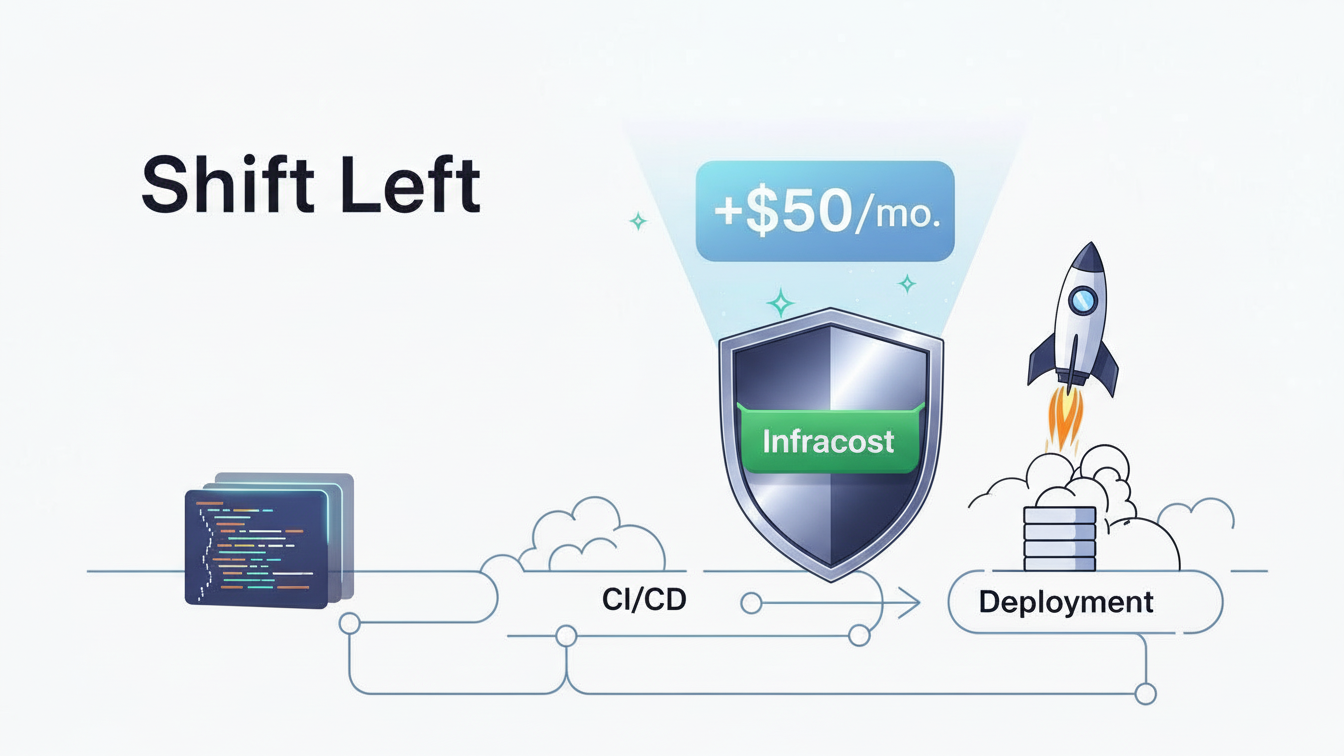
5. Infracost (The Shift-Left Option)
Best For: Preventing cost before it happens.
How it works: It scans Terraform pull requests and estimates the cost before deployment.
Verdict: While Backstage shows you what you spent, Infracost shows you what you will spend. For proactive engineering teams, this is often more valuable.
Summary
Don't default to Backstage just because it's famous. If your primary goal is cost visibility, dedicated tools or commercial IDPs like Port and Cortex often provide 80% of the value with 10% of the setup effort.
All in One Place
Atler Pilot decodes your cloud spend story by bringing monitoring, automation, and intelligent insights together for faster and better cloud operations.