
We’ve all been there, the end-of-the-month board meeting where the "Cloud Infrastructure" line item looks more like a phone number than a budget. You’ve likely heard the pitch a thousand times: "Just automate it!" It sounds so simple, right? But for most enterprises, choosing the right cloud cost automation tool isn't just about picking a software off a shelf, but it’s also about avoiding the expensive traps that turn a saving solution into another layer of technical debt.
In 2026, the stakes are higher than ever. With global public cloud spending projected to exceed $720 billion, the difference between a tool that works and one that just generates "noise" can cost millions. Let’s peel back the curtain on why smart companies often make the wrong choices and how you can get it right.
The "SaaS-First" Fallacy: Buying a Tool Before a Process
One of the most frequent blunders enterprises commit is treating cloud cost automation as a "plug-and-play" purchase rather than a cultural capability. Many leaders buy a high-end tool expecting it to magically fix a chaotic infrastructure. However, as industry data suggests, 84% of organizations still cite managing cloud spend as their top challenge, even with multiple tools in play. The mistake lies in ignoring the FinOps framework, the "people and process" side of the equation.
A tool can tell you that a development server has been idle for 20 days, but if your internal policy doesn't empower an engineer to shut it down without three layers of approval, the automation remains toothless. Enterprises that succeed don't just buy a dashboard, but they integrate the tool into their existing CI/CD pipelines and foster a culture of "cost-awareness" where engineers see the financial impact of their architectural decisions in real-time.
Overlooking the Complexity of Multi-Cloud Environments
In the race to avoid vendor lock-in, 92% of enterprises have adopted a multi-cloud or hybrid approach. However, many cost automation tools are "cloud-native" only in the sense that they work perfectly for one provider (like AWS) but offer only surface-level insights for another (like Azure or GCP). What enterprises get wrong is assuming that a "unified" dashboard provides unified control.
A tool might show you a total bill across three clouds, but does it understand the nuanced differences between AWS Savings Plans and Google Cloud’s Committed Use Discounts? Often, teams end up with "cost blind spots" because their automation tool can't normalize data across different billing APIs. This leads to fragmented strategies where one team optimizes for performance while another optimizes for cost, creating a tug-of-war that stalls growth. To avoid this, enterprises must prioritize tools that offer deep, cross-provider intelligence rather than just basic data aggregation.
The Trap of Reactive vs. Predictive Automation
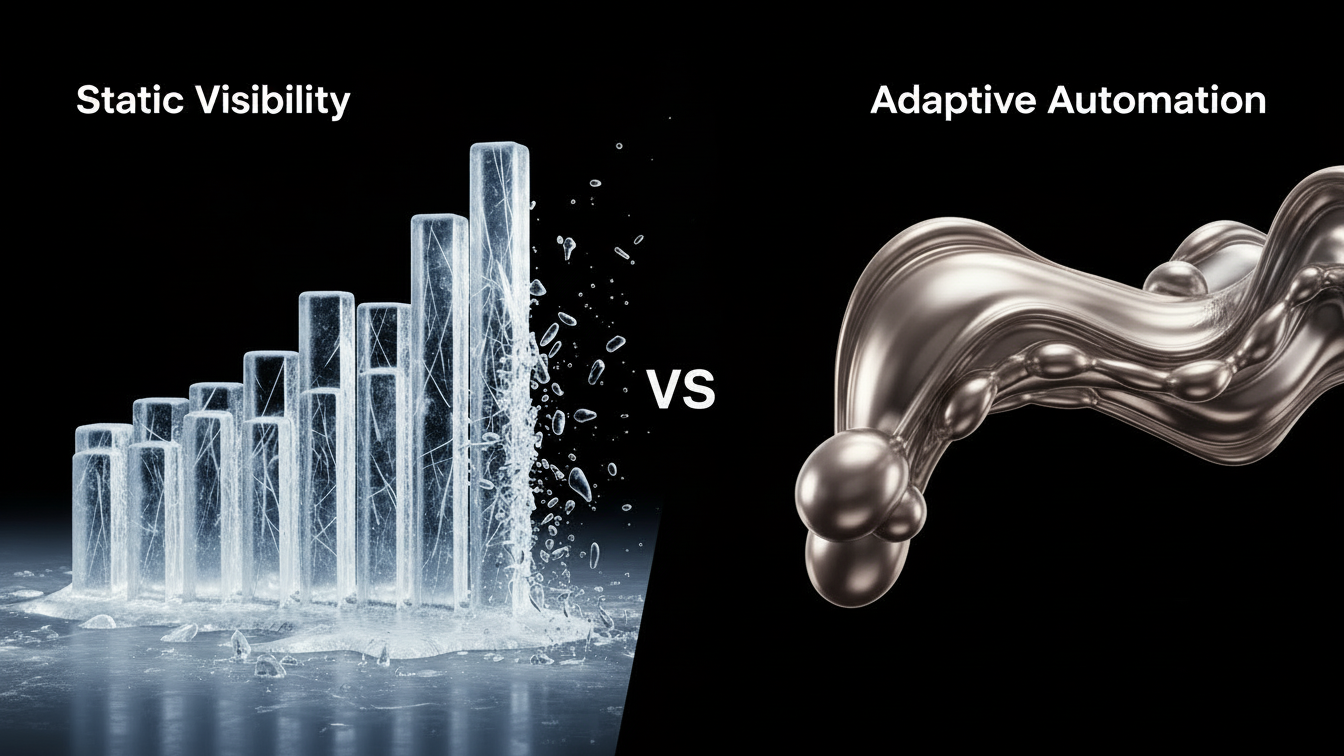
Most "automation" tools on the market are actually "reaction" tools. They alert you when you’ve already exceeded a budget or when a spike has occurred. While useful, this is a "rearview mirror" approach to finance. The latest industry trends for 2026 highlight a shift toward AI-driven predictive optimization. Enterprises often fail by choosing tools that lack machine learning capabilities to forecast seasonal demand or detect anomalies before they hit the bill.
For instance, if your business experiences a 300% traffic surge every Black Friday, a reactive tool will simply scale up and bill you later. A predictive tool analyzes historical data to suggest purchasing Spot Instances or Reserved Instances weeks in advance. If your current strategy doesn't involve an intelligent AI-based cloud management tool to guide these automated decisions with high-fidelity accuracy, you’re likely leaving 20% to 30% of potential savings on the table. Choosing a tool that acts as a proactive co-pilot rather than a passive observer is the key to true financial agility.
Ignoring the "Unit Economics" of Cloud Spend
Enterprises often get bogged down in "total spend" rather than "unit cost." It’s easy to celebrate a 10% reduction in the monthly bill, but if your user base grew by 50%, that 10% reduction might actually be an efficiency loss. Many companies choose tools that provide "macro" views but fail to offer "micro" insights, such as the cost per customer, cost per feature, or cost per deployment.
Without these metrics, it is impossible to determine if your cloud spend is driving revenue or just funding waste. This waste is usually hidden in the "shared services" or "unallocated" buckets. A sophisticated automation tool must be able to perform granular tagging and "showback" reporting, ensuring every dollar spent is mapped directly to a business outcome.
Technical Tunnel Vision: Cost vs. Performance and Security
Perhaps the most dangerous mistake is choosing a cost tool that operates in a vacuum, ignoring the holy trinity of IT: Cost, Performance, and Security. It’s easy to save money by downsizing instances, but if that causes your application to lag during peak hours, the "savings" are negated by lost customer trust. Similarly, some automation scripts might suggest moving data to cheaper storage tiers without realizing that those tiers don't meet your enterprise’s compliance or data residency requirements.
Enterprises often overlook the need for a tool that understands "application context." You need a solution that won't just suggest the cheapest option, but the optimal on balancing the need for 99.99% uptime with the goal of a leaner bill. Integrating a smart solution like Atler Pilot into your ecosystem ensures that cost-cutting measures are weighed against performance benchmarks, preventing the "penny wise, pound foolish" scenarios that plague many IT departments today.
All in One Place
Atler Pilot decodes your cloud spend story by bringing monitoring, automation, and intelligent insights together for faster and better cloud operations.