
The artificial intelligence landscape didn’t just shift recently; it experienced a seismic event that left CFOs and CTOs scrambling for their calculators. For the better part of a year, the narrative was dominated by OpenAI’s supremacy, specifically the release of the o1 series (formerly "Strawberry"), which promised a new paradigm of "reasoning" models capable of thinking before they speak. It was impressive, sure, but it came with a premium price tag that made even enterprise clients wince. Then, virtually out of nowhere, DeepSeek R1 arrived. It didn't just match the performance benchmarks of the industry giants; it did so while undercutting their prices so aggressively that it looked like a typo.
We are currently witnessing a brutal, high-stakes Model War: DeepSeek R1 vs. OpenAI o1, but the battleground isn't just about who scores higher on a math test. It is about the economics of intelligence. For developers and businesses building the next generation of AI applications, the question has moved from "Which model is smarter?" to "Which model allows my business model to survive?" When one competitor offers a similar product for nearly 30 times less than the incumbent, the laws of unit economics force a hard pivot. This analysis dives deep into the financial architecture of these two titans, dissecting not just the sticker price, but the hidden costs of reasoning tokens, caching mechanisms, and the architectural decisions that make such a disparity possible.
The 27x Differential: Analyzing the Sticker Shock
To understand the magnitude of this disruption, we have to look at the raw numbers, which paint a stark picture of the current market. As of early 2025, OpenAI’s o1 model acts as the high-end luxury sedan of the AI world. It is priced for organizations where budget is secondary to brand assurance and ecosystem integration. You are looking at approximately $15.00 per million input tokens and a staggering $60.00 per million output tokens. For a heavy reasoning task, say, analyzing a complex legal contract or debugging a massive codebase, a single query sequence can easily cost upwards of $0.50 to $1.00. That might sound small, but at scale, it is a burn rate that kills startups.
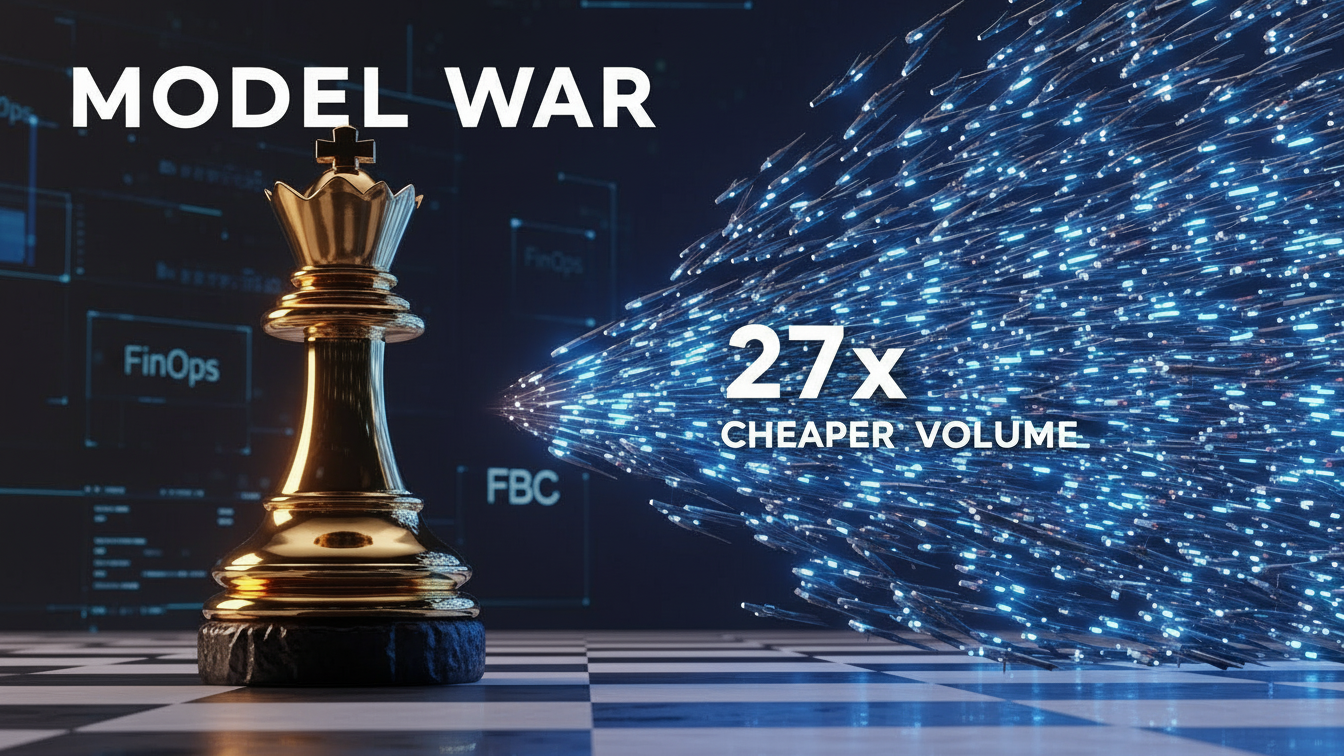
In sharp contrast, DeepSeek R1 enters the arena with a pricing structure that feels almost predatory towards its competitors. The API costs for R1 sit at roughly $0.55 per million input tokens and $2.19 per million output tokens. This is not a marginal discount; we are talking about a price difference of approximately 27x. To put that in perspective, for the price of processing one million tokens with OpenAI o1, you could process nearly 27 million tokens with DeepSeek R1. This differential fundamentally changes the feasibility of certain product features. Applications that were previously deemed too expensive to run—like autonomous agents that loop continuously or real-time personalized tutoring systems—are suddenly economically viable. The barrier to entry has not just been lowered; it has been obliterated.
The Architecture of Affordability: Mixture-of-Experts
You might be wondering how DeepSeek can afford to price its flagship model so low without bankrupting itself. The answer lies in the architectural efficiency of the model itself. DeepSeek R1 utilizes a massive Mixture-of-Experts (MoE) architecture. While the model boasts a total parameter count of 671 billion, it doesn't activate all of them for every single token it generates. Instead, it selectively activates only about 37 billion parameters relevant to the specific context of the query. This is akin to having a library of 671 experts but only waking up the 37 who know about the specific topic you are asking about.
This "sparse activation" dramatically reduces the compute required per inference. OpenAI’s o1, while its exact architecture is proprietary and closely guarded, is widely believed to be a much denser model, requiring significantly more GPU horsepower to generate every single word. By optimizing the "active parameters," DeepSeek has effectively decoupled intelligence from raw computational mass. They are not subsidizing the cost; they have structurally lowered the cost of production. This is a critical distinction for FinOps teams: you aren't buying a cheap knockoff; you are buying a more computationally efficient engine. This efficiency is what allows them to pass on savings that seem impossible to observers accustomed to the dense, power-hungry models of the past two years.
The "Thinking" Tax: Chain of Thought Costs
The defining feature of this new generation of models is "reasoning." Unlike standard LLMs that predict the next word immediately, both R1 and o1 engage in a "Chain of Thought" (CoT) process. They "think" silently, generating hidden tokens to plan, critique, and refine their answer, before outputting the final result to the user. However, who pays for this thinking time? This is where the cost-per-token analysis gets tricky and where hidden costs can explode your bill.
In the OpenAI o1 ecosystem, these reasoning tokens are often billed as output tokens. Remember that $60.00 per million price tag? You are paying that premium rate not just for the final answer, but for the hundreds or thousands of internal "thought" tokens the model generated to get there. If you ask a difficult math problem, the model might generate 2,000 hidden tokens of "thinking" and only 50 tokens of "answer." You pay for 2,050 tokens at the output rate. DeepSeek R1 operates similarly but with a crucial difference in transparency and unit cost. Because their output rate is $2.19, the cost of "thinking" is negligible. A heavy reasoning task that burns 5,000 thought tokens on DeepSeek costs you about a penny. The same task on o1 could cost you nearly $0.30. For developers building agentic workflows where models need to "think" for hours, this pricing disparity effectively locks them out of the OpenAI ecosystem and pushes them toward DeepSeek.
Cache is King: The Battle for Context
Another often-overlooked aspect of the "Model War" is the cost of context caching. In modern RAG (Retrieval-Augmented Generation) applications, we often send the same massive preamble, system instructions, few-shot examples, or large documents, over and over again. Smart APIs now offer "Context Caching," where you get a discount if you reuse the same input prefix. This is essential for keeping costs down in chat applications where the history grows with every turn.
DeepSeek has aggressively optimized this pricing lever as well. While their standard input cost is $0.55, their cache hit price drops to a microscopic $0.14 per million tokens. This is revolutionary for applications like long-document analysis or coding assistants that need to keep the entire repository in context. OpenAI also offers caching (introduced recently for some models), but the base rate is still starting from that $15.00 high ground. If you are building a system that requires a 100k token context window to be refreshed every minute, the math simply forces your hand. DeepSeek’s caching strategy suggests they are not just competing for the casual user, but are targeting high-volume, enterprise-grade infrastructure workloads where predictable, low-overhead context is king.
The Distillation Factor and Open Weights
Perhaps the most disruptive aspect of the DeepSeek R1 vs. OpenAI o1 war is the philosophy of "Open vs. Closed." OpenAI sells a service; you rent their intelligence. DeepSeek, however, released the weights for R1. This means that for organizations with their own GPU clusters or those worried about data privacy, they can bypass the API entirely and host the model themselves. But more importantly, DeepSeek introduced the concept of Distillation.
They didn't just give us the giant model, but they used the giant model to teach smaller models (like Llama-70B or Qwen-32B) how to reason. These "distilled" models retain a shocking amount of the reasoning capability of the giant teacher but can be run on much cheaper hardware. From a cost-analysis perspective, this is the "nuclear option." If you can run a distilled R1 model on a single 8xH100 node (or even smaller) for a fixed cost, your cost-per-token effectively tends toward zero as you scale volume. OpenAI currently has no answer to this. To get o1-level reasoning, you must pay the o1 toll. With DeepSeek, you can download the brains of the operation and run it on your own server. For high-security sectors like finance or healthcare, where sending data to an external API is a compliance nightmare, this isn't just a cost saving; it's a binary allow/block decision.
Conclusion: The Commoditization of Reason
The Model War: DeepSeek R1 vs. OpenAI o1 is the beginning of the commoditization of machine reasoning. For a long time, we assumed that "reasoning," which is the ability to plan, verify, and deduce, was a premium feature that would command a premium price forever. DeepSeek R1 has shattered that illusion. By proving that reasoning can be achieved at $2.19 per million output tokens (and falling), they have turned high-level intelligence into a utility as cheap as electricity.
For the developer, the FinOps lead, and the CTO, the path forward is clear. OpenAI o1 remains a masterpiece of engineering, perhaps still holding a slight edge in the most nuanced, creative, or safety-critical tasks where cost is no object. But for the 99% of use cases like data extraction, code generation, summarization, and standard RAG workflows, the cost-per-token analysis screams in favor of the challenger. The market has spoken: intelligence is abundant, and thanks to this war, it is finally affordable.
All in One Place
Atler Pilot decodes your cloud spend story by bringing monitoring, automation, and intelligent insights together for faster and better cloud operations.