
The Financial Gravity of Data Mobility
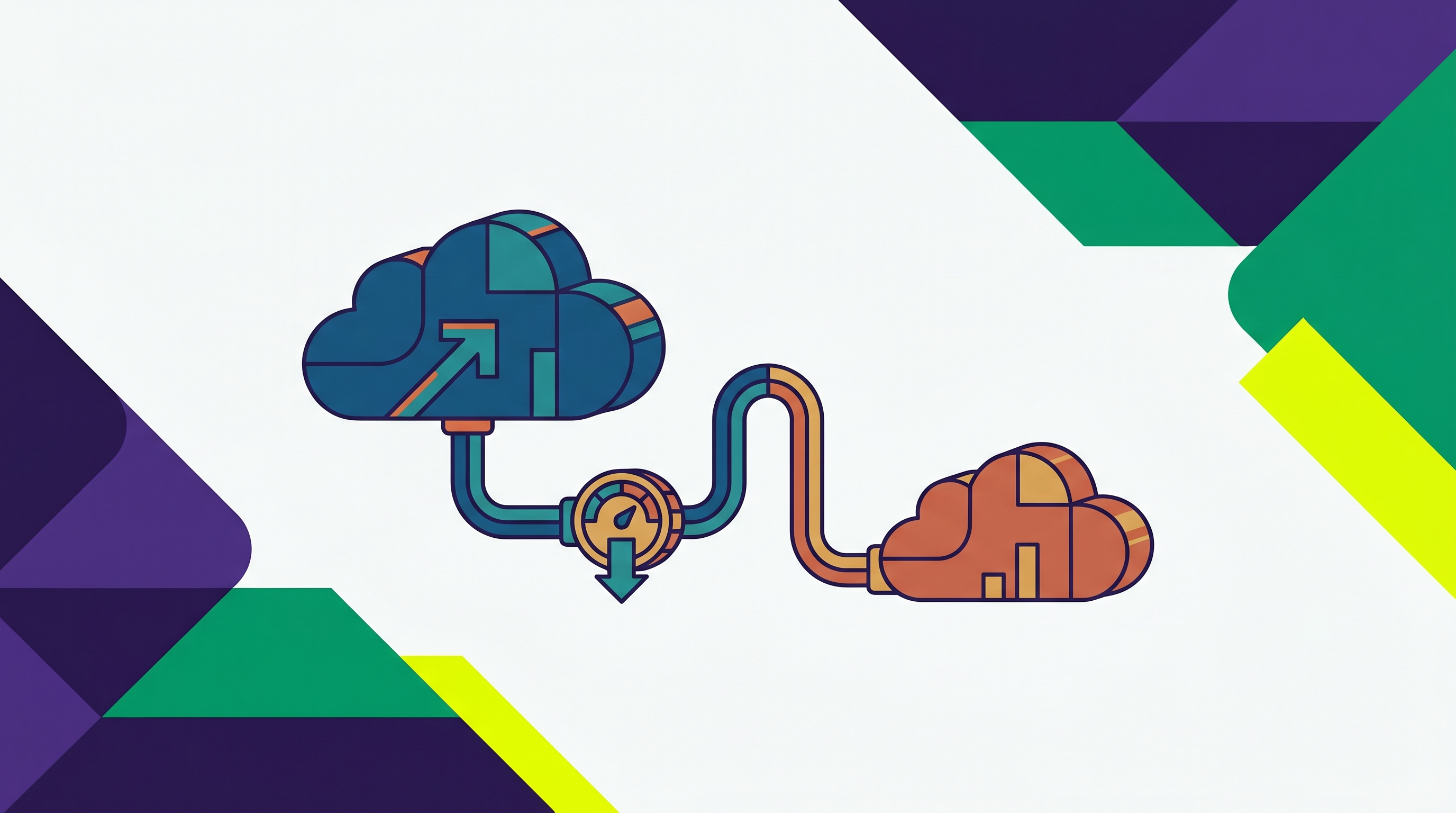
Designing for high availability and resilience often mandates a multi-region architecture, where infrastructure is distributed across geographically distinct cloud provider zones. The ultimate expression of this resilience is a robust Disaster Recovery (DR) strategy, capable of seamless failover in the event of a catastrophic regional outage. However, the architectural pursuit of 99.999% availability introduces a complex and often insidious financial vector: Data Transfer Out (DTO) costs. Unlike compute or storage, which are relatively static and highly visible on billing dashboards, data transfer costs are dynamic, opaque, and highly dependent on application architecture and network topology. In a cross-region DR scenario, the continuous replication of state across the global backbone can quickly become the dominant line item on a cloud bill. Advanced FinOps methodologies, empowered by platforms like CloudAtler, are essential to engineer DR architectures that balance recovery objectives with economic viability.
The fundamental premise of cloud networking economics is simple yet aggressive: ingress (data entering a region) is generally free, while egress (data leaving a region) is heavily monetized. This applies to data moving to the internet, but critically, it also applies to data moving between different regions within the same cloud provider's network (e.g., from AWS us-east-1 to us-west-2). When engineering a DR solution, architects must continuously replicate databases, block storage volumes, container registries, and application state across this financial boundary. Without rigorous optimization, organizations essentially pay a continuous tax on their data's mobility.
Deconstructing DR Replication Mechanics
The cost of cross-region DR is directly proportional to the Recovery Point Objective (RPO) defined by the business. RPO dictates the maximum acceptable data loss in a disaster scenario. A near-zero RPO requires synchronous or high-frequency asynchronous replication, while a looser RPO (e.g., 24 hours) might only require daily backups. The selected RPO drives the underlying replication technology and, consequently, the DTO expenditure.
Consider Amazon Elastic Block Store (EBS) Fast Snapshot Restore (FSR) or continuous replication via AWS Elastic Disaster Recovery (DRS). While these services provide phenomenal RPOs (often measured in seconds), they operate by continuously streaming block-level changes across the inter-region network. Every megabyte of modified data incurs a cross-region data transfer charge. For high-transaction databases or heavy logging clusters, the volume of block churn can be immense. FinOps practitioners must aggressively audit the underlying workloads. Are temporary tempdb files, ephemeral cache volumes, or verbose debug logs being needlessly replicated to the DR region? Excluding non-essential data from the replication payload is the first and most critical step in cost mitigation.
Similarly, database replication methodologies profoundly impact costs. Native logical replication (e.g., PostgreSQL streaming replication, MySQL binlog replication) is generally more efficient than block-level storage replication because it only transmits the actual data changes (the logical statements) rather than the underlying storage block modifications. However, establishing an active-passive cross-region database cluster still generates continuous DTO. Furthermore, if the application heavily utilizes large binary objects (BLOBs) stored directly within the database schema, the replication of these massive payloads will exacerbate cross-region costs exponentially.
Architectural Strategies for DTO Minimization
To fundamentally alter the financial trajectory of a cross-region DR strategy, architects must move beyond simple infrastructure configuration and implement structural changes to the application and data architecture.
Decoupling State and Utilizing S3 Cross-Region Replication (CRR): Object storage (like Amazon S3 or Azure Blob Storage) offers a more nuanced approach to replication. Rather than streaming continuous database changes, architects can design applications to write large payloads (images, documents, analytical data sets) directly to an S3 bucket in the primary region. S3 Cross-Region Replication (CRR) can then be configured to automatically replicate these objects to the DR region. While CRR still incurs DTO charges, object storage is fundamentally cheaper than block storage, and the replication process is often more efficient. Furthermore, developers can leverage S3 Lifecycle policies to transition data to cheaper storage tiers (like Glacier) in the DR region immediately upon replication, optimizing the long-term storage costs of the standby environment.
Data Compression and Deduplication: Before data traverses the regional boundary, it must be aggressively compressed. While cloud providers automatically optimize their backbone routing, they do not inherently compress the payload on behalf of the customer. Implementing application-level compression (e.g., Gzip, Brotli) for data streams, or utilizing database-native compression features before replication, directly reduces the payload size and the resulting DTO bill. In highly advanced architectures, WAN optimization appliances or specialized replication software (like specific NetApp SnapMirror configurations) can perform deep deduplication before transmission, ensuring that only net-new blocks traverse the expensive inter-region links.
Asynchronous Batching over Continuous Streaming: If the business RPO allows, architects should challenge the necessity of continuous, real-time replication. Shifting from synchronous streaming to asynchronous batching can yield significant savings. Instead of replicating every transaction instantly, the application can buffer changes in a message queue (like Kafka or SQS) and compress them into larger, batched payloads that are transmitted to the DR region on a schedule (e.g., every 5 minutes). This reduces the overhead of constant network connections and maximizes the efficiency of payload compression. FinOps tools like CloudAtler can help model the cost differences between these various RPO scenarios, providing the business with the data needed to make informed risk-versus-reward decisions.
The Impact of Network Topology and Transit Gateways
The specific network routing utilized for cross-region replication also influences costs. A naive implementation might route replication traffic over the public internet, utilizing public IP addresses for the database nodes. This is not only a severe security vulnerability but also often incurs higher data transfer rates depending on the provider's pricing tier.
Replication traffic must flow over the cloud provider's private backbone. Technologies like AWS Transit Gateway (TGW) and VPC Peering are essential for establishing secure, private inter-region connectivity. While VPC Peering provides a direct, localized connection, managing a complex mesh of peering connections across multiple regions becomes operationally untenable at scale. Transit Gateway acts as a centralized hub router, simplifying the topology. However, TGW introduces its own pricing dimensions, charging per gigabyte of data processed through the gateway, in addition to the standard cross-region data transfer fees.
FinOps teams must carefully model these interconnected costs. In some high-throughput replication scenarios, establishing a dedicated, inter-region VPC peering connection specifically for the database replication traffic—bypassing the Transit Gateway entirely—can eliminate the TGW data processing surcharge, yielding substantial savings despite the increased operational complexity. This granular level of architectural trade-off analysis is the hallmark of a mature cloud engineering practice.
Evaluating Pilot Light vs. Warm Standby Architectures
Beyond the cost of replicating the data, the infrastructure footprint in the DR region heavily dictates the overall financial burden. Organizations must align their Recovery Time Objective (RTO)—the time required to restore operations—with the appropriate DR architecture pattern.
A "Warm Standby" architecture maintains a scaled-down but fully functional version of the primary environment in the DR region. The databases are active (receiving replication data), and minimal compute resources (e.g., a small Kubernetes cluster or a few EC2 instances) are running to facilitate immediate failover. This provides a low RTO but incurs continuous compute and storage costs in the secondary region.
Conversely, a "Pilot Light" architecture is significantly more cost-effective. In this model, only the core data layer (the replicated database or S3 buckets) is maintained in the DR region. The compute infrastructure—the EC2 instances, load balancers, and Kubernetes nodes—is defined entirely as Infrastructure as Code (e.g., Terraform) but remains un-provisioned. In a disaster event, the IaC pipeline is triggered to spin up the compute tier and attach it to the replicated data. This minimizes continuous costs but increases the RTO, as the business must wait for the infrastructure to provision and boot.
FinOps platforms like CloudAtler excel at analyzing these architectural dichotomies. By correlating the cost of the standby infrastructure with the business value of a rapid RTO, CloudAtler enables organizations to optimize their DR posture, ensuring they are not over-insuring against a disaster event.
The Role of Traffic Routing and Egress Optimization
During a successful failover event, the financial dynamics shift abruptly. The DR region, formerly a sink for replication data, suddenly becomes the primary source of egress traffic as it serves the global user base. The cost of routing this traffic must be anticipated.
Utilizing a global anycast network or a sophisticated DNS routing service like Amazon Route 53 is essential. In a failover, Route 53 updates its records to point traffic to the DR region. However, if the user base is primarily located near the original primary region, the latency and egress costs from the DR region back to those users might increase. Implementing an intelligent Content Delivery Network (CDN) like Amazon CloudFront or Cloudflare in front of the application architecture is a critical FinOps optimization. The CDN caches static assets and aggressively minimizes the egress traffic hitting the origin servers in the DR region, significantly dampening the cost impact of the failover event.
Continuous Cost Auditing and the Future of DR
A DR strategy is not a "set and forget" configuration. As the application evolves, the volume of data generated, the network topology, and the underlying cloud provider pricing models will inevitably change. A DR architecture that was cost-optimized yesterday may become a massive financial liability tomorrow due to undetected infrastructure drift or an unoptimized new microservice generating massive cross-region log replication.
Continuous FinOps auditing is mandatory. Teams must set up strict billing alarms specifically targeting cross-region data transfer metrics. Anomalous spikes in DTO must be treated as high-severity incidents, triggering immediate investigation into the underlying replication mechanics. Advanced cost allocation tagging (e.g., DR=True, ReplicationSource=us-east-1) ensures that the financial burden of the DR strategy is accurately attributed to the correct business unit, fostering accountability.
The evolution of cloud architecture points toward increasingly sophisticated, software-defined resilience. The goal is to move away from static, expensive DR regions toward dynamic, multi-cloud architectures where workloads can fluidly migrate based on real-time cost, performance, and availability metrics. By deeply integrating platforms like CloudAtler into the engineering lifecycle, organizations can transform disaster recovery from a reactive insurance policy into a proactive, finely tuned engine of operational and economic efficiency.
All in One Place
Atler Pilot decodes your cloud spend story by bringing monitoring, automation, and intelligent insights together for faster and better cloud operations.