
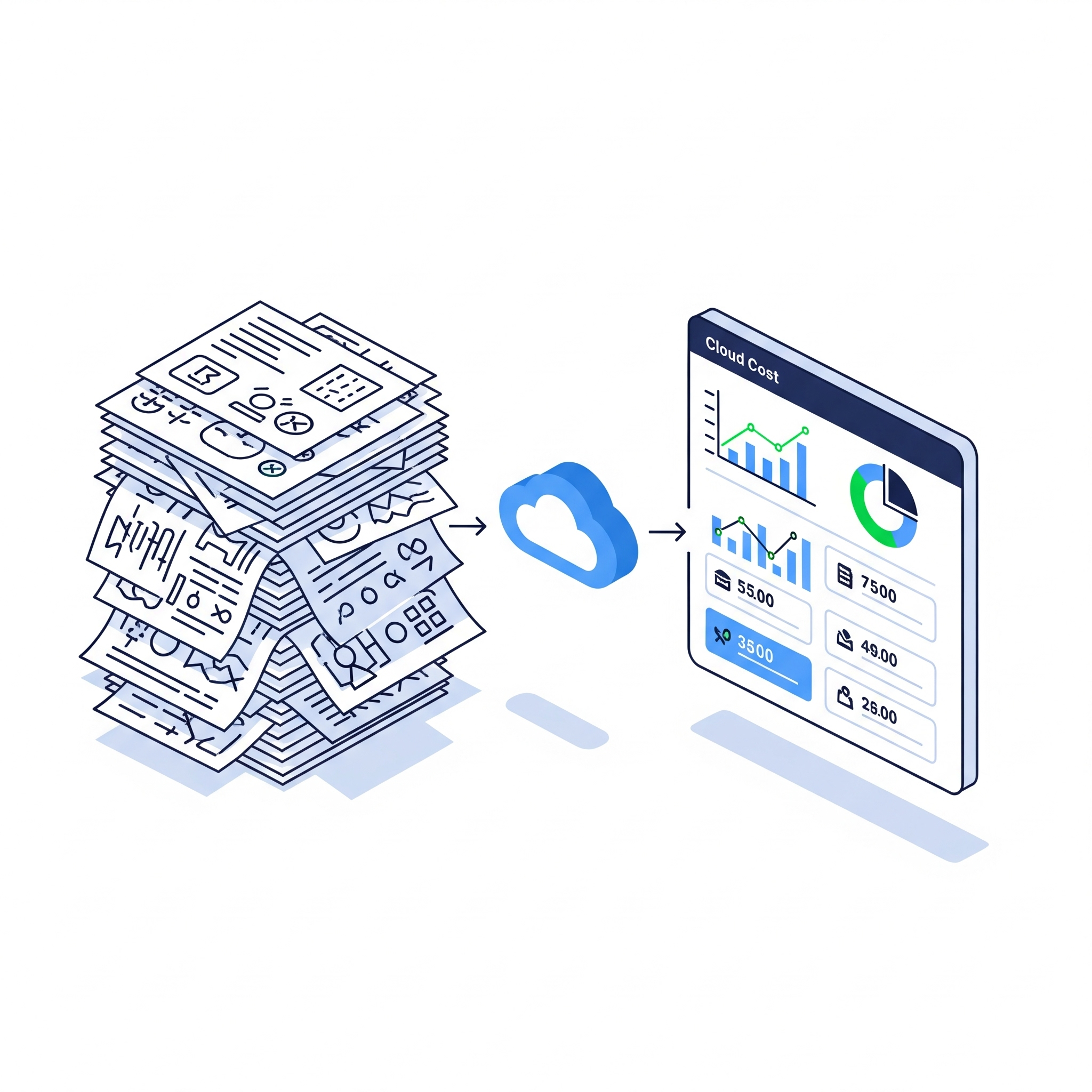
For many businesses, the monthly cloud bill is a source of dread. It's a multi-page document filled with thousands of line items, cryptic acronyms, and surprising charges. You know you're spending a lot, but it's nearly impossible to answer a simple question: "What am I actually paying for?"
This guide will help you start understanding your cloud bill by breaking down the three most common areas of confusion.
1. Decoding the AWS Pricing Models
One of the biggest challenges is the complexity of AWS pricing models explained. You aren't just paying for server time. Your bill is a mix of:
On-Demand: Pay-as-you-go, highest flexibility, highest cost.
Reserved Instances & Savings Plans: Commit to usage for 1-3 years for a significant discount.
Spot Instances: Bid on spare capacity for massive savings, but your instances can be terminated with little notice.
Tiered Pricing: The more you use of a service (like S3 storage), the less you pay per unit.
Without a tool, manually figuring out if you're on the most cost-effective plan for every resource is an impossible task.
2. The Mystery of Data Transfer Costs
Often labelled "Data Transfer," this is one of the most notorious and unpredictable charges. You are billed for data moving out of the AWS network (egress). A spike here could be from legitimate user traffic or a misconfigured application sending data between regions. Identifying the source is a critical step in cloud cost management basics.
3. The "Death by a Thousand Cuts" Services
While you keep a close eye on your big EC2 and RDS costs, hundreds of smaller charges can add up. These include things like:
Unattached Elastic IP addresses
NAT Gateway processing fees
CloudWatch logs and custom metrics
A proper cloud cost governance strategy requires visibility into 100% of your spend, not just the big-ticket items. The native billing console makes this incredibly difficult. The solution is a FinOps platform that automatically ingests, analyses, and presents this data in a simple, human-readable format, turning your confusing bill into a clear map of your cloud spending.
All in One Place
Atler Pilot decodes your cloud spend story by bringing monitoring, automation, and intelligent insights together for faster and better cloud operations.