
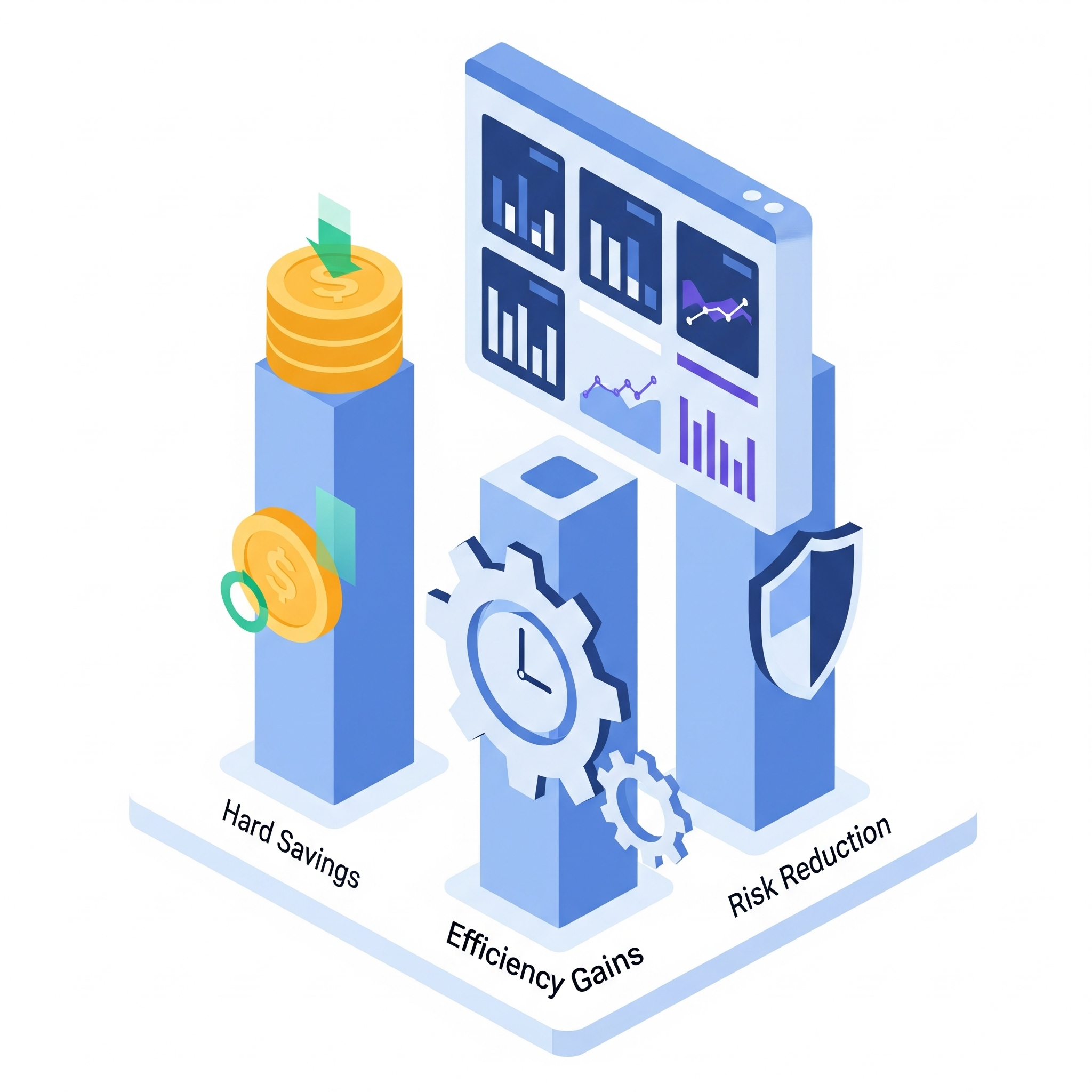
You know that a dedicated finops platform can save your company money and bring order to your cloud spending chaos. But how do you convince your VP of Finance or CFO to approve the purchase? Building a strong business case is essential. Your business case should be built on three pillars: Hard Savings, Efficiency Gains, and Risk Reduction.
1. Hard Savings (The Easiest to Quantify)
This is the direct, measurable cost reduction the platform will deliver.
Waste Reduction: Use the platform's free trial to run an initial analysis. Identify the potential savings from right-sizing EC2 instances, eliminating idle resources, and cleaning up unused storage. (e.g., "We identified $5,000/month in immediate savings from idle resources.")
Commitment Optimization: Show how the platform's recommendations for AWS Savings Plans or GCP CUDs can increase discount coverage from 50% to over 90%, leading to predictable savings. (e.g., "Increasing our Savings Plan coverage will save an additional $10,000/month.")
2. Efficiency Gains (The "Soft" Savings)
This focuses on the value of giving time back to your most expensive employees: your engineers.
Reduced Manual Effort: Calculate the number of hours your DevOps and finance teams spend each month manually downloading, reconciling, and analyzing cloud bills. (e.g., "We spend 40 engineering hours per month on manual cost analysis. A FinOps platform automates this, saving us $X in productivity.")
Faster Anomaly Resolution: How long does it currently take to identify and fix a cost spike? A platform with real-time alerts can reduce this from days to minutes, preventing budget overruns.
3. Risk Reduction (The Insurance Policy)
This pillar addresses the strategic risks of not having a FinOps platform.
Improved Forecasting Accuracy: Unpredictable cloud bills disrupt financial planning. A platform provides accurate cloud spend forecasting, reducing financial uncertainty.
Better Margin Protection: Without understanding cloud unit economics, you could be selling products or serving customers at a loss. A platform provides the cost-per-customer visibility needed to protect profitability.
Enhanced Governance: A platform helps enforce cloud cost governance policies automatically, preventing costly configuration mistakes and ensuring compliance.
By framing the investment around these three pillars, you can clearly demonstrate that a cloud cost intelligence platform is not just a cost center, but a strategic investment that pays for itself through savings, increased productivity, and reduced financial risk.
All in One Place
Atler Pilot decodes your cloud spend story by bringing monitoring, automation, and intelligent insights together for faster and better cloud operations.