
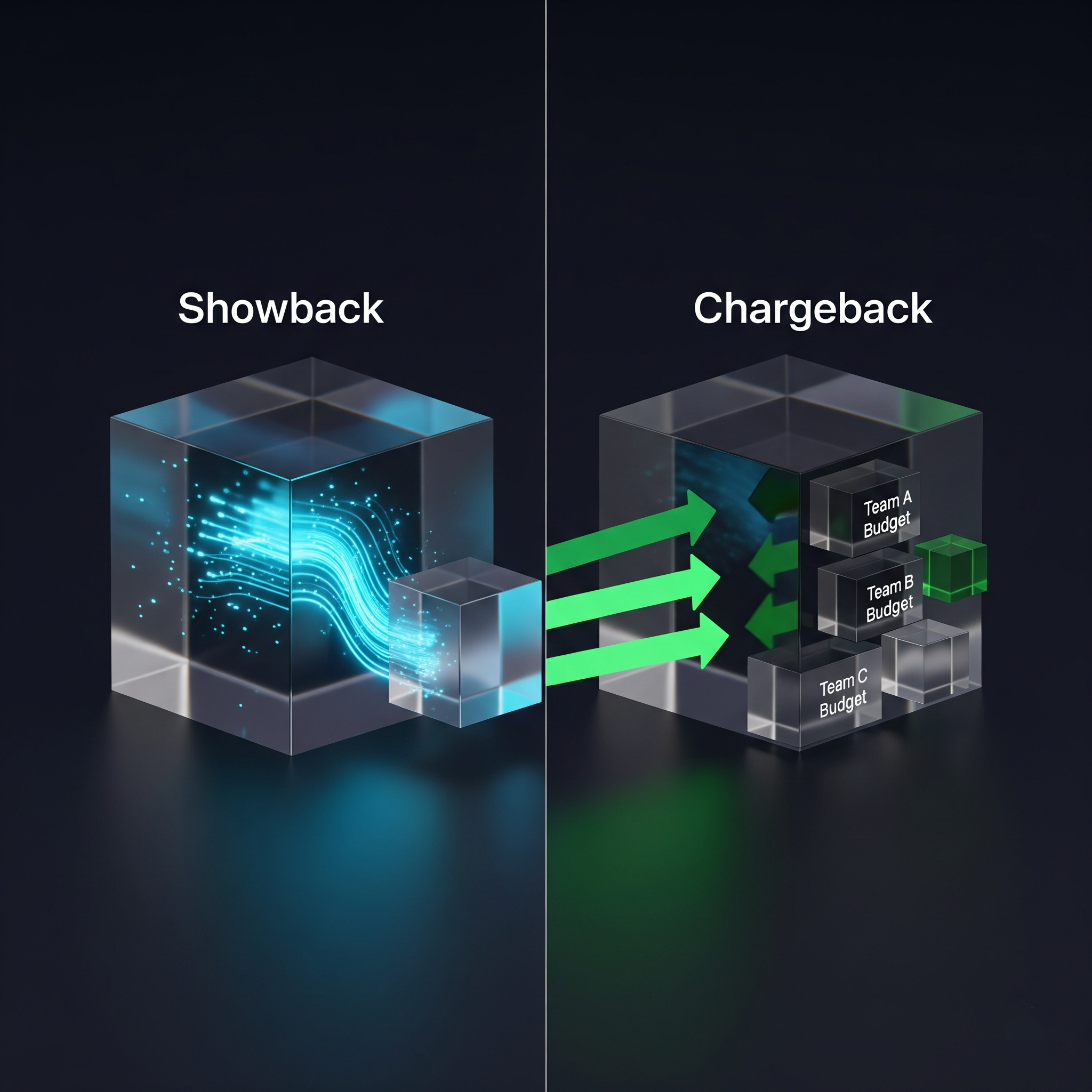
In the world of FinOps, showback and chargeback are two fundamental models for managing cloud costs. Showback provides visibility by reporting usage costs back to the teams that incurred them, while chargeback takes it a step further by actually billing those costs to departmental budgets. While these concepts are straightforward in traditional IT, applying them to a dynamic, multi-tenant Kubernetes environment presents a unique set of challenges. This guide provides a practical roadmap for implementing showback and chargeback for Kubernetes. It focuses not just on the definitions, but on the cultural and technical prerequisites for building a system that fosters accountability without creating friction.
The Foundation: Why Accurate Allocation is Non-Negotiable
Before you can show or charge for anything, you must have cost data that your engineering teams trust implicitly. If the allocation is perceived as a "black box" estimate, any attempt at accountability will be met with skepticism and resistance. This is the single biggest reason why cost allocation initiatives fail.
In Kubernetes, this is especially difficult because basic strategies like resource tagging are insufficient. Tags are manual, often applied inconsistently, and cannot account for the many layers of shared costs inherent in a cluster. A mature allocation strategy must be able to distribute 100% of the cluster's costs, including:
In-Cluster Costs: The cost of the underlying EC2 or Compute Engine nodes.
Out-of-Cluster Costs: Associated services like RDS databases, S3 buckets, or managed load balancers that a microservice depends on.
Shared Costs and Overhead: The cost of shared services (e.g., monitoring, logging agents) and the idle capacity of the cluster itself.
An effective system achieves this by looking inside the cluster, measuring the real-time CPU and memory consumption of each pod, and proportionally allocating the cost of the underlying infrastructure back to the appropriate namespace, deployment, or team.
Showback: The First Step to Building a Cost-Aware Culture
Showback is the informational phase of cost allocation. Its primary purpose is to build awareness and foster a shared understanding of cloud consumption without financial penalty. It shifts the conversation from "the cloud is expensive" to "this specific feature costs $X to run."
How to Implement Showback
A successful showback implementation is a gradual, deliberate process focused on building trust in the data.
Deploy a Kubernetes-Native Cost Tool: The first step is to integrate a monitoring platform that understands Kubernetes constructs like namespaces, deployments, and labels, rather than just virtual machines.
Establish a Clear Cost Taxonomy: Work with engineering teams to define consistent tagging and labeling standards that map resources to meaningful business contexts, such as
team:payments,env:prod, orfeature:checkout-v2.Create Engineer-Centric Dashboards: Present the cost data in a way that aligns with how engineers view their systems. Instead of a raw billing report, provide dashboards that show cost per microservice, cost per team, or cost per deployment.
Initiate Blame-Free Reviews: Schedule regular meetings with engineering teams to review the cost data. Frame these discussions around curiosity and optimization opportunities, not blame. The goal is to collaboratively identify the "why" behind the numbers.
Chargeback: Driving Financial Accountability
Chargeback is the mature phase of cost allocation where financial accountability is enforced. In this model, the allocated costs are formally transferred to the budgets of the respective business units or engineering teams. This fundamentally changes the dynamic, as cloud spend is no longer an abstract corporate expense but a direct line item that a team manager must own.
When Are You Ready for Chargeback?
Transitioning to chargeback is a significant cultural shift and should not be rushed. An organization is ready for chargeback only when a few key prerequisites are met:
The Showback Model is Stable and Trusted: Your showback system should be operational for at least one to two financial quarters, giving teams time to understand their consumption patterns and validate the accuracy of the data.
Engineering Teams Trust the Data: This is non-negotiable. If engineers do not believe the numbers are a fair and accurate representation of their usage, chargeback will be seen as punitive and arbitrary.
Executive Buy-In is Secured: A successful chargeback implementation requires strong, unified support from both finance and engineering leadership.
A phased implementation is the most effective path. Start with a comprehensive showback model to establish a baseline of visibility and trust. Once the data is consistently accurate and understood by all stakeholders, you can introduce chargeback.
Conclusion
Implementing Kubernetes chargeback is less of an accounting exercise and more an act of organizational design. By tying a team's cloud consumption directly to its own budget, you alter the incentive structure. An inefficient service becomes a direct drain on a team's finite resources. This makes cost a first-class engineering metric, on par with performance and reliability. When done correctly, chargeback doesn't just assign costs; it empowers teams with the autonomy and data to manage their own financial efficiency, making FinOps an intrinsic part of engineering excellence.
All in One Place
Atler Pilot decodes your cloud spend story by bringing monitoring, automation, and intelligent insights together for faster and better cloud operations.