
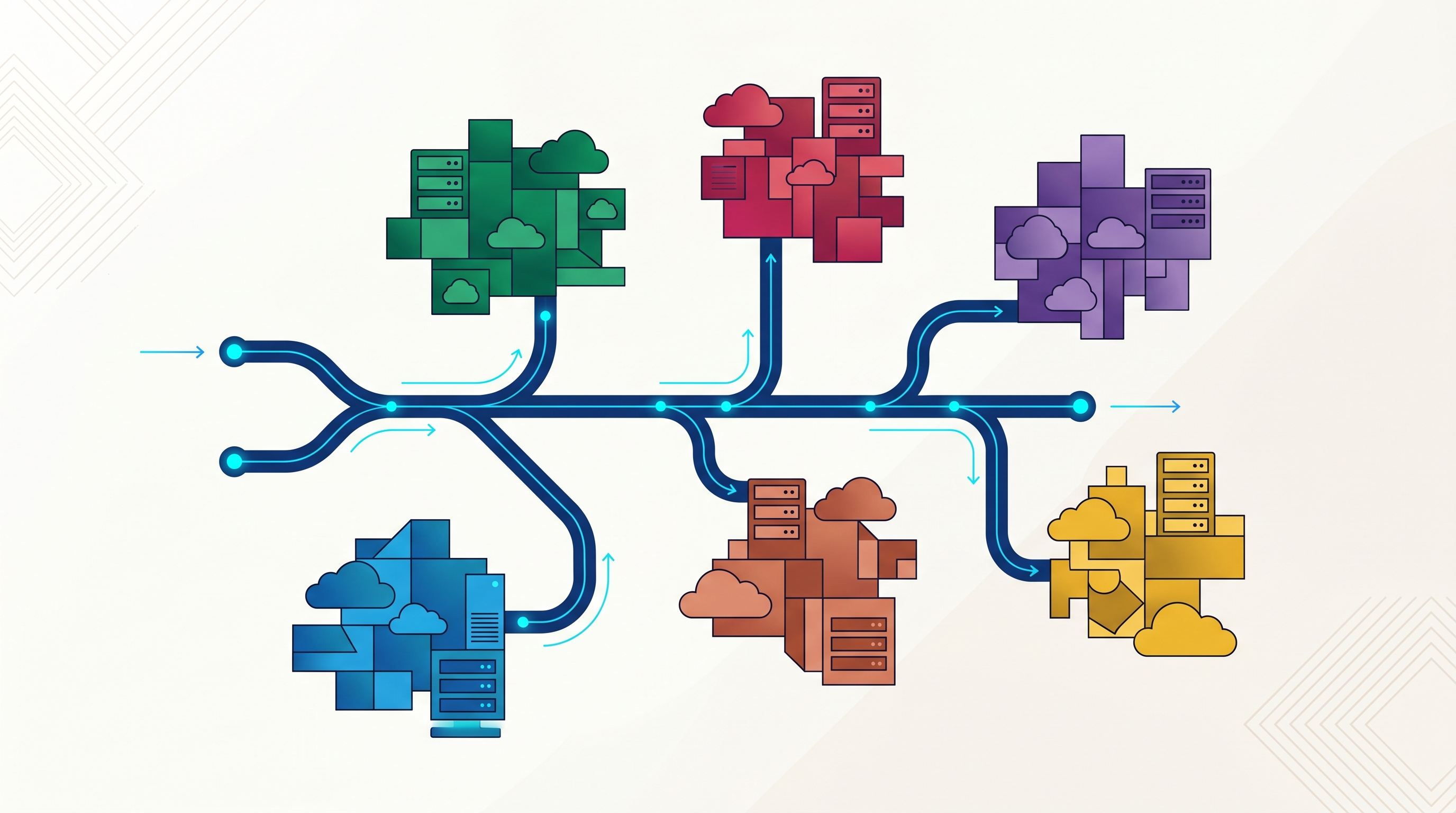
The Shifting Landscape of IaC State Management
Managing Terraform state is inherently risky. The state file contains a complete mapping of your physical and virtual infrastructure, often including sensitive secrets, database passwords, and architectural blueprints. In a collaborative DevOps environment, securely sharing this state, preventing concurrent modification races via state locking, and maintaining an audit trail are absolute necessities.
Terraform Cloud (TFC) has long been the default solution, offering managed state, remote execution, and policy enforcement. However, changes in its pricing model—shifting towards Resource Under Management (RUM) pricing—have caused cloud budgets to inflate rapidly for organizations with massive, ephemeral infrastructure. As a result, engineering teams are aggressively migrating to alternatives that offer predictable pricing, support for open-source forks like OpenTofu, and deeper native integrations into their existing CI/CD ecosystems.
1. Spacelift: The Advanced Policy Engine
Spacelift has emerged as one of the most powerful continuous delivery platforms for IaC. It supports Terraform, OpenTofu, Pulumi, and CloudFormation, making it highly versatile for multi-tool environments.
Key Advantages
Open Policy Agent (OPA) Integration: Spacelift utilizes OPA for incredibly granular policy enforcement. You can write policies that block deployments if they exceed a certain cost threshold or violate security compliance frameworks, shifting security and FinOps "left" into the PR process.
Custom Workflows and Contexts: It allows for complex dependency mapping between different infrastructure stacks, ensuring that a database provisions successfully before the application tier attempts to deploy.
Predictable Pricing: Unlike TFC's RUM model, Spacelift often utilizes concurrency-based pricing, which is vastly more predictable for teams scaling their infrastructure footprints.
2. Env0: Developer Self-Service and Ephemeral Environments
Env0 focuses heavily on empowering developers with self-service infrastructure while maintaining strict administrative guardrails and cost controls.
Key Advantages
Ephemeral Environments with TTL: Env0 allows developers to spin up complete environments for testing and automatically tears them down via Time-to-Live (TTL) policies. This is a massive cost-saving feature, preventing "orphan" dev environments from silently draining budgets.
Cost Estimation via Infracost: Env0 natively integrates cost estimation directly into the pull request workflow. Before a developer merges code that deploys 50 new EC2 instances, they see the exact financial impact.
RBAC and Governance: It provides excellent role-based access control, ensuring that only authorized personnel can deploy to production, while developers have free rein within their sandbox environments.
3. Scalr: The Hierarchical Approach
Scalr positions itself as a robust alternative specifically built for large enterprises managing thousands of workspaces and complex organizational structures.
Key Advantages
Hierarchical Policy Enforcement: Scalr allows organizations to set policies at the global, departmental, and workspace levels. This top-down inheritance model simplifies governance across massive, decentralized engineering teams.
OpenTofu Native: Scalr was incredibly fast to adopt and natively support OpenTofu, ensuring that users migrating away from proprietary Terraform versions have a seamless landing zone.
Pricing Transparency: Scalr's pricing model is widely praised by FinOps practitioners for its straightforward, workspace-based scaling, completely avoiding the unpredictable traps of resource-based billing.
4. The DIY CI/CD Route: GitHub Actions / GitLab CI + S3/DynamoDB
For organizations with strong DevOps capabilities, bypassing dedicated IaC platforms entirely remains a highly viable and cost-effective strategy.
The Architecture
This approach involves utilizing standard CI/CD pipelines (like GitHub Actions or GitLab CI) to run terraform plan and terraform apply. State is managed via native cloud storage backends—such as an AWS S3 bucket combined with a DynamoDB table for state locking, or an Azure Storage Account with blob leasing.
Pros and Cons
The primary advantage is cost; you only pay pennies for S3 storage and standard CI minutes. The disadvantage is the engineering overhead. You must manually implement OPA policies, configure secure OIDC authentication between GitHub and AWS, and build your own PR commenting bots for plan visibility. However, for teams prioritizing extreme cost optimization and avoiding vendor lock-in, this remains the gold standard.
FinOps Integration: The Missing Link
Regardless of which state management backend or orchestrator you choose, IaC is the point of origin for cloud spend. If an engineer changes an instance type in a .tf file, that immediately impacts the monthly bill.
Connecting your IaC deployment pipeline with a FinOps intelligence platform like CloudAtler is crucial. By analyzing the infrastructure provisioned via these platforms, CloudAtler tracks the exact cost trajectory of every deployment. This synergy ensures that engineering velocity—enabled by tools like Spacelift or Env0—does not outpace financial governance, maintaining tight alignment between architectural decisions and business value.
Conclusion
The decision to migrate away from Terraform Cloud is increasingly driven by a desire for open-source alignment (OpenTofu) and predictable financial scaling. Whether you choose the granular policy control of Spacelift, the developer self-service of Env0, the enterprise hierarchy of Scalr, or a custom CI/CD pipeline, the goal remains the same: secure, collaborative, and cost-aware infrastructure deployment.
All in One Place
Atler Pilot decodes your cloud spend story by bringing monitoring, automation, and intelligent insights together for faster and better cloud operations.