
For the last decade, enterprises have been maintaining two separate and redundant data stacks:
The Data Lake (S3/ADLS): Cheap storage for unstructured data (logs, images, JSON).
Problem: No transactions. If a write fails halfway, you have corrupted files. No schemas. It's a swamp.
The Data Warehouse (Snowflake/Redshift): Expensive storage for structured data (SQL tables).
Problem: You can't put images here. And you have to ETL everything from the Lake to the Warehouse, doubling your storage costs and adding latency.
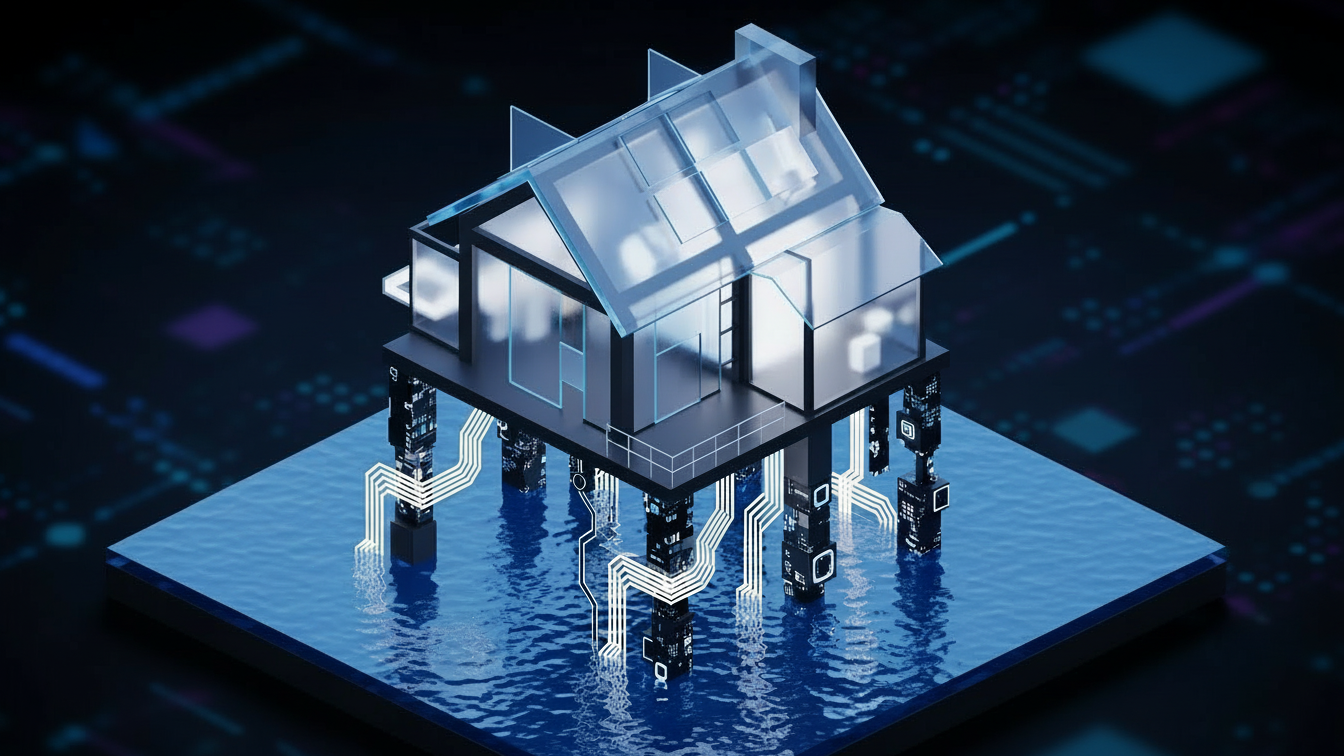
The Data Lakehouse unified these two. It gives you the low cost of S3 with the ACID Transactions and Performance of a Warehouse.
The Secret Sauce: "Table Formats"
S3 is immutable. You cannot UPDATE a file. You can only delete and rewrite.
Table Formats (Delta Lake, Iceberg, Hudi) solve this by adding a metadata layer (Transaction Log) on top of the Parquet files.
When you run UPDATE users SET name='Bob' WHERE id=1:
The engine writes a NEW Parquet file with Bob's new name.
It writes a JSON log entry saying: "Ignore File A. Read File B instead."
Part 1: The Three Kings (Format Wars)
1. Delta Lake (The Pioneer)
Created by Databricks. It was the first to bring ACID to Spark.
Pros: Insanely optimized for Spark. Features like Z-Ordering (spatial indexing) and Data Skipping make queries fast.
Cons: historically tightly coupled to Databricks (though Delta 3.0 is essentially open).
2. Apache Iceberg (The Open Standard)
Created by Netflix. Adopted by Apple, Amazon, and Snowflake.
Pros: Hidden Partitioning (you don't need to know the physical folder structure). Schema Evolution (you can rename columns without rewriting data).
Cons: Slightly slower write performance compared to Hudi.
3. Apache Hudi (The Streaming Specialist)
Created by Uber.
Pros: Designed for "Upserts" (Update/Insert) at massive scale. Great for streaming ingestion (CDC).
Cons: High operational complexity.
Feature Showdown: Delta vs Iceberg vs Hudi
Feature
Delta Lake
Apache Iceberg
Apache Hudi
Primary Backer
Databricks
Netflix/Apple
Uber
DML Support
Excellent (Merge/Update)
Good (Merge-on-Read)
Best (Upserts)
Ecosystem
Spark Driven
Engine Agnostic (Trino, Snowflake)
Streaming First
Part 2: The Medallion Architecture
The standard design pattern for a Lakehouse is the "Bronze-Silver-Gold" pipeline.
Bronze Layer (Raw):
Dump everything here. JSON logs, IoT streams. Don't validate schemas. Just capture the history.
"The source of truth."
Silver Layer (Cleansed):
Filter out bad data. Deduplicate. Convert JSON to Parquet/Delta. Add constraints (non-null).
"The enterprise data asset."
Gold Layer (Aggregated):
Business-level aggregates. "Daily Sales per Region." "Churn Prediction."
"Ready for BI Dashboards."
Part 3: Time Travel (Zero-Copy Cloning)
Because the Lakehouse never deletes old files (it just marks them into history logs), you can query the database as it existed in the past.
SQL
-- Query the table as of yesterday
SELECT * FROM my_table TIMESTAMP AS OF '2023-10-25 10:00:00';

-- Restore a table after a bad DELETE
RESTORE TABLE my_table TO VERSION AS OF 123;
Deep Dive: The "Small File" Problem
If you stream data into a Data Lake (1 record every second), you end up with millions of tiny 1KB Parquet files (one per second).
The Impact: Reading millions of tiny files is slow (Latency hell).
The Fix (Compaction): You must run a background job (Vacuum/Optimize) to merge these tiny files into larger 1GB files.
Delta Lake does this automatically with OPTIMIZE.
SQL
-- Spark SQL command to compact small files
OPTIMIZE events_table
ZORDER BY (user_id);

-- Remove old history files (older than 7 days) to save storage
VACUUM events_table RETAIN 168 HOURS;
This is critical for Reproducible AI. You need to prove that your model was trained on the data available at that time, not future data.
Part 4: Why AI Researchers Love Lakehouses
In a traditional Warehouse, your images are outside and your labels are inside. Training a model requires a complex join.
In a Lakehouse, the image paths and the labels sit in the same storage tier. You can mount the Lakehouse directly to PyTorch/TensorFlow.
Zero-Copy Cloning: You can create a "Clone" of a Petabyte production database for your experiment. It costs $0 because it just points to the existing files. You can mess it up, delete rows, and test your model without affecting production.
Part 5: Expert Interview
Topic: The Migration from Warehouse to Lakehouse
Guest: Sarah J., Data Platform Lead at a Fintech Unicorn.
Interviewer: Why did you leave Snowflake for Databricks?
Sarah J: Cost. We were spending $50k/month just storing JSON logs in Snowflake. By moving raw logs to S3 (Delta Lake), our storage cost dropped to $2k/month. We only pay for compute when we actually query it.
Interviewer: Was it hard?
Sarah J: The hardest part was governance. In a Warehouse, you have GRANT SELECT. In a Data Lake, you have AWS IAM Roles, S3 Bucket Policies, and Table ACLs. It's a mess. But Unity Catalog is fixing that.
Deep Dive: Lakehouse vs Data Mesh
Don't confuse architecture (Lakehouse) with organizational structure (Data Mesh).
Lakehouse: The Technology. (S3 + Delta).
Data Mesh: The People. (Decentralized teams owning their own domains).
You can build a Data Mesh on top of a Lakehouse. Domain A owns Bucket A. Domain B owns Bucket B. They share data via open protocols (Delta Sharing) without moving it.
The Cost Optimization Checklist:
[ ] Storage Tiering: Move data older than 30 days to S3 Infrequent Access (save 40%).
[ ] Spot Instances: Run your ETL jobs on Spot Instances (save 80%).
[ ] Auto-Termination: Kill Spark clusters after 10 minutes of inactivity.
[ ] Column Pruning: Don't read SELECT *. Parquet is columnar. Read only what you need.
[ ] Compression: Use Snappy or ZSTD. Smaller files = Less I/O = Cheaper queries.
Part 6: Glossary
ACID: Atomicity, Consistency, Isolation, Durability.
Parquet: A columnar file format optimized for analytics.
Partition Evolution: The ability to change how data is grouped (e.g., from 'Month' to 'Day') without rewriting old files.
Z-Ordering: A technique to co-locate related information in the same set of files to minimize I/O.
CDC: Change Data Capture. Streaming database changes.
Medallion Architecture: The Bronze/Silver/Gold data quality progression.
Manifest File: A JSON file listing all the Parquet files that make up a specific version of the table.
The Future: Serverless Lakehouses
We are moving toward "Serverless Lakehouses" (Databricks SQL Serverless, Snowflake). You don't manage clusters. You don't manage vacuuming. You just write SQL. The infrastructure is invisible. This is the final step in the evolution from "Hadoop" (Manage everything) to "Serverless" (Manage nothing).
Furthermore, as AI Agents begin to query data autonomously, the Lakehouse provides the necessary semantic layer. An Agent doesn't know where the file is, but it knows the Table Schema. The Lakehouse creates a safe, governed playground for AI to explore enterprise data without breaking things.
Warning: The Vacuum Trap
Be careful with VACUUM. If you set the retention period to 0 hours, you delete the history immediately.
If a long-running job is still reading that old file, it will crash with FileNotFoundException.
Best Practice: Keep at least 7 days of history (168 hours) to allow for rollbacks and safe concurrent reads.
SQL
/* Pro Tip: Delta Live Tables (DLT) */
/* Stop writing manual `INSERT INTO` statements. Use DLT (Declarative ETL). */
/* You define the state you want ("I want this Silver table to be a clean version of that Bronze table"), */
/* and the engine handles the orchestration, retries, and error handling automatically. It treats Data Pipelines as Code. */
Conclusion
The Data Warehouse is dead. Long live the Data Lakehouse.
All in One Place
Atler Pilot decodes your cloud spend story by bringing monitoring, automation, and intelligent insights together for faster and better cloud operations.