
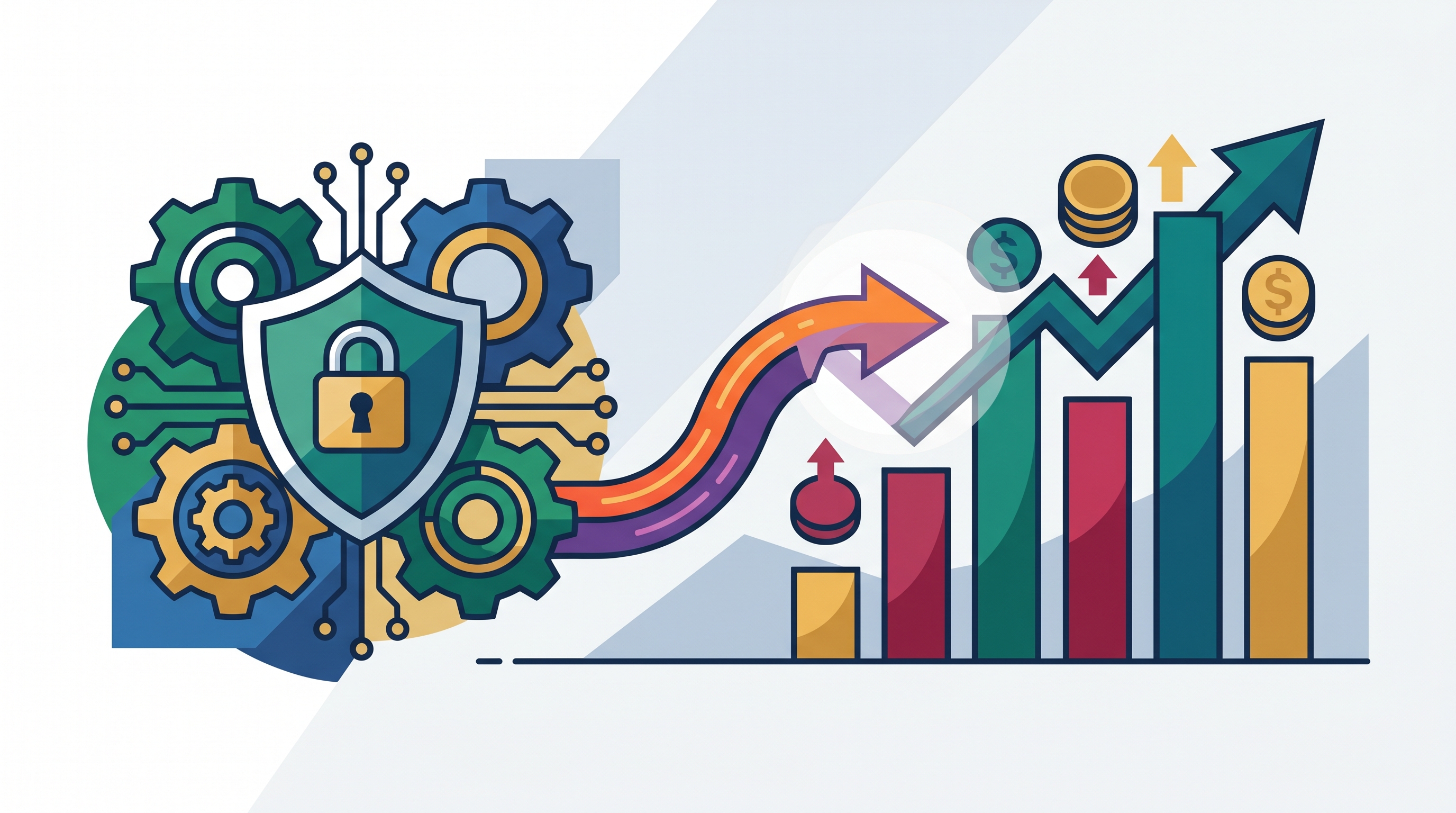
The Economics of Vulnerability Remediation
The imperative to "shift left" in software development—moving security practices, testing, and validation as early in the lifecycle as possible—is universally acknowledged as a best practice for risk mitigation. However, the discourse surrounding this paradigm shift is overwhelmingly dominated by security metrics: reduced attack surfaces, faster time-to-remediate (TTR), and compliance adherence. What is frequently missing from the conversation, and what this technical analysis addresses, is the profound and quantifiable financial impact of shifting left. In modern cloud architectures, a vulnerability is not merely a security risk; it is a vector for catastrophic financial hemorrhage. The intersection of DevSecOps and FinOps reveals that the most effective cost-optimization strategy is often a robust, automated security posture embedded directly into the CI/CD pipeline.
The traditional model of cloud security relied heavily on "shifting right"—deploying robust, expensive perimeter defenses such as Web Application Firewalls (WAF), Intrusion Detection Systems (IDS), and continuous runtime scanning. While these controls remain necessary, relying on them as the primary defense mechanism is economically inefficient. When an insecure configuration or vulnerable dependency reaches production, the organization incurs the cost of the compute resources running the flawed code, the cost of the perimeter defenses actively blocking exploits against it, and the exponentially higher cost of engineering time required to patch it in a live environment.
Defining "Shift Left" in a DevSecOps Context
Shifting left is not a single tool; it is an architectural philosophy that integrates security controls into the developer's immediate workflow. Technically, this manifests through a series of automated gates within the Continuous Integration and Continuous Deployment (CI/CD) pipeline.
At the earliest stage, it involves IDE plugins that analyze code in real-time. It progresses to pre-commit hooks executing Static Application Security Testing (SAST) and Software Composition Analysis (SCA) to identify vulnerable third-party libraries. Crucially, in cloud-native environments, it involves Infrastructure as Code (IaC) scanning. Tools like Checkov or OPA (Open Policy Agent) analyze Terraform or CloudFormation templates before they are applied, ensuring that S3 buckets are not public, IAM roles are strictly scoped, and encryption is enabled by default.
The financial thesis of shifting left is simple: preventing a misconfiguration from being deployed costs a fraction of a cent in CI/CD compute time. Detecting and remediating that same misconfiguration in production can cost thousands of dollars in incident response, wasted infrastructure spend, and potential data exfiltration penalties.
The Cost Curve of Software Defect Rectification
Barry Boehm’s classic software engineering curve posits that the cost of fixing a defect increases exponentially as the software progresses through the development lifecycle. This curve is radically amplified in the cloud era. Let us quantify this in a modern context.
If a developer introduces an overly permissive IAM policy in a Terraform module and catches it locally via a pre-commit hook (Shift Left), the cost to fix is essentially zero—perhaps 30 seconds of the developer's time. If the code passes to the Pull Request stage and is caught by a peer reviewer or an automated CI pipeline scan, the cost increases slightly, representing the compute time of the CI runner and a few minutes of review time (approx. $5 - $10).
However, if that same flawed Terraform code is deployed to a production AWS environment (Shift Right), the financial consequences explode. The overly permissive IAM role might be exploited by a bad actor who provisions 50 p4d.24xlarge instances for cryptomining. Before the anomaly is detected by GuardDuty and the incident response team shuts it down 12 hours later, the organization has incurred an AWS bill of over $19,000 for the compute alone, not factoring in the salaries of the incident responders or the potential regulatory fines. The shift-left mechanism (the IaC scan) transforms a potential $20,000 disaster into a $0.05 CI/CD execution cost.
Traditional Security Architecture: The Gateway Model's Financial Flaws
To understand the savings, we must analyze the costs of the alternative. The traditional "gateway" model relies on heavy inspection of traffic entering the VPC. Organizations deploy fleets of third-party Next-Generation Firewalls (NGFW) or heavy utilization of cloud-native WAFs.
Consider a microservice with a known SQL injection vulnerability. If this service is deployed to production, the security team must write a complex Regex rule in the WAF to block malicious payloads targeting that specific endpoint. AWS WAF charges $1.00 per rule per month and, more significantly, $0.60 per million requests inspected. If the API receives 1 billion requests a month, the WAF inspection cost is $600/month purely to protect the vulnerable endpoint.
If, instead, a SAST tool caught the SQL injection vulnerability during the build phase and forced the developer to implement parameterized queries, the vulnerability would never reach production. The WAF rule would be unnecessary, saving the $600/month in inspection costs, reducing latency for the end-user, and permanently eliminating the risk. Shifting left is the ultimate mechanism for reducing runtime security infrastructure costs.
Infrastructure as Code (IaC) Scanning: The First Line of Financial Defense
Infrastructure as Code is the blueprint of the cloud. Consequently, IaC scanning is arguably the most impactful shift-left practice for direct FinOps outcomes. Misconfigured IaC not only creates security vulnerabilities; it frequently creates massive financial waste.
A common scenario involves the provisioning of EBS volumes. A developer might write a Terraform template requesting a 2TB io2 Block Express volume with 64,000 IOPS for a simple test database, fundamentally misunderstanding the pricing model. This single volume costs over $4,000 per month. Without IaC scanning, this infrastructure is deployed, and the finance team discovers the error 30 days later when the AWS bill arrives.
An advanced shift-left pipeline integrates FinOps policies alongside security policies. Using tools like Infracost integrated into the PR process, the pipeline automatically calculates the estimated monthly cost of the Terraform changes. The CI system can be configured to block the merge if the infrastructure cost exceeds a predefined budget or if expensive, unapproved instance types are utilized. This proactive governance, championed by platforms like CloudAtler, prevents budget overruns before the cloud provider's meter even starts ticking.
Static Application Security Testing (SAST) and Developer Productivity
SAST tools analyze source code for vulnerabilities without executing it. While the direct infrastructure savings of SAST are harder to quantify than IaC scanning, the indirect savings in engineering productivity are massive.
In a shift-right model, vulnerabilities are often discovered by periodic penetration tests or dynamic scanners (DAST) running against staging environments weeks after the developer wrote the code. When a critical vulnerability is reported, the developer must context-switch back to old code, understand the flaw, write a fix, and push it through the entire testing pipeline again. Context-switching is the enemy of engineering velocity, and lost velocity translates directly to increased payroll costs per feature delivered.
By shifting SAST into the IDE or the immediate PR check, the feedback loop is reduced from weeks to seconds. The developer fixes the vulnerability while the context is fresh. This efficiency is a core tenet of FinOps—optimizing not just the cloud bill, but the total cost of delivering software.
Dynamic Application Security Testing (DAST) vs. Cloud Costs
DAST tools interact with a running application, simulating attacks to identify vulnerabilities. In a traditional workflow, massive DAST scans are run against staging environments over the weekend. These scans are resource-intensive. They generate millions of HTTP requests, forcing the staging infrastructure to scale up to handle the load.
If an organization mirrors production in staging (a common, albeit expensive, practice), running a heavy DAST scan might spin up dozens of EC2 instances and generate massive database IOPS. The cloud cost of running the security test itself becomes a significant line item.
By shifting left and relying more heavily on SAST, interactive application security testing (IAST), and unit-level security tests, the reliance on heavy, infrastructure-punishing DAST scans can be reduced. This allows organizations to downsize their staging environments or utilize ephemeral, scale-to-zero environments for targeted testing, driving down the non-production cloud spend significantly.
Container Image Scanning: Preventing Bloat and Billed Vulnerabilities
Modern applications are delivered as container images. These images often contain hundreds of third-party libraries and OS packages. Container scanning tools analyze these images for known CVEs (Common Vulnerabilities and Exposures).
Shifting container scanning left means analyzing the image during the CI build process, before it is pushed to a registry like Amazon ECR. If a critical CVE is found, the build fails. The financial implication here relates to storage and data transfer. If vulnerable, unoptimized images (often gigabytes in size due to unnecessary base OS packages) are continuously pushed to ECR and pulled by Kubernetes worker nodes, the organization pays for the ECR storage and the inter-AZ data transfer costs associated with pulling massive images.
A rigorous shift-left process forces developers to use minimal base images (like Alpine or distroless), explicitly defining dependencies. This not only eliminates CVEs but drastically reduces the image size. A reduction from a 1GB image to a 100MB image, multiplied by thousands of deployments per day across hundreds of worker nodes, results in tangible reductions in ECR storage fees and network egress charges.
The FinOps Implications of Automated Remediation
The zenith of shifting left is automated remediation. It is not enough to simply detect a vulnerability; the system should automatically generate the fix. Tools like Dependabot or Renovate scan repositories for outdated, vulnerable libraries and automatically generate Pull Requests with the updated versions.
From a FinOps perspective, this automation replaces highly compensated engineering labor. If a new zero-day vulnerability (like Log4Shell) is announced, a traditional organization might pull 20 engineers off product development for a week to manually audit repositories, update dependencies, and run tests. This represents tens of thousands of dollars in diverted engineering effort. An organization with mature, shift-left automated remediation can patch hundreds of repositories across the enterprise in hours, with minimal human intervention, preserving the engineering budget for feature development.
Deep Dive: AWS Security Hub and GuardDuty Cost Optimization
AWS provides robust runtime security tools like Security Hub and GuardDuty. However, these tools analyze cloud events and configurations after they happen. GuardDuty analyzes VPC Flow Logs, CloudTrail logs, and DNS logs. You pay for the volume of data analyzed.
If your infrastructure is poorly configured—for example, if you have hundreds of security groups with wide-open ports (0.0.0.0/0) generating massive amounts of noisy, unsolicited inbound traffic from the internet—GuardDuty has to process all of those flow logs. This drives up your GuardDuty bill significantly.
By shifting left and using IaC scanning to prevent overly permissive security groups from ever being deployed, you inherently reduce the volume of anomalous traffic hitting your VPC. This directly reduces the volume of log data that tools like GuardDuty and Security Hub must process, leading to a direct reduction in the monthly AWS security bill. This correlation is a prime example of how proactive security creates downstream financial efficiency.
Deep Dive: The Hidden Costs of WAF Rules and "Shift Right" Security
Let us re-examine the Web Application Firewall. WAFs are essential, but they are often used as a crutch for poor application security. When a vulnerability cannot be fixed in the code (perhaps it's a legacy system), a WAF rule is deployed to "virtual patch" it.
This virtual patching is financially toxic. Complex WAF rules, especially those utilizing regular expressions to inspect large request bodies, consume significant compute resources within the WAF infrastructure. While AWS WAF pricing is relatively flat per request, aggressive use of custom Regex rules can lead to increased latency, which in turn requires backend systems to scale up to handle the delayed processing, increasing compute costs.
Furthermore, WAFs generate massive amounts of log data. Every request blocked by a WAF rule generates a log entry. If a botnet is hammering a vulnerable endpoint, the WAF logs can generate terabytes of data in CloudWatch or S3, leading to massive storage and ingestion fees. By shifting left and fixing the vulnerability in the code, the endpoint no longer requires the complex WAF rule, the bot traffic is handled efficiently by the application layer (or dropped at the edge without complex inspection), and the associated logging costs plummet.
Shifting Left on IAM: Least Privilege as a FinOps Strategy
Identity and Access Management (IAM) is the perimeter of the cloud. The principle of Least Privilege dictates that an entity should only have the exact permissions necessary to perform its function. In practice, developers often use wildcard permissions (e.g., s3:* or dynamodb:*) during development to move quickly, intending to restrict them later.
If these overly permissive roles make it to production, they create a massive blast radius. If an application with ec2:* permissions is compromised, the attacker can provision massive infrastructure for cryptomining (as discussed earlier). But even without malicious intent, overly permissive roles create FinOps risks. A poorly written script running with s3:* might accidentally enter an infinite loop, creating millions of S3 buckets or making billions of PUT requests, racking up massive API charges.
Shifting IAM security left involves using tools like AWS IAM Access Analyzer in the CI pipeline to mathematically validate that the IAM policies defined in Terraform do not grant excessive permissions. By enforcing Least Privilege at the deployment boundary, you drastically limit the maximum potential financial damage a compromised or buggy application can inflict.
The Financial Impact of Compliance Audits and Shift Left Evidence
Enterprise organizations spend millions of dollars annually preparing for and executing compliance audits (SOC 2, PCI-DSS, HIPAA). A significant portion of this cost is the labor required to gather evidence proving that security controls are in place and effective.
In a traditional environment, proving that vulnerabilities are patched promptly requires manually extracting data from various ticketing systems, scanners, and deployment logs—a grueling, expensive process. A mature shift-left DevSecOps pipeline automatically generates this evidence as a byproduct of the software delivery process.
When every deployment is gated by an automated vulnerability scan, and the results of those scans are immutably logged in the CI/CD platform, the audit process becomes trivial. The organization can programmatically prove to auditors that no code is deployed without passing security checks. This automation drastically reduces the billable hours charged by external auditors and minimizes the internal engineering time wasted on compliance fire drills, generating massive, indirect financial savings.
Integrating CloudAtler: Correlating Security Posture with Spend
The true power of this paradigm shift is realized when security telemetry and financial telemetry are unified. Platforms like CloudAtler are pioneering this integration. CloudAtler ingests data from shift-left security tools (like Snyk or Checkov) and correlates it with the AWS Cost and Usage Report.
This allows organizations to generate unprecedented insights. For example, CloudAtler can calculate the "Financial Risk Exposure" of a specific microservice. If an application has three critical CVEs and is running on infrastructure costing $10,000/month, the platform can prioritize the remediation of that specific application over an application with similar CVEs running on $100/month infrastructure. It enables organizations to prioritize security investments based on actual financial exposure rather than abstract CVSS scores.
Furthermore, CloudAtler can track the ROI of the shift-left initiative itself. By measuring the decrease in runtime security costs (WAF, GuardDuty) and correlating it with the increase in automated CI/CD scans, organizations can definitively prove the financial efficacy of their DevSecOps transformation.
The Tooling Sprawl: The Irony of Expensive Security Tools
A critical nuance in the FinOps of shift-left is managing the cost of the security tools themselves. The market is flooded with commercial SAST, DAST, SCA, and CSPM (Cloud Security Posture Management) vendors. Licensing these tools across thousands of developers can cost millions of dollars.
The irony is palpable: an organization might spend $500,000 on a shift-left security suite to prevent $100,000 in cloud misconfigurations. FinOps principles must be applied to the DevSecOps tooling architecture. Organizations must carefully evaluate the Total Cost of Ownership (TCO) of commercial tools against robust open-source alternatives like Trivy (for container scanning), Semgrep (for SAST), and Checkov (for IaC).
Often, a hybrid approach is the most economically viable. Leveraging open-source tools for the high-volume, automated pipeline scans, and reserving expensive commercial licenses for specialized, deep-dive analysis by the core security team. Managing this tooling sprawl is a critical component of ensuring the shift-left strategy remains financially net-positive.
Real-world Case Study: The Cryptomining Exploit and the CI/CD Pipeline
A mid-sized SaaS company suffered a devastating security breach. An engineer accidentally committed an AWS IAM Access Key to a public GitHub repository. Within 4 minutes, automated bots scraped the key and utilized it to provision 200 high-end GPU instances across multiple AWS regions for cryptomining.
The attack was detected by AWS GuardDuty 8 hours later. The resulting AWS bill was $45,000. The incident response, forensic analysis, and subsequent security audit cost the company an additional $80,000 in external consulting fees. The total financial impact of a single exposed key was $125,000.
Following the incident, the company implemented a strict shift-left policy. They deployed a pre-commit hook (like Talisman or git-secrets) on every developer's machine to scan for high-entropy strings and known API key formats before a commit could be created. They also integrated a secret-scanning action into their GitHub PR pipeline. The cost of implementing these open-source tools was purely internal engineering time (approximately 40 hours, or roughly $3,000). This $3,000 shift-left investment acts as a permanent, automated safeguard against a $125,000 financial catastrophe.
Real-world Case Study: Shifting Left to Reduce AWS WAF Spend
A large media enterprise operating a highly trafficked content delivery platform noticed their AWS WAF costs spiraling out of control, exceeding $30,000 per month. Analysis revealed that the vast majority of the WAF evaluations were triggering on thousands of complex, custom rules written to protect legacy API endpoints from cross-site scripting (XSS) and SQL injection attacks.
The security team partnered with the FinOps team to execute a targeted shift-left remediation project. Instead of paying the perpetual "WAF tax," they allocated engineering resources to refactor the legacy APIs, implementing strict input validation, parameterized queries, and robust output encoding—fixing the vulnerabilities at the source code level.
The refactoring effort took two months and cost approximately $50,000 in engineering time. Once deployed, the security team was able to decommission 80% of the custom WAF rules, relying only on the baseline AWS Managed Rules. The monthly WAF bill dropped from $30,000 to $4,000. The $50,000 engineering investment yielded an annual savings of over $300,000. This case study perfectly illustrates the massive ROI generated by shifting security left and eliminating reliance on expensive runtime gateways.
Developer Friction: The Unseen Cost of Poorly Implemented Shift Left
While the financial benefits of shifting left are substantial, they can be entirely negated if the implementation creates excessive developer friction. If a SAST tool generates a 90% false-positive rate, developers will spend hours investigating phantom vulnerabilities. If a container scan takes 45 minutes to run, the CI/CD pipeline grinds to a halt, destroying engineering velocity.
Lost engineering velocity is a massive financial drain. If a team of 100 developers loses 1 hour per week dealing with poorly tuned security gates, the organization is losing approximately $500,000 annually in wasted engineering time. The FinOps mandate requires that security tools be rigorously tuned, false positives aggressively suppressed, and scans optimized for speed. Shifting left must empower developers, not paralyze them. The financial success of the initiative depends entirely on the seamless, frictionless integration of security into the development workflow.
Measuring the ROI of a DevSecOps Transformation
To justify the investment in DevSecOps tooling and the necessary cultural shifts, organizations must establish clear financial KPIs. The ROI is not calculated merely by adding up the cloud costs saved. It is a multi-dimensional formula:
ROI = (Avoided Breach Costs + Reduced Runtime Security Infrastructure Costs + Reduced Audit/Compliance Costs + Engineering Time Saved via Automation) - (Cost of DevSecOps Tools + Cost of Implementation Engineering)
By tracking metrics such as the decrease in vulnerabilities reaching production, the reduction in WAF/GuardDuty spend, the decrease in average time-to-remediate (TTR), and the engineering hours saved by automated dependency updates, organizations can mathematically prove the value of shifting left.
In conclusion, the practice of shifting security left is a financial imperative disguised as a security best practice. In the cloud, compute is metered, bandwidth is metered, and security inspection is metered. Every vulnerability that escapes the CI/CD pipeline forces the organization to pay for the compute to run the flaw, the infrastructure to defend it, and the labor to patch it. By embedding rigorous, automated security controls into the earliest stages of software development, organizations drastically reduce their cloud infrastructure costs, optimize their engineering resources, and insulate themselves from the catastrophic financial impacts of a security breach.
All in One Place
Atler Pilot decodes your cloud spend story by bringing monitoring, automation, and intelligent insights together for faster and better cloud operations.