
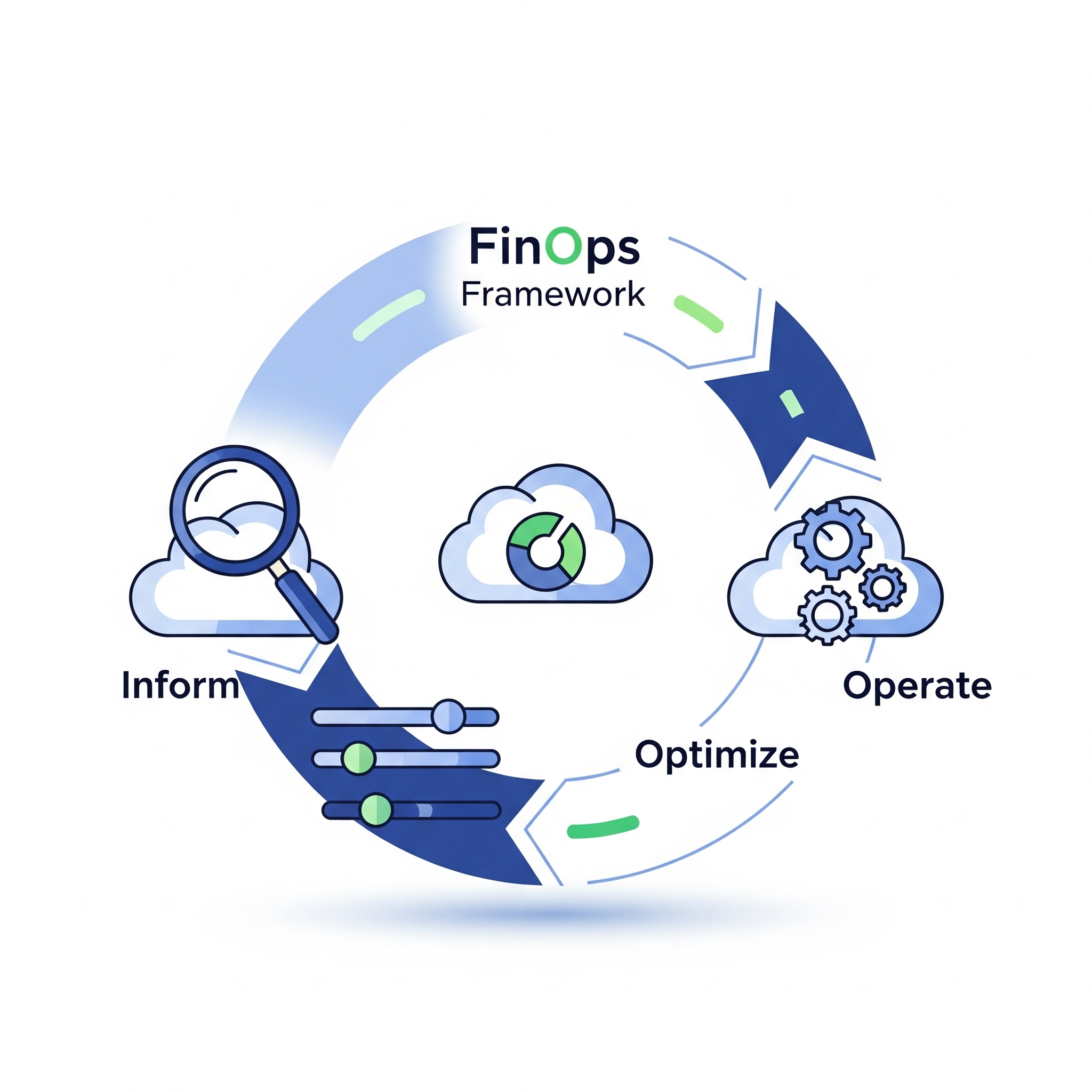
As cloud adoption has matured, so has the need for a systematic approach to managing its costs. This is where the FinOps framework comes in. It's not a piece of software or a single team's job; it's a cultural and operational shift that brings financial accountability to the variable spend model of the cloud. The FinOps lifecycle, managed by the FinOps Foundation, provides a clear, iterative process for organizations to follow.
The Three Phases of the FinOps Lifecycle
The framework is built around a continuous cycle of Inform, Optimize, and Operate.
1. Inform
This is the foundation of everything. The goal is to provide complete visibility into cloud spending. It's about answering the question, "What are we spending, and why?" This phase involves:
Allocation: Accurately assigning 100% of costs to teams and business units.
Benchmarking: Comparing your costs and efficiency against industry peers.
Forecasting: Predicting future spend based on historical data and business plans.
2. Optimize
Once you have visibility, you can begin to optimize. This phase is about making your cloud usage more efficient. This includes:
Resource Optimization: Right-sizing EC2 instances, terminating idle resources, and leveraging automation.
Rate Optimization: Taking advantage of commitment-based discounts like Savings Plans and Reserved Instances.
3. Operate
This phase is about aligning your cloud operations with your business objectives. It involves:
Continuous Improvement: Regularly reviewing costs and efficiency metrics.
Business Value Alignment: Connecting cloud spend to key performance indicators (KPIs) and understanding cloud unit economics.
Cross-Functional Collaboration: Building a shared understanding and language between Engineering, Finance, and Product teams.
Adopting the FinOps framework is a journey, not a destination. It requires a commitment to cultural change, supported by a powerful cloud cost management software that can provide the visibility and automation needed to succeed.
All in One Place
Atler Pilot decodes your cloud spend story by bringing monitoring, automation, and intelligent insights together for faster and better cloud operations.