
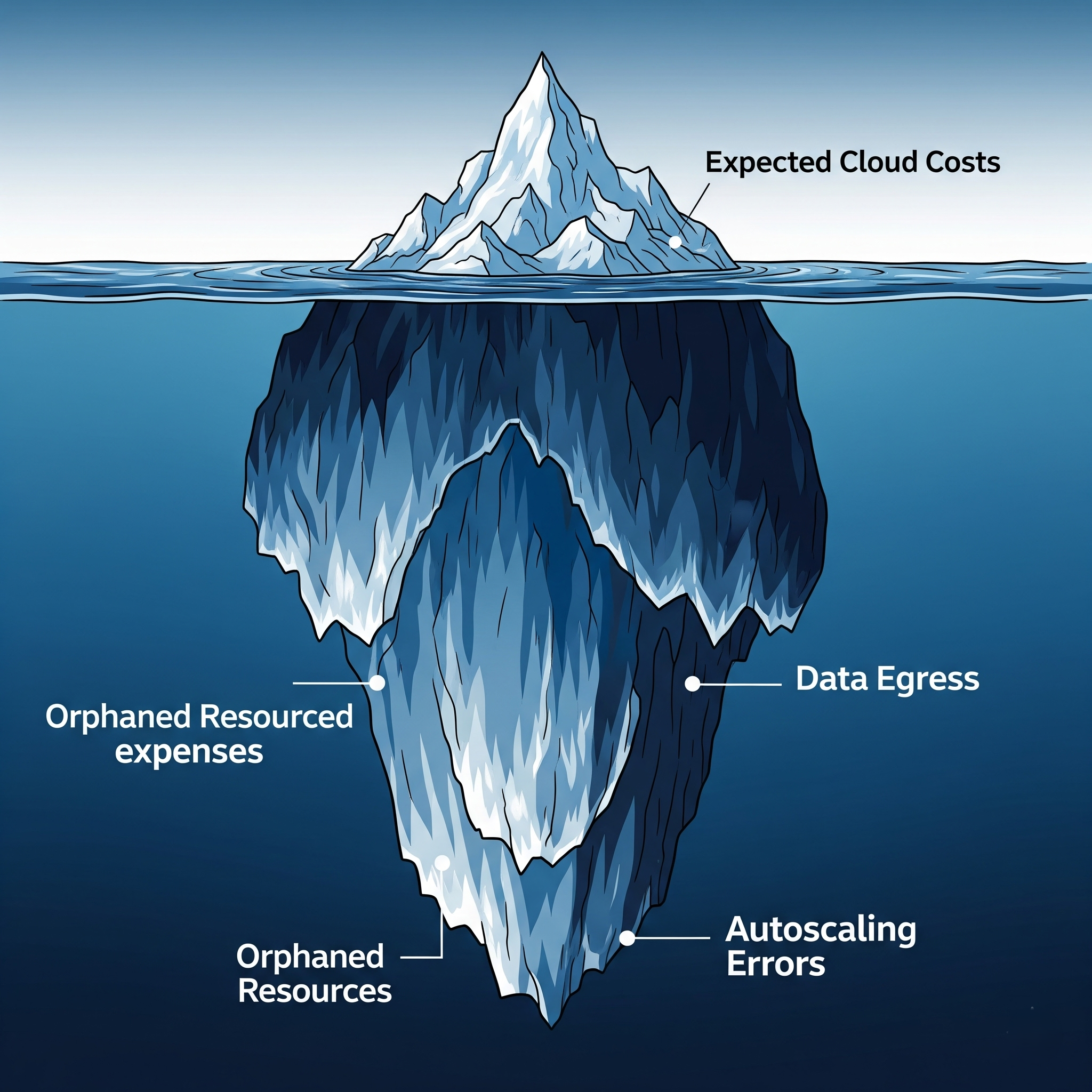
The promise of the cloud is flexibility and scalability, paying only for what you use. However, this pay-as-you-go model has a significant downside: unpredictability. Cloud bill shock is the painful experience of receiving a monthly bill from AWS, GCP, or Azure that is dramatically higher than anticipated. It's a common problem that can strain budgets and create friction between finance and engineering. Preventing bill shock requires moving from a reactive to a proactive stance on cloud financial management. This guide explores the common causes of surprise cloud bills and outlines the essential best practices to regain control.
Common Causes of Cloud Bill Shock
Unexpected cost spikes are rarely due to a single, obvious cause but rather several factors accumulating unnoticed.
Orphaned and Idle Resources: When a developer spins up a server for a test and forgets to terminate it, or an EBS volume remains after its EC2 instance is deleted, these "zombie" assets continue to accrue charges 24/7.
Autoscaling Misconfigurations: A poorly configured autoscaling policy can lead to disaster. A small bug could trigger a scale-out event that never scales back in, leaving hundreds of unnecessary instances running for weeks.
Data Egress Fees: Data transfer costs, especially for data moving out to the internet, are notoriously difficult to predict. A new feature that serves large files can cause these costs to skyrocket.
Logging and Monitoring Overages: Services like AWS CloudWatch or Datadog can become very expensive if not managed carefully. A developer switching a service to a DEBUG logging level in production can generate terabytes of log data, leading to a massive overage.
Lack of Visibility and Ownership: The root cause of most bill shock is a lack of clear ownership. When engineers cannot see the cost impact of their actions, waste is almost inevitable.
Best Practices for Preventing Bill Shock
A robust strategy for preventing bill shock is built on the core FinOps principles of visibility, accountability, and optimization.
1. Establish Granular, Real-Time Visibility
You cannot control what you cannot see. The 30-day billing cycle is too long a feedback loop.
Implement Real-Time Anomaly Detection: Use a cloud cost intelligence platform that uses machine learning to monitor your spending in real-time. These tools establish a baseline and send immediate alerts (e.g., via Slack) the moment a significant cost spike is detected.
Use a Rigorous Tagging Strategy: Enforce a mandatory tagging policy where every resource is tagged with an owner, team, and project. This is the only way to understand who is spending what, and why.
2. Right-Size and Eliminate Waste Continuously
Make waste reduction an ongoing process.
Right-Size Your Resources: Continuously analyze the utilization of your compute and database instances. Use monitoring data to downsize instances to match their actual needs.
Automate Shutdowns: For non-production environments (development, staging), implement automated scripts to shut them down outside of business hours. This simple step can reduce costs by over 70%.
3. Leverage Commitment Discounts Strategically
For predictable workloads, On-Demand pricing is unnecessarily expensive.
Use Savings Plans and Reserved Instances: Commit to a 1 or 3-year term for your stable workloads to achieve discounts of up to 72%. A data-driven approach, guided by a FinOps tool, can help you make these commitments confidently.
4. Create a Culture of Cost Awareness
The most effective way to prevent bill shock is to make cost a shared responsibility.
Empower Engineers with Data: Give them access to dashboards that show the cost of the specific services they own.
Integrate Cost into the Workflow: "Shift left" by providing cost estimates directly in the CI/CD pipeline. When a developer can see that their pull request will increase monthly costs, they are empowered to make a more cost-effective choice.
Establish Governance Policies: Create clear rules for who can provision resources and implement budget alerts and approval workflows.
Conclusion
Cloud bill shock is a symptom of a lack of visibility and accountability. By implementing real-time monitoring, fostering a culture where engineers are empowered with cost data, and automating the removal of waste, organizations can transform their cloud spending from a source of unpredictable shocks into a manageable and strategic advantage.
All in One Place
Atler Pilot decodes your cloud spend story by bringing monitoring, automation, and intelligent insights together for faster and better cloud operations.