
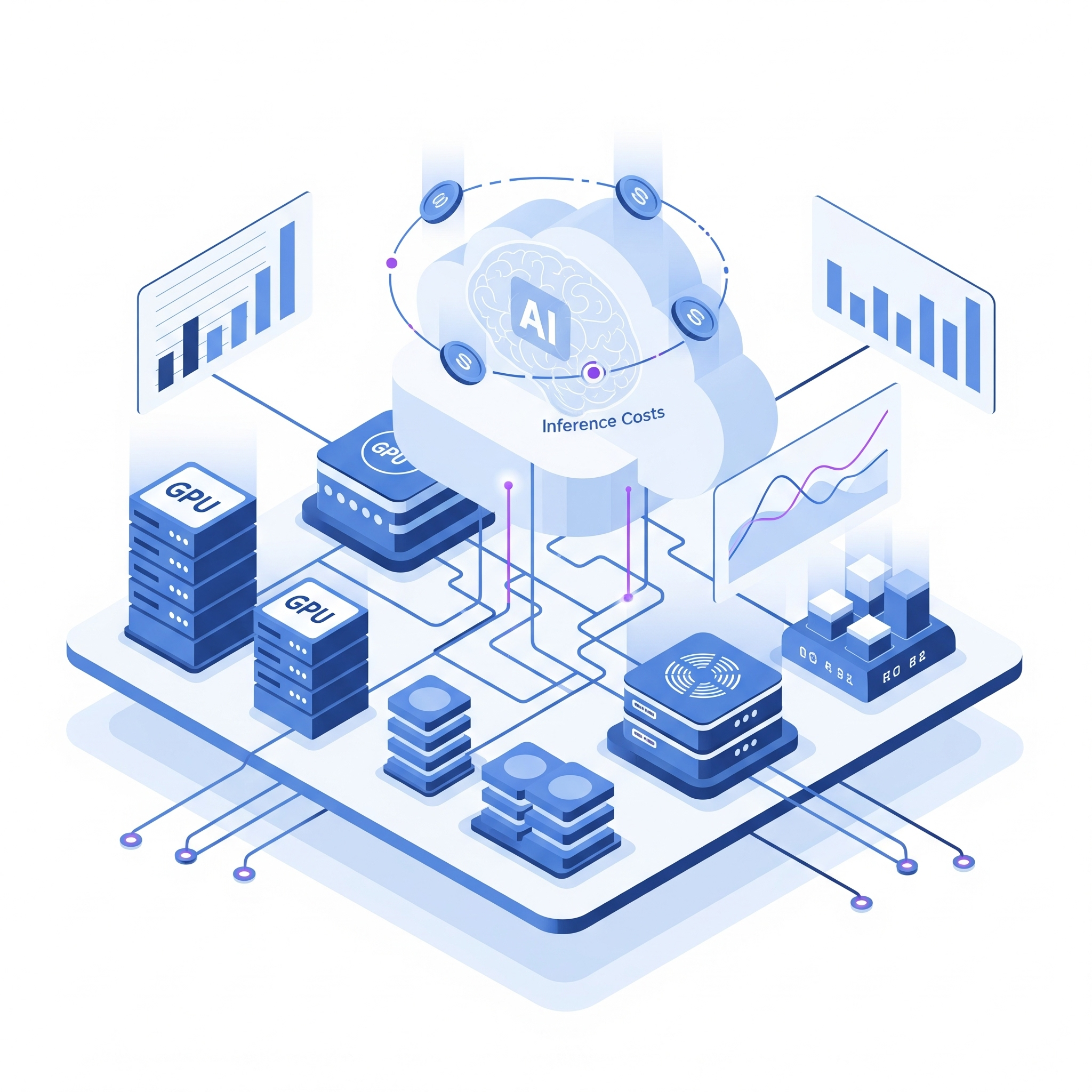
The adoption of Artificial Intelligence (AI) and Large Language Models (LLMs) is exploding, but for many organizations, so are the costs. Unlike traditional cloud workloads, the expenses associated with training and running models on services like Amazon SageMaker are often unpredictable and difficult to track. This is the new frontier of cloud spend, and it requires a specialized approach to AI cost optimization.
If you're struggling to understand the ROI of your AI investments, you're not alone. The core challenge is that the key drivers of AI costs—like GPU instance hours, data transfer for training sets, and cost-per-token for inferences—don't show up clearly on a standard cloud bill.
Key Strategies for Effective LLM Cost Management:
1. Track Unit Economics
The most critical step is to move beyond tracking total spend and start measuring cloud unit economics. For AI, this means understanding metrics like cost-per-training-job or cost-per-inference. This connects your AI spend directly to business value and helps you identify which models are delivering a positive return.
2. Choose the Right Infrastructure
Not all AI workloads are the same. Selecting the most cost-effective GPU instances for each specific job (training vs. inference) is crucial. A robust FinOps platform can provide recommendations to ensure you're not over-provisioning expensive resources.
3. Optimize Your Data
Data transfer and storage can be significant hidden costs in your AI budget. Implementing data lifecycle policies and choosing the right storage tiers can dramatically reduce these expenses without impacting model performance.
4. Monitor and Alert on Anomalies
AI costs can spike unexpectedly. Real-time monitoring and automated alerts are essential to catch cost overruns the moment they happen, not weeks later when the bill arrives.
Managing AI costs effectively requires a platform that provides deep visibility into these specialized workloads. By focusing on unit economics and proactive optimization, you can ensure your AI initiatives are both innovative and profitable.
All in One Place
Atler Pilot decodes your cloud spend story by bringing monitoring, automation, and intelligent insights together for faster and better cloud operations.