
To test a marketing message today, you have to follow a painful, slow cycle:
Build the landing page via Engineering.
Buy traffic (Google Ads) for $5,000.
Wait 2 weeks for statistical significance.
Realize the copy failed. Repeat.
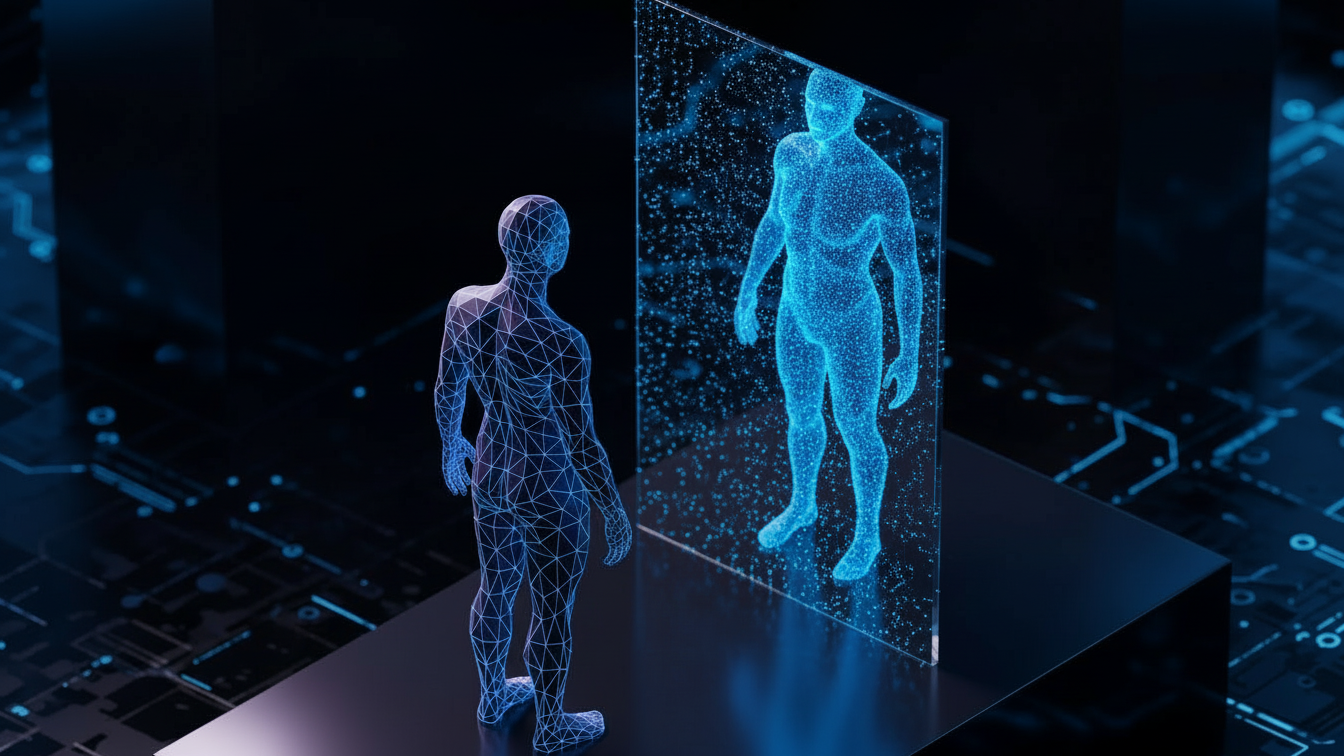
This cycle is too slow for 2025. The solution is Synthetic User Testing. Instead of showing the ad to real humans, you show it to Customer Digital Twins.
The "Roleplay" Capability: LLMs (like GPT-4) are excellent simulators of human psychology. If you give an LLM a specific persona ("You are a 34-year-old Project Manager named Sarah, you hate spam, and you are budget-conscious"), it can accurately predict how Sarah will react to a specific subject line. The Famous Stanford "Generative Agents" paper showed that LLM agents interacting in a virtual village produced social behaviors (like planning a party) that were statistically identical to human behaviors.
Part 1: Building the Twin (From CRM to Persona)
You have a database full of data: Transaction history, support tickets, click logs. But this data is "cold." It doesn't reason. We can feed this data into an LLM to generate a detailed System Prompt for each customer segment, turning a database row into a Live Agent.
The Twin: Persona #412 (Cluster D) Demographic: Male, 55, Mid-Management. Risk Profile: High. He just spoke to support about a billing error 3 days ago. Buying Style: Impulsive on weekends, conservative on weekdays. Deep Need: Wants to look competent in front of his boss. Context: It is currently Tuesday Morning, and he is late for a meeting.
Part 2: The Simulation Loop (What-If Scenarios)
Once you have 10,000 of these "Twins" running in a virtual environment (a simple Python loop), you can run infinite experiments at $0 cost.
Pricing Sensitivity: "Simulate the 10,000 customers. If we raise the price by $5 today, how many of them churn?" The Agent representing #412 might say: "Given my recent billing dispute, a price hike is the last straw. I cancel."
Subject Line Optimization: "Show these 5 subject lines to the twins. Which one gets the highest Open Rate?"
Product Validation: "If we launch this feature, will you use it?"
Part 3: Predicting Churn (The "Minority Report" Effect)
Traditional "Predictive Analytics" (Linear Regression) looks at the past. "John Churned because he stopped logging in." This is an autopsy.
Generative Simulation looks at the future. You simulate John's next week. The simulation reveals: "John will likely encounter a bug in the mobile app on Thursday, get frustrated, and given his previous history with support, he will cancel on Friday."
You can verify this potential future and intervene before the event happens (e.g., Send a proactive apology email on Wednesday).
Part 4: Synthetic Focus Groups
Ad Agencies like WPP are already using "Synthetic Focus Groups." Instead of paying 10 people $100 to sit in a room and eat donuts for 3 hours, they spawn 1,000 AI Agents representing different demographics. They show the Super Bowl ad storyboard to the Agents. The Agents provide detailed, qualitative feedback ("I felt offended by the second scene because it made light of inflation").
Part 5: The "Uncanny Valley" of Simulation (Privacy & Ethics)
Is it legal to simulate a specific person?
The Privacy Paradox: If you simulate "John Smith, 123 Main St", you are processing PII (Personally Identifiable Information). You need consent. If you simulate "Persona #412 (Male, 55, Risk Averse)", you are not processing PII. Compliance Rule: Always anonymize before generating the Twin. Never feed raw names/emails into the LLM context window.
Part 6: Implementation Guide (LangChain + Vector DB)
How do you build a "Memory" for a Twin? You use RAG.
Python
from langchain.chat_models import ChatOpenAI
from langchain.memory import VectorStoreRetrieverMemory

# 1. Load the Customer's history into a Vector DB
vector_db.add_documents([
  "Customer complained about high price in 2023",
  "Customer prefers email over phone",
  "Customer bought the Premium plan in 2024"
])

# 2. Create the Agent with Memory
twin = ChatOpenAI(
  model_name="gpt-4",
  temperature=0.9, # High temp for "human-like" variability
  system_message="You are Customer #412. React to this email."
)

# 3. Running the Simulation
email_draft = "Hey, buy our new Pro plan for $99!"
reaction = twin.predict(f"Read this email: {email_draft}. Would you click buy?")
print(reaction)
# Output: "No. I already paid for Premium in 2024. Stop spamming me."
Appendix A: The Simulation Glossary
Agent-Based Modeling (ABM): A simulation technique where individual "agents" interact to create complex system behavior (Game Theory). Used in finance and epidemiology.
BDI Model (Belief-Desire-Intention): A cognitive architecture for agents. The agent has Beliefs (Information), Desires (Goals), and Intentions (Plans). This makes them realistic.
Lookalike Audience: Traditional ad-tech term for finding similar people. Twins are "Lookalikes with Agency."
Standard Deviation (Temperature): In LLMs, temperature controls randomness. Real humans are random. If you simulate an audience with Temperature 0, they will all act like robots. Use Temperature > 0.7 for simulation.
Synthetic Data: Data generated by AI, not collected from the real world. Useful for training when privacy is key.
Twin: A virtual replica of a physical entity (in this case, a person).
Appendix B: Frequently Asked Questions
Q: Is this cheaper than user testing? A: Yes. A user test costs $100/person. An LLM simulation costs $0.05/person. It is 2000x cheaper.
Q: Can it predict irrational behavior? A: Surprisingly, yes. LLMs are trained on internet data, which is full of irrational human arguments. They are very good at mimicking anger, confusion, and bias.
Conclusion
We are moving from a world of "Guessing" to a world of "Knowing." Simulation allows us to make mistakes in a virtual world so we don't have to make them in the real one.
The CMO of 2026 will not have a "Target Audience." They will have a "Simulated Population." Instead of launching a campaign and praying, they will run it through the simulator 10,000 times overnight. By morning, they will know exactly what works.
Appendix C: Case Study (Fashion Retailer)
The Goal: Launching a new "Edgy" streetwear line. The Simulation: They created 5,000 Customer Twins based on GEN-Z purchasing data. They named the segment "The Hypebeasts."
The Test: They showed the Twins two ad concepts.
Ad A: "Quality you can trust." (Traditional Luxury)
Ad B: "Drop 001. If you miss it, you're dead." (Scarcity)
The Result: The Twins overwhelmingly (92%) chose Ad B. But they also flagged a risk: "This sounds too desperate." The Pivot: The marketing team refined Ad B to be cooler and more aloof ("Drop 001. Arriving Soon.") based on the feedback. The launch sold out in 12 minutes.
Appendix D: Expert Interview (Simulation Architect)
Q: Isn't this just sophisticated guessing? A: All business is guessing. This is "informed guessing." It's better to guess with a probabilistic model trained on 10TB of human behavior than to guess based on what your boss thinks looks cool.
Q: When does it fail? A: When the world changes. If you simulate travel behavior using data from 2019, your model knows nothing about COVID-19. You must retrain constantly.
Appendix E: The Simulation Readiness Checklist
[ ] Data Hygiene: Do I have at least 1,000 anonymized customer transcripts to train the base persona?
[ ] Vector DB: Is my RAG retrieval latency under 200ms? (Simulation speed matters when running 10k agents).
[ ] Diversity: Did I simulate the "Edge Cases"? (The angry customer, the confused customer, the elderly customer).
[ ] Validation: Did I back-test the simulation against last month's actual churn data?
[ ] Ethics: Did I scrub all PII before sending data to OpenAI/Anthropic?
All in One Place
Atler Pilot decodes your cloud spend story by bringing monitoring, automation, and intelligent insights together for faster and better cloud operations.