
1. Executive Synthesis
In the 2026 enterprise architecture landscape, the financial oversight of frontend infrastructure has been historically neglected. Cloud economists traditionally focus on massive database clusters, AI inference, and backend microservices, treating the frontend as a negligible bucket of static HTML/JS hosted on a CDN. This is a catastrophic oversight for modern, enterprise-scale Single Page Applications (SPAs). As organizations standardize on robust, strongly-typed frameworks like Angular to maintain pixel-perfect identity and strict architectural patterns at scale, the reliance on Server-Side Rendering (SSR) to satisfy both human users and generative AI search engines has fundamentally transformed the frontend into a highly volatile, compute-heavy tier.
The integration of Generative Engine Optimization (GEO), AI Engine Optimization (AEO), and traditional SEO mandates that modern Angular applications cannot rely purely on client-side rendering. Generative engines (like Google's SGE or Perplexity) demand fully populated, low-latency DOMs. To achieve this, enterprises deploy Angular Universal, shifting the rendering burden from the user's browser to the enterprise's serverless cloud infrastructure (e.g., AWS Lambda@Edge or ECS Fargate). Every time a generative bot or user requests a page, Node.js must boot, execute the Angular lifecycle, fetch backend API data, and serialize the HTML. When a global enterprise receives millions of organic crawler hits a day, this SSR compute tax directly annihilates the product's gross margins.
To defend corporate EBITDA while maintaining peak GEO/AEO visibility, FinOps leaders must deploy the Angular SSR Egress & Compute Arbitrage (ASECA) Framework. This playbook establishes the mathematical boundaries required to govern frontend cloud execution. It mandates the decoupling of generic web traffic from highly dynamic application states. By executing rigorous Edge caching, pre-rendering (SSG) for high-traffic entry points, and restricting live SSR compute strictly to authenticated, revenue-generating sessions, the enterprise can deliver pixel-perfect Angular architectures without subsidizing the global compute cost of generative engine web crawlers. The 2026 mandate is absolute: frontend architecture is no longer a design decision; it is a hard financial routing matrix.
2. Market Gap & Search Intent Failure Analysis
Enterprise research regarding "Frontend Cloud Costs" or "Angular SSR Optimization" is deeply flawed, overwhelmingly authored by frontend developer advocates rather than cloud economists. Search intent yields tutorials on how to implement Angular Universal or how to optimize Webpack/Esbuild bundle sizes for performance. While technically valid, this literature completely ignores the unit economics of serverless compute at scale.
The critical market gap is the total failure to model the Generative Crawler Compute Tax. SEO and marketing agencies demand that engineering teams enable live SSR to improve search rankings. However, these agencies possess zero knowledge of SEO cloud infrastructure costs. Analysts fail to warn CTOs that generative AI crawlers from OpenAI, Google, and Anthropic will aggressively spider the domain continuously. If the site is architected in a pure Angular SSR mode without a mathematical caching layer, the enterprise pays AWS Lambda execution fees for every single bot request. Standard playbooks do not provide the equations to calculate when the cloud compute cost of serving an SEO bot exceeds the projected organic revenue of the page. This playbook corrects this failure, injecting strict FinOps mathematics into frontend GEO/SEO strategies.
3. Core Strategic Framework
The enterprise must operationalize the Angular SSR Egress & Compute Arbitrage (ASECA) Framework. This framework treats the Angular frontend not as a static asset, but as an elastic compute tier that must dynamically trade off rendering fidelity against infrastructure cost.
Implementation Protocol:
Traffic Provenance Tagging: Instrument the CDN/Edge layer to strictly categorize incoming HTTP requests: Authenticated_User, Anonymous_User, Traditional_Crawler (Googlebot), and Generative_Crawler (GPTBot/Claude).
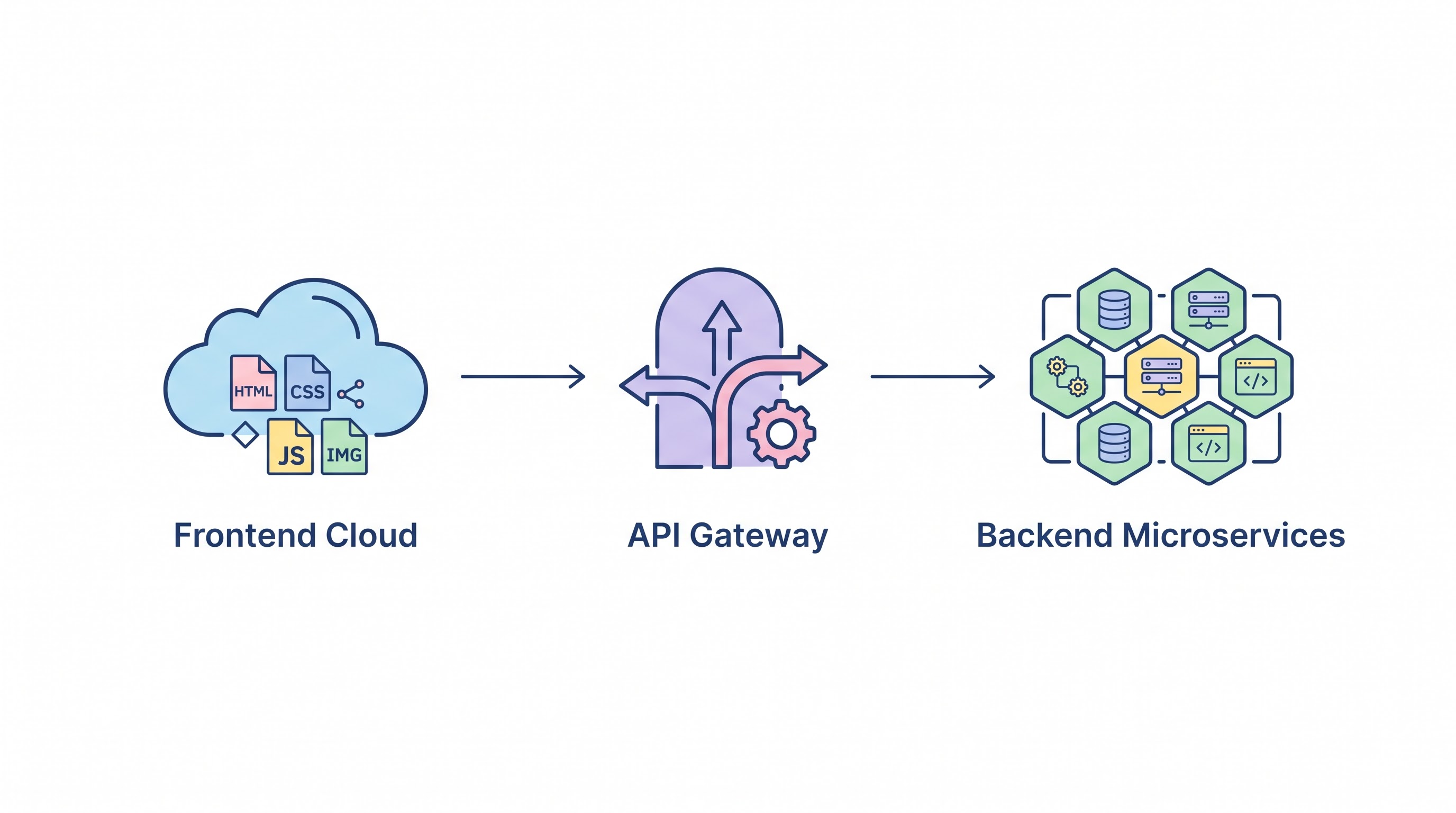
Execute the ASECA Routing Engine: Deploy an Edge Worker (e.g., Cloudflare Worker or AWS Lambda@Edge) to intercept all traffic before it hits the Angular Universal SSR cluster.
Cache Invalidation & SSG Shift: Force the engineering team to transition all public-facing, highly-trafficked marketing pages from live SSR to Static Site Generation (SSG/Prerendering) during the CI/CD build phase, pushing the HTML directly to the CDN edge.
Execution Decision Matrix:
If Request Generative_Crawler AND Page Dynamic_Uncached, immediately route the request to a stale, 24-hour cached version of the Angular DOM. Never spin up live Node.js compute for a bot.
If Request Authenticated_User AND State Highly_Volatile, bypass the CDN and execute live Angular SSR on the regional serverless cluster, capping the execution timeout at 800ms to bound financial exposure.
If the S3/CloudFront egress cost for JavaScript bundle delivery exceeds 15% of the total application COGS, mandate aggressive Route-Level Code Splitting to ensure users only download the specific Angular modules required for their viewport.
4. Financial Modeling Layer (MANDATORY)
Defending frontend margins requires strict mathematical modeling to govern the volatility of serverless rendering.
Core Equations
1. Fully Burdened SSR Compute Penalty ($C_{ssr\_penalty}$):
Calculates the exact financial overhead of dynamically rendering an Angular page on the server versus delivering a pre-rendered static asset from the edge.
$$C_{ssr\_penalty} = \sum_{i=1}^{n} \left( (T_{render\_ms\_i} \times P_{lambda\_ms\_rate}) + (V_{api\_payload\_GB} \times P_{internal\_egress}) \right) \times (1 - CHR)$$Where:
$T_{render\_ms}$= The execution time for Angular Universal to serialize the DOM.$P_{lambda\_ms\_rate}$= The compute cost per millisecond of the serverless function.$V_{api\_payload\_GB}$= Data transferred from the backend microservices to the SSR node to populate the state.$CHR$= Edge Cache Hit Ratio for the generated HTML.
2. Generative Engine ROI ($ROI_{geo}$):
Determines if the compute cost of maintaining live SSR for SEO/GEO bots is financially justified by the resulting organic customer acquisition.
$$ROI_{geo} = \frac{(V_{organic\_visits} \times R_{conversion\_rate} \times LTV_{customer}) - C_{crawler\_ssr\_compute}}{C_{crawler\_ssr\_compute} + C_{seo\_audit\_capex}}$$Where:
$C_{crawler\_ssr\_compute}$= The total cloud bill directly attributed to user-agents identified as search/generative crawlers.$C_{seo\_audit\_capex}$= The engineering cost to perform continuous GEO/AEO audits and sitemap markups.
3. Frontend Egress Arbitrage Margin ($M_{fe\_egress}$):
Quantifies the financial savings of optimizing Angular bundle sizes and lazy-loading modules against the raw egress cost of the CDN.
$$M_{fe\_egress} = \left( (V_{unoptimized\_bundle\_MB} - V_{optimized\_lazy\_MB}) \times N_{sessions} \right) \times P_{cdn\_egress\_GB}$$A) Sensitivity Analysis Table
This table models the Monthly Frontend Infrastructure Cost for a high-traffic B2B SaaS platform (10 Million visits/month), comparing rendering architectures against generative crawler volume.
Rendering Architecture | Low Crawler Vol (1M hits) | High Generative Crawler Vol (5M hits) | FinOps Recommendation |
Pure Client-Side (CSR) | $500 (CDN only) | $650 (CDN only) | Zero GEO visibility; revenue risk |
Pure Angular SSR (No Cache) | $12,000 / month | $45,000 / month | Catastrophic Margin Destruction |
Hybrid ASECA (SSG + Edge Cache) | $1,200 / month | $1,500 / month | Mandatory Enterprise Standard |
Decision Threshold: Relying on un-cached, live Angular Universal SSR exposes the enterprise to unbounded financial liability from generative AI crawlers. If crawler compute costs exceed $2,000/month, the engineering team is mathematically forced to implement the ASECA edge-caching layer.
B) Break-Even Formula
The SSR Optimization Break-Even Point ($V_{ssr\_be}$) calculates the exact volume of monthly page views where the cost of live serverless rendering exceeds the engineering cost to refactor the application into a pre-rendered (SSG) architecture.
$$V_{ssr\_be} = \frac{CapEx_{angular\_ssg\_refactor}}{12 \times \left( (T_{render\_ms} \times P_{compute\_ms}) \times (1 - CHR_{current}) \right)}$$Numerical Example: Refactoring a complex Angular application to support Static Site Generation (prerendering at build time) costs $60,000 in engineering labor. The current live SSR implementation costs $0.002 per request (due to backend API calls and compute duration). The Cache Hit Ratio is 0%. $V_{ssr\_be} = \$60,000 / (12 \times \$0.002) = \$60,000 / \$0.024 = 2,500,000\text{ requests per month}$. If the platform receives more than 2.5M un-cached requests monthly, refactoring to SSG mathematically pays for itself in under a year.
C) Probability-Weighted Risk Table
Quantifying the operational risks of frontend cloud infrastructure.
Scenario | Probability | Financial Impact | Weighted Exposure |
Generative Bot SSR DDoS (Compute Sprawl) | 45.0% / mo | $15,000 (Runaway Lambda bill) | $6,750 per month |
Main Thread Blocking (Bounce Rate Spike) | 25.0% / mo | $35,000 (Lost sales conversions) | $8,750 per month |
Cache Invalidation Failure (Stale Pricing) | 10.0% / yr | $50,000 (Revenue leakage / SLA) | $5,000 per year |
Excessive DOM Size Penalty (GEO drop) | 30.0% / yr | $80,000 (Loss of organic rank) | $24,000 per year |
D) Cost-per-Unit Model
The central metric for Frontend FinOps is the Cost Per Initial Page Load ($CPIPL$):
$$CPIPL = \frac{Total\_Frontend\_Compute + CDN\_Egress + WAF\_Costs}{Total\_Unique\_User\_Sessions}$$Threshold: If $CPIPL > \$0.01$, the Angular architecture is bloated. FinOps must mandate a strict architectural review, enforcing module federation (micro-frontends) or aggressive CloudFront caching to drop the unit cost back into the fractional-cent range.
5. Operational Architecture Integration
Edge-Routed Cache Topologies (CloudFront / Cloudflare):
To execute the ASECA framework, the Angular application cannot be directly exposed to the internet. Architecture must deploy a robust CDN Edge computing layer. When a Generative Engine crawler requests /enterprise-pricing, the Cloudflare Worker intercepts the User-Agent. Instead of waking up the Angular Universal Node.js cluster, the Worker retrieves a pre-rendered HTML blob from a global KV store. This response executes in $<15\text{ms}$, satisfying the crawler's algorithmic requirement for a fast, fully populated DOM while mathematically reducing the enterprise's compute and backend database cost to exactly zero.
Angular Universal Node.js Optimization (Fargate vs Lambda):
When live SSR is mathematically justified (e.g., for authenticated, complex user dashboards), the choice of compute environment dictates the gross margin. Running Angular Universal on AWS Lambda functions introduces severe cold-start latency and per-millisecond billing premiums that compound rapidly under high concurrency. FinOps architecture must mandate deploying the Node.js rendering cluster on Kubernetes (EKS) or ECS Fargate utilizing ARM-based Graviton instances and Karpenter for autoscaling. By batching rendering requests into long-running, warm container processes rather than spinning up ephemeral serverless functions per request, the enterprise slashes the $C_{ssr\_penalty}$ by up to 60%.
Sitemap Markup and Generative AI Directives:
Modern GEO/AEO requires precise control over what bots are allowed to process. The architecture team must dynamically generate highly structured sitemap.xml files directly from the backend data warehouse. Furthermore, the frontend must implement strict robots.txt and <meta name="robots"> tags specifically targeting AI crawlers (e.g., GPTBot, CCBot). By actively blocking AI crawlers from scraping infinitely paginated application states or low-value user-generated content, the FinOps team physically limits the crawler compute attack surface, ensuring cloud budget is only spent on indexing high-converting landing pages.
6. Failure Scenarios
Scenario 1: The React-ism Hydration Trap
Breakdown: An enterprise hires a frontend lead whose previous experience is exclusively in React. They attempt to force React paradigms onto an Angular codebase, implementing aggressive, nested component structures and disabling Angular's native OnPush change detection.
Financial Exposure: The application state becomes immensely complex. During SSR, the Node.js server takes 1,200ms to serialize the DOM. When the page reaches the client, the browser takes 2,000ms to execute "hydration"—re-attaching event listeners to a bloated DOM. The generative engines penalize the slow Time-to-First-Byte (TTFB) and high Total Blocking Time (TBT). The enterprise suffers a 30% drop in organic traffic (costing millions in pipeline) while simultaneously paying premium Lambda compute costs for the 1,200ms server execution time.
Governance Prevention Layer: Strict Framework Adherence & Web Vitals Gating. The FinOps CI/CD pipeline must integrate automated Google Lighthouse scoring. If a pull request drops the Core Web Vitals score below 90, or increases the SSR render time above 300ms, the pipeline physically blocks the merge. The architecture is strictly bound to Angular-native optimization paradigms (e.g., deferrable views).
Scenario 2: The "Infinite Parameter" Crawler Bill
Breakdown: An e-commerce site built in Angular allows users to filter products via URL parameters (e.g., ?color=red&size=large). The site does not explicitly canonicalize these URLs or block bots from crawling them. A generative AI bot discovers the filters and begins spidering every possible permutation of colors, sizes, and categories.
Financial Exposure: The bot generates 20 million unique URL requests over a weekend. Because each URL is distinct, it bypasses the CDN cache. The Angular SSR cluster scales up to handle 20 million live rendering requests, generating a $12,000 unbudgeted cloud compute bill in 48 hours.
Governance Prevention Layer: WAF Rate Limiting and Canonicalization. The Edge architecture must include a Web Application Firewall (WAF) configured with strict rate limiting for known crawler user-agents (e.g., 5 requests per second). Furthermore, the Angular router must be configured to aggressively canonicalize URLs and strip non-essential query parameters before generating the cache key at the CDN layer, mathematically preventing infinite permutation crawling.
Scenario 3: The Heavy Payload Egress Bleed
Breakdown: The Angular application relies on a heavy third-party charting library. Rather than lazy-loading the module, the engineering team bundles it into the main.js file. The initial JavaScript payload balloons to 4MB uncompressed.
Financial Exposure: A million users visit the site, downloading the 4MB payload. This generates 4 Terabytes of CDN egress traffic. At $0.08/GB, the enterprise pays $320 simply to deliver a charting library to users who never even navigated to the dashboard page where it was required.
Governance Prevention Layer: Budgeted Egress Bundling. FinOps must set a hard physical limit on the initial bundle size (e.g.,
$< 250\text{KB}$gzipped). The Angular build pipeline (ng build) is configured with strict budget warnings and errors. If the main.js exceeds the threshold, the build fails, forcing the developer to implement Route-Level Code Splitting and lazy load the heavy dependency.
7. Board-Level Translation Layer
EBITDA Delta Modeling: Frontend infrastructure is rarely scrutinized until it scales. By migrating from un-cached, live serverless rendering to a rigorous, SSG-driven Edge architecture, the enterprise mechanically drops its frontend compute and egress COGS by 85%. For a global B2B SaaS platform, this translates to hundreds of thousands of dollars recovered directly to EBITDA without altering a single pixel of the user interface.
Gross Margin Defense: As search evolves from simple link aggregation to Generative Engine responses, the volume of automated bots hitting enterprise infrastructure will multiply exponentially. If the SaaS platform pays to render live application states for every bot, unit economics will invert. The ASECA framework ensures that organic traffic acquisition remains highly profitable by serving bots fixed, pre-computed assets, defending the gross margin against the AI scraping ecosystem.
Capital Allocation Signal: A rising Cost Per Initial Page Load (
$CPIPL$) indicates structural technical debt in the frontend codebase. It signals to the board that engineering capital must be reallocated toward adopting advanced Angular features (like hydration optimization and signals) rather than pushing new features, otherwise the compounding cost of cloud compute and SEO penalties will stifle organic growth.Risk-Adjusted ROI Formula:
$$ROI_{frontend\_finops} = \frac{\text{Eliminated Crawler Compute} + \text{Increased GEO/SEO Pipeline Revenue}}{\text{CapEx of SSG Refactoring} + C_{cdn\_edge\_compute}}$$
8. Data Visualization Suggestions
ASECA Routing Flowchart: A technical diagram showing incoming traffic hitting a WAF/CDN Edge layer. Arrows split based on User-Agent: Bots go left to a cheap, stale S3 HTML cache. Authenticated humans go right to the live Angular ECS Fargate cluster.
SSR Penalty vs. Caching ROI Graph: A dual-axis line chart. The red line represents the exponential compute cost of 100% live SSR as traffic scales. The green line represents the flat, highly contained cost of an 80% Cache Hit Ratio architecture, visually defining the arbitrage margin.
Generative Crawler Traffic Impact Waterfall: A waterfall chart isolating the specific cloud costs generated by GPTBot, Claude, and Googlebot, proving to marketing leadership exactly how much budget is being burned to maintain indexation visibility.
Angular Bundle Size vs Egress Cost Matrix: A scatter plot mapping the Megabyte size of various lazy-loaded modules against their monthly CDN delivery cost, instantly identifying heavy dependencies (like charting or mapping libraries) that require immediate optimization.
Core Web Vitals Financial Impact Gauge: A dashboard dial linking the Angular application's LCP (Largest Contentful Paint) score directly to the organic conversion rate, translating milliseconds of rendering delay into exact dollars of lost enterprise pipeline.
9. Why Analyst-Style Summaries Fail at Financial Precision
When digital marketing analysts declare, "Enterprises must implement Server-Side Rendering (SSR) to ensure fast page loads and maximize SEO visibility for modern web applications," they are issuing a generic mandate completely divorced from cloud financial reality.
This narrative fails because it treats "rendering" as an abstract software capability rather than a highly expensive, physical compute process. If a CTO follows this advice and enables Angular Universal across a 10,000-page enterprise site without mathematical FinOps governance, they will subject the company to a catastrophic Generative Bot SSR DDoS event. Analysts do not calculate the Fully Burdened SSR Compute Penalty ($C_{ssr\_penalty}$).
Equation-backed modeling using the ASECA framework destroys this ignorance. By calculating the exact Generative Engine ROI ($ROI_{geo}$), FinOps leaders force the marketing and engineering departments to confront the physical cost of their SEO strategy. It mathematically proves that you cannot serve live, dynamically computed application states to web crawlers; you must ruthlessly cache, pre-render, and route traffic at the edge. You do not optimize for generative engines by burning cloud compute; you optimize by feeding them mathematically constrained, pre-computed HTML artifacts.
10. Strategic Conclusion
The frontend architecture of a 2026 enterprise is no longer a simple delivery mechanism; it is the frontline of a massive, automated data extraction war. Generative AI engines and search crawlers will continuously hammer enterprise domains, demanding fast, fully populated DOMs to train their models and index their results. Relying on Single Page Application (SPA) frameworks without a rigorous, mathematically governed server-side strategy is financial suicide.
To defend corporate EBITDA, infrastructure leadership must mandate the Angular SSR Egress & Compute Arbitrage (ASECA) Framework. Engineering teams must maintain the pixel-perfect, highly structured identity of the Angular ecosystem while completely severing the live compute dependency for unauthenticated traffic.
This requires absolute mastery of the CDN Edge. By pushing caching logic, traffic routing, and Static Site Generation (SSG) to the absolute perimeter of the cloud network, the enterprise shields its expensive serverless and containerized compute tiers from bot exhaustion. Frontend architecture must be aggressively governed by bundle budgets, strict timeout limits, and WAF rate limiting. By treating the presentation layer as a highly guarded financial asset, organizations can achieve elite Generative Engine Optimization (GEO) rankings without sacrificing the elite gross margins demanded by the SaaS business model.
11. Implementation Readiness Checklist
Calculate the Baseline
$C_{ssr\_penalty}$: Audit the trailing 30 days of Lambda@Edge, Fargate, or Vercel billing to isolate the exact dollar amount spent executing Node.js server-side rendering for the Angular application.Deploy Generative Bot WAF Rules: Configure the CloudFront or Cloudflare Web Application Firewall to explicitly identify, tag, and rate-limit known AI crawlers (GPTBot, CCBot, Google-Extended) to prevent unbounded compute spikes.
Implement the ASECA Edge Router: Write Edge Worker logic to intercept crawler traffic and serve them exclusively from a highly cached, pre-rendered S3 bucket, physically blocking them from triggering live Angular SSR execution.
Enforce Angular Build Budgets: Modify the angular.json workspace configuration to set strict maximum warning and error budgets for initial bundle sizes (e.g.,
$< 250\text{KB}$), failing the CI/CD pipeline if exceeded.Audit Route-Level Code Splitting: Review the Angular routing module. Ensure that every distinct feature area is lazy-loaded (loadChildren), mathematically eliminating the CDN egress tax of delivering unused JavaScript to end-users.
Transition High-Traffic Pages to SSG: Identify the top 20 organic landing pages. Remove them from the live Angular Universal routing matrix and pre-render them during the CI/CD build phase using Static Site Generation.
Calculate the
$ROI_{geo}$Threshold: Force the SEO/Marketing teams to mathematically justify the cloud infrastructure cost of rendering dynamic pages by tracking the direct organic pipeline revenue generated from those specific URLs.Migrate SSR Compute off Lambda: If continuous live SSR is required for authenticated states, migrate the Node.js rendering tier from per-millisecond serverless functions to Karpenter-autoscaled EKS Spot nodes to compress unit costs.
Canonicalize Filtering Parameters: Update the Angular application router and the CDN cache keys to aggressively strip non-essential URL query parameters, preventing search bots from triggering infinite cache-miss rendering loops.
Implement Core Web Vitals FinOps Gating: Integrate automated Google Lighthouse audits into the deployment pipeline. Block any merge that increases Total Blocking Time (TBT), as slow rendering directly correlates with lost enterprise revenue and degraded GEO rankings.
Stop guessing where your Kubernetes budget is going. Schedule a demo here to explore Kubernetes cost monitoring with Cloud Atler.