
Modern enterprise infrastructure changes constantly. Kubernetes workloads scale dynamically, cloud resources are provisioned automatically, CI/CD pipelines deploy continuously, and multiple engineering teams interact with environments simultaneously across multi-cloud ecosystems.
This speed and flexibility are what make modern DevOps environments powerful. But they also create one of the most overlooked operational risks in enterprise cloud infrastructure: configuration drift.
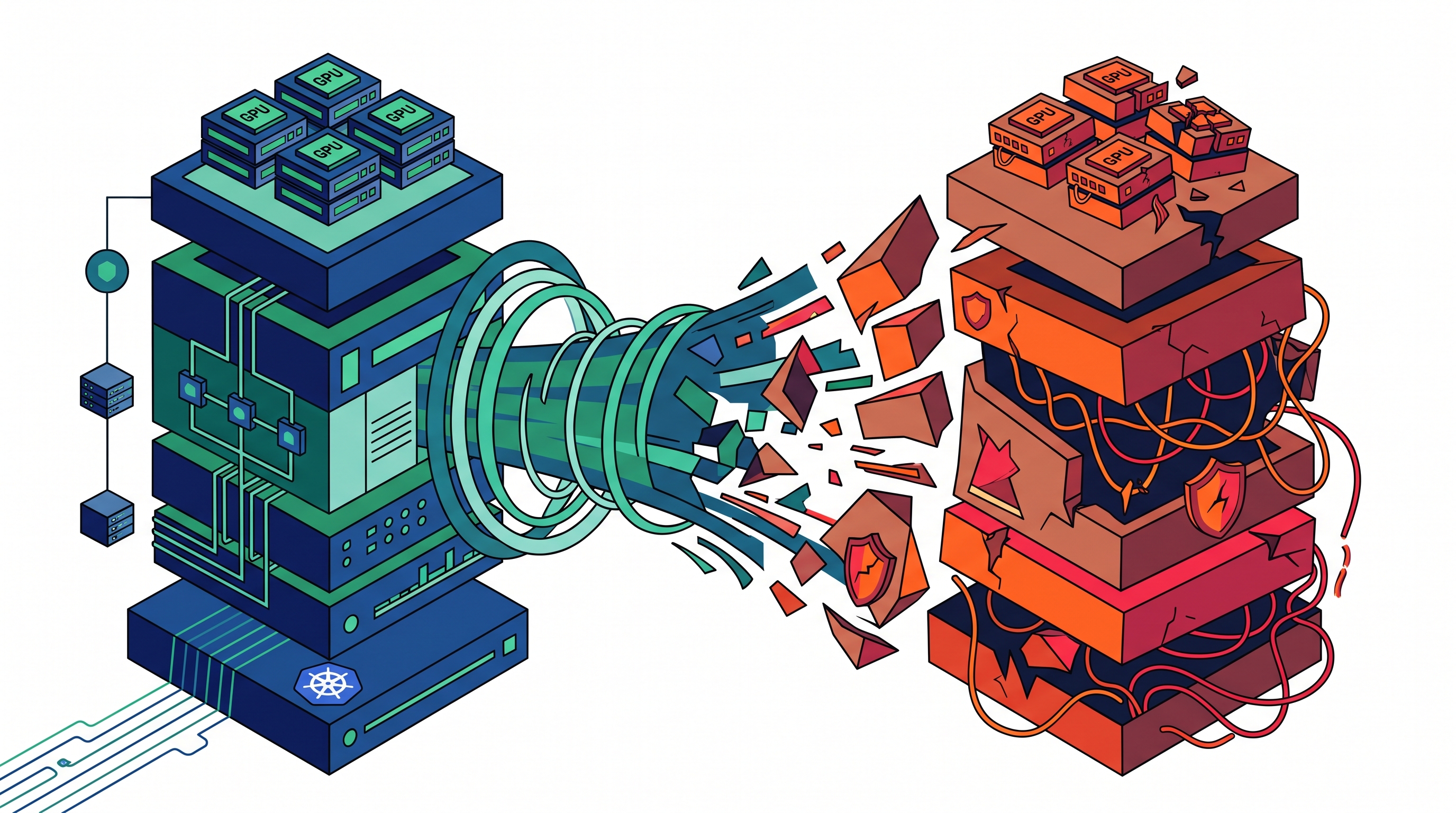
Infrastructure drift occurs when the actual state of cloud environments gradually diverges from the intended or approved configuration state. What begins as a small manual change, emergency patch, temporary permission adjustment, or undocumented infrastructure modification can slowly evolve into inconsistent, difficult-to-govern environments that become increasingly fragile over time.
The problem is that infrastructure drift rarely creates immediate failure. Systems often continue operating normally while operational inconsistencies quietly accumulate beneath the surface. Over time, however, drift introduces serious risks around security, compliance, scalability, troubleshooting, and operational reliability.
As enterprise cloud environments become larger and more distributed, drift management is becoming a critical operational discipline for DevOps teams.
In this blog, we will explore what cloud infrastructure drift really means, why it becomes difficult to control at enterprise scale, what risks it introduces, and how organizations can manage infrastructure consistency more effectively across modern cloud-native environments.
What Infrastructure Drift Actually Means
Infrastructure drift occurs when deployed cloud environments no longer match the intended infrastructure configuration defined through infrastructure-as-code templates, operational policies, governance standards, or approved deployment workflows.
This divergence often happens gradually through:
Manual console changes
Emergency operational fixes
Untracked configuration updates
Unauthorized permission changes
Direct Kubernetes modifications
Infrastructure patching outside automation workflows
At first, these changes may seem harmless or operationally necessary. However, over time they create environments where infrastructure behavior becomes increasingly inconsistent and difficult to predict.
The challenge is that cloud-native environments evolve continuously, making drift difficult to detect without strong operational visibility and governance controls.
Enterprise Environments Drift Faster Than Teams Expect
Drift becomes especially dangerous in enterprise environments because infrastructure complexity scales rapidly. Large organizations typically manage:
Multi-cloud environments
Kubernetes ecosystems
Distributed APIs
Hybrid infrastructure
CI/CD pipelines
AI workloads
Shared operational platforms
Each layer introduces additional operational change continuously. Multiple teams deploy independently, infrastructure scales dynamically, and operational dependencies evolve constantly.
In these environments, even small unmanaged changes accumulate quickly across thousands of resources and workloads simultaneously.
Without structured drift management, organizations gradually lose confidence in whether infrastructure actually matches intended operational standards.
Infrastructure Drift Weakens Security Posture
One of the biggest risks created by drift is inconsistent security governance.
Modern cloud security depends heavily on maintaining consistent policies across environments. When infrastructure drifts, organizations often end up with:
Overly permissive IAM policies
Exposed network configurations
Unpatched workloads
Misconfigured Kubernetes clusters
Inconsistent encryption settings
Weak segmentation controls
The challenge is that security teams may believe environments remain compliant because approved configurations exist in infrastructure-as-code templates, even though the live infrastructure has already diverged operationally.
This creates dangerous visibility gaps between the intended security posture and the actual infrastructure reality.
As enterprise environments scale, unmanaged drift becomes one of the biggest causes of hidden cloud security exposure.
Compliance Drift Creates Regulatory Risk
Compliance frameworks increasingly require continuous governance visibility rather than periodic audits alone.
However, infrastructure drift creates situations where environments gradually fall out of compliance over time through operational changes, scaling activity, or configuration updates.
For example:
Logging settings may change unexpectedly
Access permissions may expand operationally
Data retention policies may drift
Kubernetes security controls may weaken
Monitoring coverage may become inconsistent
The problem is that traditional compliance reviews often happen too slowly to detect these changes early.
By the time audits occur, infrastructure may already have drifted significantly away from approved governance baselines.
Continuous drift visibility is becoming essential for maintaining enterprise compliance in modern cloud-native environments.
Kubernetes Environments Are Especially Vulnerable to Drift
Kubernetes environments introduce unique drift challenges because workloads and infrastructure change dynamically in real time.
Drift commonly occurs through:
Direct kubectl changes
Namespace-level modifications
Manual workload scaling
Policy exceptions
Untracked resource updates
Emergency production changes
The highly dynamic nature of Kubernetes makes drift harder to detect than in traditional infrastructure systems. Containers restart automatically, workloads move across nodes continuously, and infrastructure topology changes rapidly through autoscaling behavior.
As Kubernetes environments grow, even small inconsistencies can create major operational instability if left unmanaged.
Kubernetes requires continuous configuration governance, not occasional infrastructure review alone.
Multi-Cloud Environments Increase Drift Complexity
Enterprise organizations increasingly operate across AWS, Azure, Google Cloud, Kubernetes environments, and hybrid infrastructure simultaneously.
Each platform introduces different APIs, identity systems, networking models, and governance mechanisms. Maintaining a consistent infrastructure state across these environments becomes an extremely difficult operationally.
Different teams may apply changes differently across providers, leading to fragmented governance standards and operational inconsistency.
Without centralized visibility, organizations often struggle to understand:
Which environments drifted
When changes occurred
Who introduced modifications
Whether infrastructure still matches intended policy baselines
Multi-cloud architectures amplify drift complexity significantly because operational consistency becomes harder to maintain across distributed ecosystems.
Drift Makes Troubleshooting Much Harder
One of the most frustrating consequences of infrastructure drift is reduced operational predictability.
When environments no longer behave consistently, troubleshooting becomes significantly more difficult because engineers cannot fully trust that the infrastructure behaves according to documented expectations.
For example:
Production and staging may no longer match operationally
Infrastructure-as-code templates may differ from live systems
Security policies may vary across clusters
Workload behavior may differ unexpectedly between environments
This increases operational uncertainty during incidents because teams spend additional time validating infrastructure state before identifying root causes.
Operational consistency is essential for reliable troubleshooting in distributed cloud-native systems.
Drift Reduces the Value of Infrastructure as Code
Infrastructure as Code only delivers long-term value if live environments remain aligned with declared configurations.
When organizations allow unmanaged operational changes outside automated workflows, infrastructure-as-code gradually loses credibility because it no longer accurately reflects infrastructure reality.
This creates dangerous operational disconnects between:
Intended state
Documented state
Actual infrastructure state
Over time, engineers may stop trusting deployment templates entirely and begin relying more heavily on manual operational knowledge instead.
At that point, infrastructure management becomes increasingly fragile and difficult to scale sustainably.
Drift management is essential for preserving the integrity of infrastructure automation itself.
AI Infrastructure Introduces New Drift Risks
AI infrastructure is creating additional operational complexity around drift management.
Organizations now manage:
GPU clusters
AI inference pipelines
Distributed model-serving environments
Specialized Kubernetes scheduling policies
AI workload orchestration systems
These environments evolve rapidly and often involve highly customized infrastructure configurations.
Without strong governance, AI environments may drift operationally through manual optimizations, experimental scaling adjustments, or infrastructure tuning changes introduced outside standard workflows.
As AI ecosystems scale, configuration governance becomes increasingly important for maintaining operational stability and efficiency.
Preventing Drift Requires Both Automation and Visibility
Many organizations assume that Infrastructure as Code alone automatically prevents drift. In reality, automation alone is not enough. Drift management requires:
Continuous configuration monitoring
Operational visibility
Policy enforcement
Change auditing
Infrastructure reconciliation workflows
Organizations must continuously compare the intended infrastructure state against live operational behavior across environments.
The faster environments evolve, the more important real-time visibility becomes for maintaining operational consistency. Drift prevention is not a one-time project. It is an ongoing operational discipline.
Intelligent Automation Helps Reduce Drift Risk
Modern enterprise environments increasingly use intelligent automation to reduce operational drift proactively.
Automation helps organizations:
Enforce policy consistency
Detect unauthorized changes
Validate deployments automatically
Reconcile the infrastructure state continuously
Prevent manual configuration sprawl
As infrastructure ecosystems grow more distributed and dynamic, intelligent automation becomes essential for maintaining operational alignment at scale.
Human-driven governance alone increasingly struggles to keep pace with the speed of modern cloud-native operations.
Strengthening Drift Visibility with Atler Pilot
One of the biggest challenges in enterprise drift management is maintaining clear operational visibility across rapidly evolving cloud-native environments.
This is where Atler Pilot helps organizations gain a deeper understanding of infrastructure behavior, workload activity, operational patterns, and cloud environment changes across distributed systems. By connecting infrastructure insights, workload visibility, utilization behavior, and operational signals into a unified view, teams can better identify inconsistencies, operational anomalies, and emerging drift risks earlier.
Instead of relying solely on fragmented dashboards and periodic configuration reviews, organizations gain more contextual awareness across cloud-native and multi-cloud environments. This supports stronger governance, more consistent infrastructure operations, and improved operational confidence as environments continue evolving rapidly.
As enterprise infrastructures become increasingly automated and distributed, unified operational visibility becomes essential for maintaining infrastructure consistency at scale.
Sign up for Atler Pilot and explore how deeper operational visibility can help your team strengthen cloud governance, reduce infrastructure drift, and manage enterprise DevOps environments with greater confidence and control.
Conclusion
Infrastructure drift is one of the most underestimated operational risks in modern cloud-native environments. It develops gradually, often invisibly, while increasing security exposure, operational inconsistency, compliance risk, and troubleshooting complexity over time.
As enterprise infrastructures scale across Kubernetes, multi-cloud systems, AI workloads, and distributed environments, drift management becomes increasingly critical for maintaining reliable operations.
Organizations that succeed will not simply automate infrastructure deployment. They will build operational systems capable of continuously validating, monitoring, and governing infrastructure behavior as environments evolve dynamically.
Because in modern DevOps operations, the challenge is no longer simply deploying infrastructure consistently.
It ensures infrastructure stays consistent long after deployment itself.
All in One Place
Atler Pilot decodes your cloud spend story by bringing monitoring, automation, and intelligent insights together for faster and better cloud operations.