
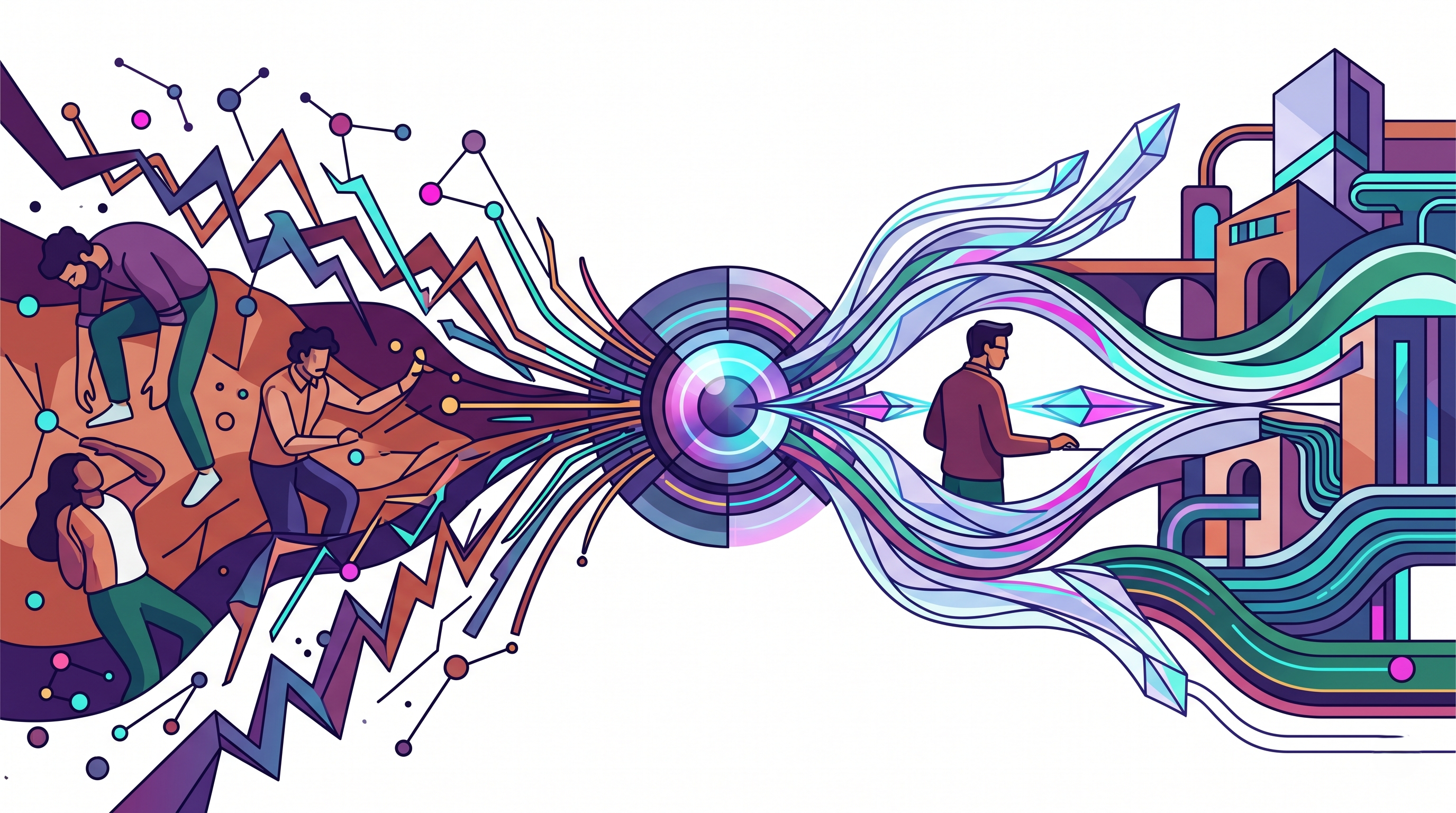
Every DevOps team wants to move fast, ship confidently, and keep systems reliable. Yet in many organizations, productivity is repeatedly disrupted by one unavoidable reality: incidents. A failed deployment, rising latency, service outage, security alert, broken integration, or infrastructure misconfiguration can instantly pull engineers away from planned work. Roadmaps pause, focus disappears, and the team shifts from building to firefighting. When this happens frequently, productivity suffers far beyond the duration of the incident itself.
The real cost of incidents is often underestimated. It is not only downtime or customer impact. It is also the hours spent triaging alerts, gathering logs, assigning ownership, recreating timelines, escalating to the right people, and manually searching for root causes. Skilled engineers end up doing repetitive coordination work instead of solving strategic problems. Over time, this creates frustration, slower delivery, and burnout.
This is why AI-powered incident response is gaining serious attention. Instead of treating incidents as purely manual processes, organizations are using AI to accelerate detection, improve triage, surface context, recommend actions, and automate repetitive response tasks. The result is not just faster recovery. It is stronger DevOps productivity.
AI does not replace engineers during incidents. It removes friction around them. It helps teams spend less time navigating chaos and more time applying expertise where it matters most.
In this blog, we will explore how AI-powered incident response improves DevOps team productivity, where it creates measurable value, and why it is becoming essential in modern engineering environments.
Why Incidents Hurt Productivity So Much
Many leaders evaluate incidents only through uptime metrics or customer impact. While those are important, internal productivity damage is equally significant.
When an incident begins, developers stop feature work to investigate alerts. Platform engineers join war rooms. Managers coordinate updates. Senior engineers are pulled into diagnosis. Planned releases may be paused until confidence returns. Even after systems recover, context switching continues as teams complete postmortems and backlog work piles up.
This means a one-hour outage can create many hours of lost momentum across multiple teams.
Frequent incidents also create hidden psychological costs. Engineers hesitate to make changes, become reactive, and spend more time protecting systems than improving them. AI-powered incident response helps reduce these losses by making incident handling faster, clearer, and less disruptive.
Faster Detection of Real Issues
Traditional monitoring systems often rely on static thresholds and fragmented alerts. They may generate noise for harmless fluctuations while missing subtle early warnings.
AI improves detection by analyzing patterns across metrics, logs, traces, historical incidents, and workload behavior. It can identify anomalies such as unusual latency growth, coordinated service degradation, or error patterns that differ from normal system activity.
This helps teams recognize real issues earlier. Faster detection means engineers can intervene before incidents grow into major outages. It also reduces time wasted chasing false alarms.
The sooner teams know what truly matters, the less productivity is lost.
Intelligent Alert Prioritization
Many DevOps teams do not suffer from a lack of alerts. They suffer from too many alerts.
During busy periods, engineers may receive notifications from infrastructure tools, cloud services, CI/CD systems, application monitors, and security platforms simultaneously. Sorting urgent signals from routine noise consumes valuable time.
AI-powered systems prioritize alerts based on severity, customer impact, service criticality, historical patterns, and related signals. Instead of dozens of disconnected notifications, teams receive clearer incident ranking.
This means engineers spend less time filtering noise and more time responding to meaningful problems. Better prioritization protects attention, which is one of the most limited resources in engineering teams.
Automatic Incident Correlation
One outage often triggers multiple symptoms at once. A database slowdown may cause API latency, queue backlogs, failed transactions, pod restarts, and user complaints.
Without intelligent correlation, responders may treat these as separate issues. Different teams investigate different symptoms while root cause resolution slows.
AI-powered incident response systems correlate alerts and telemetry automatically. They recognize that multiple failures likely stem from one underlying problem and group them into a single incident narrative.
This prevents duplicate effort and improves coordination. Teams solve the actual cause faster instead of managing scattered symptoms.
Faster Root Cause Investigation
Manual root cause analysis is one of the most expensive parts of incident response. Engineers search dashboards, compare timelines, inspect logs, review deployments, and ask multiple teams for context.
AI reduces this burden by surfacing likely causes based on patterns and recent changes. It may identify that latency increased immediately after a release, a dependency began timing out, or a specific region showed abnormal resource behavior first.
This does not eliminate human judgment, but it shortens the path to useful investigation.
Instead of starting from zero, engineers start with informed hypotheses. That saves time, lowers stress, and restores productivity faster.
Better Use of Senior Engineering Time
In many companies, senior engineers become default responders for complex incidents. They are pulled into investigations because they understand systems deeply and can navigate ambiguity quickly.
While valuable during major emergencies, this model is expensive when used for routine issues. Senior talent gets consumed by repeated triage instead of architecture, mentoring, or strategic improvement work.
AI-powered systems help less experienced responders by providing context, probable causes, recommended actions, and runbook suggestions. This enables faster first-line handling without escalating every issue upward.
Senior engineers can then focus on where they create the highest leverage.
Reduced Context Switching
Few things damage productivity more than constant context switching. Engineers may move from coding to incident response, then back to coding, then into another urgent investigation hours later.
Even after an incident ends, it often takes time to regain concentration and return to deep work.
AI-powered response systems reduce this disruption by shortening incident duration and improving first-response quality. Faster triage, clearer ownership, and quicker mitigation mean fewer people need to abandon planned work.
The value is not only in faster resolution. It is in preserving engineering focus across the rest of the organization.
Automated Routine Actions
Many incidents include repetitive operational tasks such as restarting services, scaling resources, clearing stuck queues, pausing unhealthy jobs, rerouting traffic, or creating communication tickets.
These actions are important but often predictable.
AI-powered incident workflows can trigger approved automations when confidence thresholds are met. For example, systems may auto-scale during traffic surges or restart known unhealthy components before humans are paged.
This reduces manual toil and speeds recovery.
Automation should be controlled carefully, but when applied well, it removes low-value repetitive work from engineers.
Smarter Communication During Incidents
Incident response is not only technical. Communication often becomes a major workload.
Teams must update stakeholders, coordinate across departments, assign responders, and summarize progress under pressure. Poor communication creates duplication, confusion, and delay.
AI tools can generate incident summaries, maintain timelines, suggest stakeholder updates, and capture key actions automatically. This helps responders stay aligned without assigning one engineer solely to note-taking.
Clear communication improves team efficiency and allows more energy to remain focused on resolution.
Better Post-Incident Learning
Productivity improves not only by resolving incidents faster, but also by preventing repeated incidents later.
Many postmortems are delayed because collecting evidence takes time. Timelines are incomplete, logs are scattered, and memory fades quickly after stressful events.
AI systems can automatically preserve incident timelines, key signals, affected services, remediation steps, and communication history. This makes retrospectives faster and more accurate.
Teams learn sooner, fix recurring weaknesses earlier, and reduce future disruption. Long-term productivity gains often come from stronger learning loops.
Supporting Smaller DevOps Teams
Not every organization has a large SRE or operations department. Many SaaS and growth-stage companies run lean engineering teams responsible for product delivery and platform reliability simultaneously.
For these teams, every hour matters.
AI-powered incident response acts as a force multiplier. It helps smaller teams detect issues faster, coordinate smarter, and recover with less manual effort. This allows lean organizations to maintain reliability without scaling headcount at the same pace as system complexity.
That efficiency can become a competitive advantage.
The Operational Intelligence Advantage of Atler Pilot
Incident productivity is heavily influenced by operational visibility. Teams need to know where inefficiencies exist, which resources are under pressure, and what signals deserve priority. Without that clarity, incidents become slower and more expensive to manage.
That is where Atler Pilot creates a measurable advantage.
Atler Pilot helps organizations transform fragmented cloud and operational data into actionable intelligence. Instead of manually piecing together utilization gaps, cost inefficiencies, or unclear infrastructure priorities, teams gain a clearer operating view built for faster decisions.
This supports stronger resilience, better resource efficiency, and smoother scaling as environments grow.
If your DevOps team is spending too much time reacting and not enough time improving systems, Atler Pilot can help restore balance.
Start with Atler Pilot and turn operational complexity into confident action.
Common Mistakes to Avoid
Some organizations expect AI to solve incident response automatically. That usually leads to disappointment. AI should accelerate workflows, not replace engineering ownership and judgment.
Another mistake is deploying AI on top of poor monitoring hygiene. If alerts are noisy, ownership unclear, and telemetry inconsistent, AI outputs will also be weak. Strong foundations still matter.
Teams should also avoid over-automation in sensitive production environments. Start with recommendations and low-risk automations first, then expand carefully.
The best results come from pairing AI capabilities with mature DevOps practices.
Conclusion
Incidents will always be part of operating modern systems. The real question is how much productivity they consume.
Traditional response models often waste engineering time through noise, slow triage, fragmented tools, manual coordination, and repeated investigation work. AI-powered incident response changes that equation.
It helps teams detect faster, prioritize better, investigate smarter, automate routine actions, and learn more effectively after recovery.
The result is not only better uptime. It is time for innovation, stronger team focus, and healthier engineering operations.
The most productive DevOps teams are not the ones with zero incidents. They are the ones who recover intelligently and lose the least momentum when incidents happen.
All in One Place
Atler Pilot decodes your cloud spend story by bringing monitoring, automation, and intelligent insights together for faster and better cloud operations.