
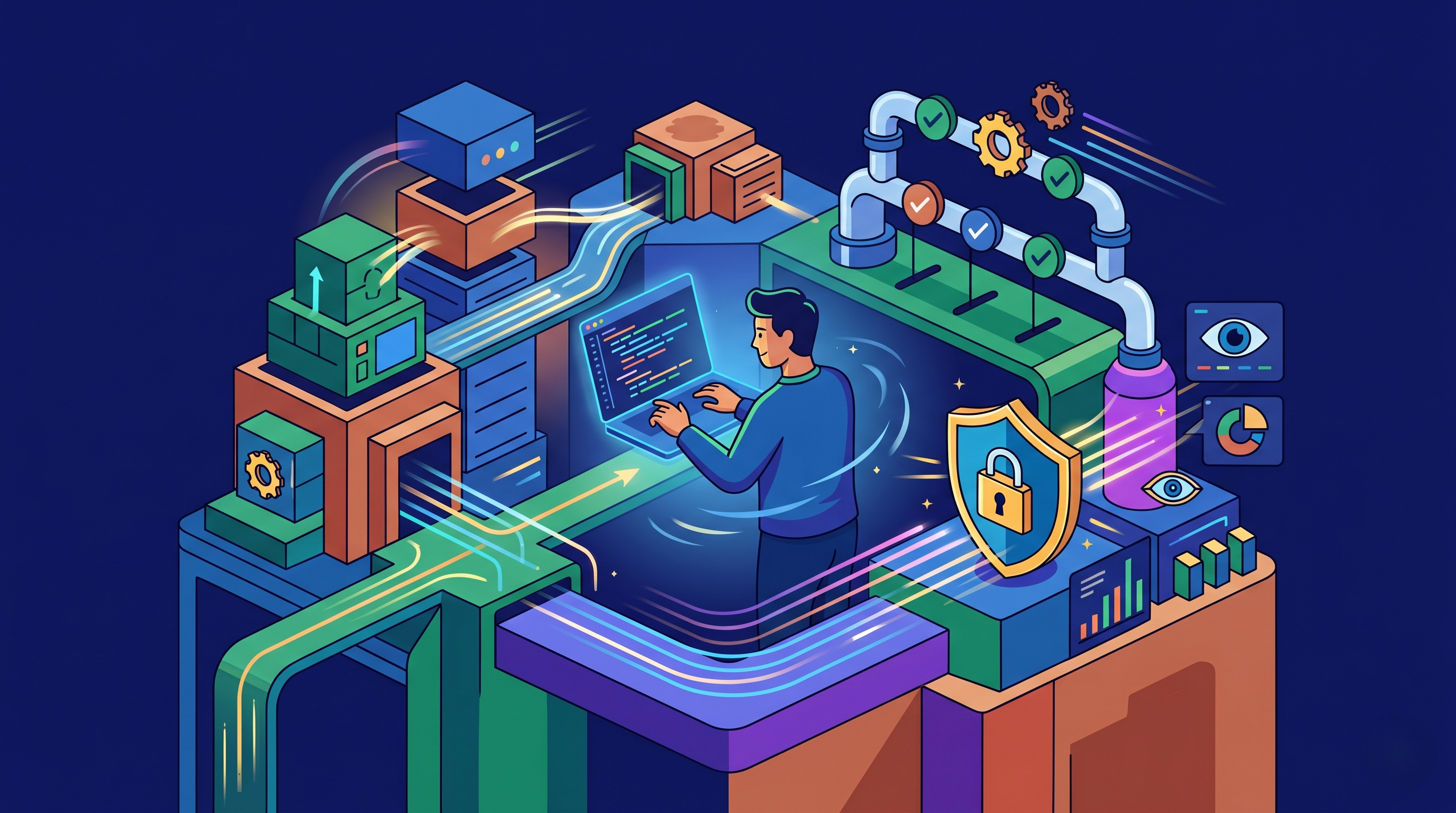
Modern SaaS companies compete on one thing more than ever before: speed. The ability to release features faster, fix issues quickly, scale reliably, and respond to customer needs often determines who leads the market. Yet many engineering teams struggle to move at that speed because developers spend too much time dealing with infrastructure complexity instead of building products. They navigate deployment pipelines, cloud permissions, environment issues, fragmented tools, and repetitive operational tasks. This creates friction that slows innovation and drains momentum.
Developer experience has therefore become a strategic priority. It is no longer only about giving engineers good laptops or modern coding tools. It is about creating an environment where developers can build, test, ship, and operate software efficiently with minimal friction. The easier it is for teams to do high-value work, the faster the business can grow. Strong developer experience directly influences productivity, retention, quality, and delivery speed.
This is where platform engineering creates real value. Instead of asking every team to solve infrastructure and operations problems independently, platform engineering builds internal products, shared systems, and self-service capabilities that make software delivery simpler. It gives developers paved roads instead of forcing everyone to build their own path.
In this blog, we will explore how platform engineering improves developer experience in SaaS companies, why it matters now, and where organizations gain the biggest operational and business advantages.
Why Developer Experience Matters in SaaS
SaaS businesses operate in highly competitive markets where customer expectations evolve quickly. New features, reliable performance, secure systems, and responsive support all depend on engineering execution. If developers move slowly, product velocity suffers. If they are frustrated by internal processes, innovation declines. If delivery becomes painful, talent retention becomes harder.
Poor developer experience often hides inside daily inefficiencies. Engineers wait for infrastructure approvals, struggle with inconsistent environments, troubleshoot pipelines, request access manually, or spend hours understanding legacy systems. Each issue may seem small individually, but together they create significant drag. Over months, this drag can delay launches, increase burnout, and reduce engineering capacity.
Improving developer experience means removing unnecessary friction so developers can focus on creating customer value. That is exactly where platform engineering becomes powerful.
What is Platform Engineering?
Platform engineering is the practice of building and managing internal platforms that help development teams deliver software more efficiently. These platforms are designed as products for internal users, with developers as the customers.
Instead of every team managing CI/CD pipelines, Kubernetes templates, observability setups, access workflows, and deployment processes independently, a platform team creates reusable systems that standardize and simplify these tasks. Developers then use self-service tools, templates, and workflows that reduce complexity.
Platform engineering is not just about tools. It is about designing a smooth internal experience. The focus is usability, reliability, consistency, and speed for engineering teams.
When done well, platform engineering turns internal operations into an advantage rather than a bottleneck.
Reducing Cognitive Load
One of the biggest ways platform engineering improves developer experience is by reducing cognitive load. Modern software environments are complex. Developers may need to understand containers, infrastructure as code, security policies, monitoring tools, cloud services, networking rules, and deployment pipelines before shipping even simple changes.
This constant context switching is exhausting. It consumes mental energy that should be spent solving product problems.
Platform engineering helps by abstracting non-essential complexity. Developers can use opinionated workflows, standardized templates, and self-service systems without needing to become experts in every operational domain. They still retain flexibility where needed, but the default path becomes simpler.
Lower cognitive load leads to faster onboarding, better focus, and stronger engineering output.
Faster Onboarding for New Engineers
Hiring talent is expensive. But the hidden cost often comes after hiring, when new engineers need weeks or months to become productive.
Without strong internal systems, onboarding may require manual access requests, environment setup problems, outdated documentation, tribal knowledge, and unclear deployment processes. New hires can feel blocked before contributing meaningful work.
Platform engineering improves onboarding by creating consistent developer environments, automated access flows, service templates, documentation portals, and repeatable workflows. New engineers can set up faster and begin shipping sooner.
This shortens the time to productivity and improves confidence early in the employee journey. For growing SaaS companies, that advantage compounds quickly.
Self-Service Infrastructure
Many engineering teams lose time waiting for operational support. They need databases, test environments, secrets management, permissions, preview environments, or deployment approvals. If every request depends on another team, progress slows.
Platform engineering introduces self-service models. Developers can provision approved resources, create environments, deploy applications, and access tooling through controlled workflows without opening multiple tickets.
This removes unnecessary queues while maintaining governance.
Self-service does not mean lack of control. It means safe autonomy with guardrails. Developers move faster, and platform teams avoid repetitive manual work.
Standardized Deployment Workflows
In some organizations, every team deploys software differently. One team uses custom scripts, another uses Jenkins, another uses manual approvals, and another relies on undocumented processes. This inconsistency increases risk and creates confusion.
Platform engineering improves experience by standardizing delivery workflows. Common CI/CD pipelines, rollback processes, release templates, and deployment guardrails help every team ship more confidently.
Developers spend less time maintaining pipelines and more time improving applications. Reliability also improves because delivery practices become repeatable and visible.
Consistency is one of the most underrated productivity accelerators.
Better Reliability Without Extra Burden
Developers care about reliability, but they do not want every team reinventing monitoring, logging, tracing, incident workflows, and security controls from scratch.
Platform engineering can embed reliability into the default path. New services can launch with built-in observability, alerting standards, backup policies, runtime policies, and secure configurations already included.
This means developers get better production readiness without additional operational overhead. Good engineering practices become easier to adopt because they are already integrated into the platform.
When reliability is built in, teams move faster with fewer downstream problems.
Stronger Collaboration Between Dev and Ops
Traditional models often created tension between development and operations teams. Developers wanted speed. Operations wanted stability. Requests moved slowly between groups, creating frustration on both sides.
Platform engineering helps align incentives. Instead of acting as gatekeepers, platform teams become enablers. Their mission is to create systems that allow developers to move quickly and safely.
This changes the relationship from dependency to partnership.
Developers gain smoother workflows, while platform teams can enforce standards through automation rather than manual approvals. Collaboration improves because success becomes shared.
Enabling Product Teams to Focus on Core Work
Every hour spent debugging pipelines or requesting permissions is an hour not spent improving the product. SaaS companies win when product teams focus on customer-facing innovation.
Platform engineering protects that focus. By owning shared delivery systems, infrastructure patterns, internal tooling, and developer workflows, platform teams free product engineers from repetitive operational distractions.
This creates more time for feature development, performance improvements, UX enhancements, and experimentation.
The best platform work often appears invisible because developers simply experience fewer blockers.
Improving Security by Default
Security processes often become painful when they are separate from developer workflows. Manual approvals, inconsistent secrets handling, and unclear policies create friction and delay.
Platform engineering improves experience by embedding security into standard workflows. Identity management, secret rotation, access controls, compliance logging, and secure templates become part of the platform itself.
Developers no longer need to navigate every security detail manually for common tasks. They follow secure paved roads.
This creates a better experience while also reducing risk. Security and speed no longer need to feel like opposites.
Internal Developer Portals
Many SaaS companies struggle with tool sprawl. Documentation lives in one system, ownership data in another, deployment pipelines elsewhere, and service status somewhere else entirely.
Platform engineering often solves this through internal developer portals. These portals give engineers one place to discover services, documentation, ownership, runbooks, APIs, environments, and deployment tools.
Instead of searching across disconnected systems, developers get a unified operational workspace.
That convenience may seem small, but it saves significant time across hundreds of engineers and thousands of tasks.
Measuring Developer Experience Properly
Improving developer experience should not rely on guesswork. SaaS companies should measure friction directly.
Useful indicators include:
Time to first deployment for new hires
Lead time from code commit to production
Build and deployment failure rates
Developer satisfaction surveys
Ticket volume for common platform requests
Time spent on environment setup
Service onboarding speed
These metrics help platform teams prioritize meaningful improvements. Developer experience becomes a measurable business capability rather than a vague cultural goal.
Atler Pilot Creates Additional Value
As SaaS companies scale, developer experience depends not only on workflows but also on operational clarity. Teams need to understand cloud efficiency, resource utilization, infrastructure waste, and optimization priorities without slowing delivery.
That is where Atler Pilot creates a real advantage.
Atler Pilot helps organizations transform fragmented cloud and operational signals into actionable intelligence. Instead of spending time manually chasing utilization gaps or unclear cost drivers, teams gain clearer visibility into where resources can be optimized and where action is needed most.
This supports faster decisions, stronger cost control, and smoother scaling as engineering organizations grow.
If your developers are moving fast but cloud complexity is growing faster, Atler Pilot can help restore control.
Start with Atler Pilot and give growing engineering teams the clarity to scale confidently.
Common Mistakes to Avoid
Some companies mistake platform engineering for simply buying tools. Others build platforms without treating developers as customers. In those cases, internal systems become rigid, confusing, or underused.
Successful platform engineering requires product thinking. Teams should gather feedback, improve usability, document workflows clearly, and prioritize developer pain points. Another common mistake is overengineering too early. Start with the most painful bottlenecks first.
The best platforms evolve with the organization rather than imposing unnecessary complexity.
Conclusion
Platform engineering is becoming essential for SaaS companies because software delivery complexity keeps rising while market pressure keeps increasing. Developers need environments where they can build and ship quickly without fighting internal systems.
By reducing cognitive load, enabling self-service, standardizing delivery, improving reliability, and embedding security into workflows, platform engineering transforms developer experience into a competitive advantage.
The companies that win will not only hire great developers. They will create systems where great developers can do their best work every day.
Because in SaaS, developer experience often becomes customer experience faster than leaders realize.
All in One Place
Atler Pilot decodes your cloud spend story by bringing monitoring, automation, and intelligent insights together for faster and better cloud operations.