
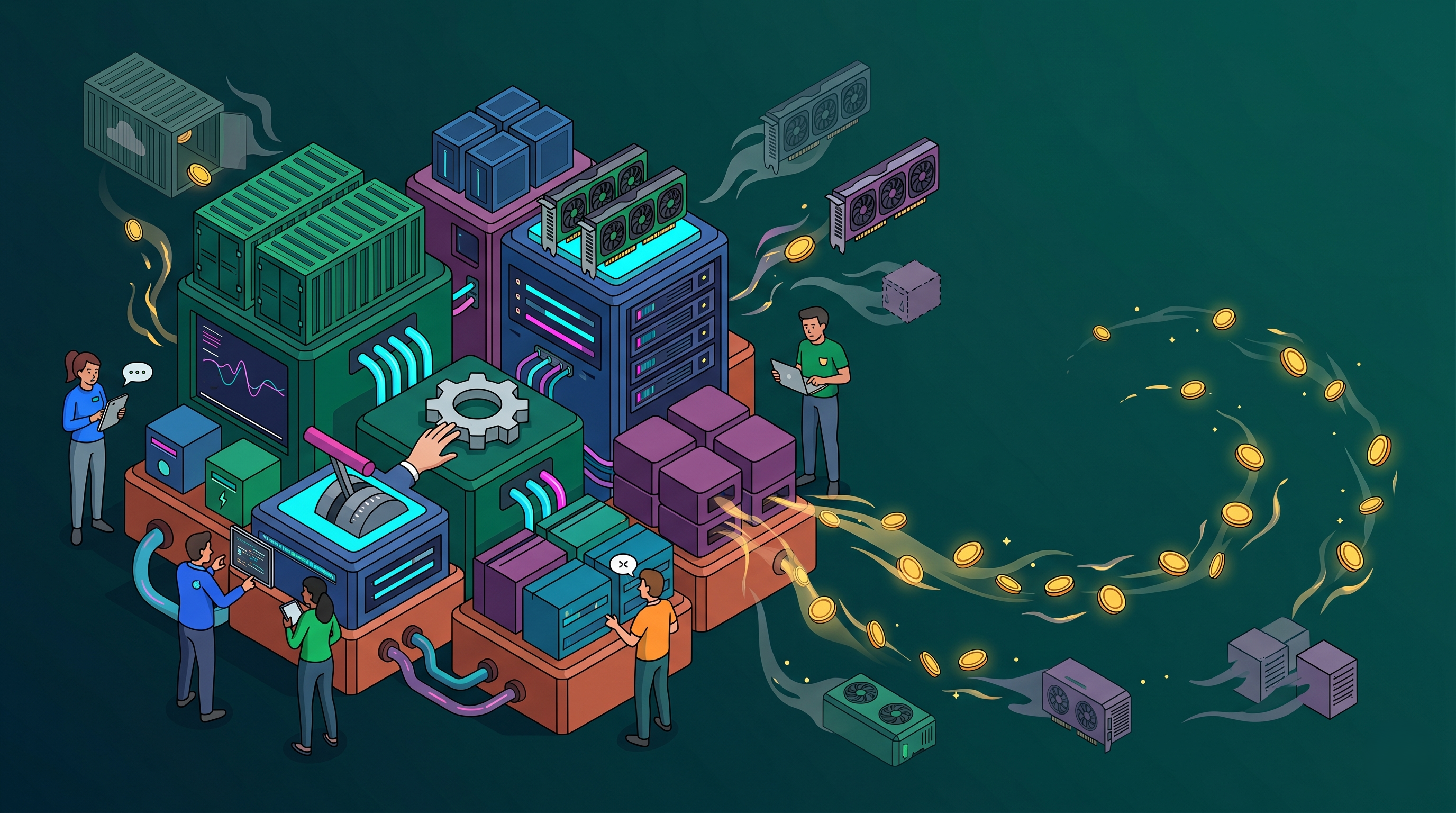
Cloud spending is often viewed as a technology problem. Organizations invest in cost optimization tools, Reserved Instances, Savings Plans, Kubernetes rightsizing initiatives, and FinOps programs to reduce waste and improve infrastructure efficiency. While these efforts are important, many cloud cost challenges originate from something far more fundamental: resource ownership.
As cloud-native environments grow, infrastructure becomes increasingly distributed across engineering teams, business units, platform teams, AI initiatives, development environments, and shared services. Resources are created rapidly, workloads scale dynamically, and cloud environments evolve continuously.
The challenge is that cloud resources are often easier to provision than they are to govern. Virtual machines, Kubernetes workloads, databases, storage systems, GPU clusters, observability platforms, and development environments can be deployed in minutes, but ownership is not always assigned with the same level of discipline.
When ownership is unclear, infrastructure frequently remains oversized, underutilized, duplicated, or forgotten altogether. Costs continue accumulating because no individual team or stakeholder feels directly responsible for evaluating whether resources are still delivering value.
In contrast, organizations with strong ownership models tend to make better infrastructure decisions, improve utilization, strengthen accountability, and reduce unnecessary cloud spending without sacrificing innovation or scalability.
The relationship between ownership and cloud economics is often underestimated, yet it has become one of the most important factors influencing modern FinOps success.
In this blog, we will explore how resource ownership affects cloud spending, why unclear accountability creates inefficiencies, and how organizations can build stronger ownership practices across cloud-native environments.
Cloud Resources Scale Faster Than Governance Processes
One of the defining characteristics of cloud computing is speed. Engineering teams can provision infrastructure on demand, launch new services quickly, and scale resources automatically as workload requirements change.
While this flexibility accelerates innovation, it also creates governance challenges. Resources often grow faster than organizations can track them effectively. New Kubernetes namespaces, databases, storage volumes, AI environments, and observability pipelines are created continuously across distributed teams.
Without clear ownership, these resources can persist indefinitely even after their original purpose has changed or disappeared. Since cloud providers continue billing for allocated resources, forgotten infrastructure quietly contributes to growing cloud costs.
The problem is rarely intentional. Most inefficiencies emerge because ownership was never clearly established in the first place. When nobody is responsible for reviewing utilization or lifecycle management, cloud spending naturally increases over time.
Unclear Ownership Creates Invisible Waste
One of the biggest drivers of cloud waste is infrastructure that exists without a clearly accountable owner.
When teams cannot determine who owns a workload, database, storage bucket, Kubernetes namespace, or AI environment, optimization becomes difficult. Even if underutilization is identified, organizations often hesitate to remove or resize resources because nobody can confidently confirm whether they are still needed.
As a result, resources remain active “just in case.” Development environments stay online, unused storage persists, idle workloads continue running, and oversized infrastructure remains allocated despite minimal utilization.
These resources often represent small costs individually, but collectively they can account for a significant portion of cloud spending. The absence of ownership creates uncertainty, and uncertainty typically leads organizations to preserve infrastructure rather than optimize it.
Over time, invisible waste accumulates across cloud-native environments and becomes increasingly difficult to manage.
Kubernetes Environments Amplify Ownership Challenges
Kubernetes introduces additional complexity because resources are often shared across multiple teams and workloads. Clusters may support dozens or hundreds of applications simultaneously, making ownership less obvious than in traditional infrastructure models.
For example, engineering teams may share compute resources, networking infrastructure, storage systems, observability platforms, and platform services within the same environment. While this improves operational efficiency, it can make accountability more difficult.
When resource ownership is unclear, teams often struggle to answer questions such as:
Who is responsible for oversized workloads?
Which team owns idle namespaces?
Who should review autoscaling policies?
Which services are driving cluster growth?
Without clear ownership structures, Kubernetes environments can become fragmented and inefficient. Resource requests remain oversized, workloads continue consuming capacity unnecessarily, and optimization opportunities are frequently overlooked because responsibility is distributed across multiple stakeholders.
Strong ownership models help ensure that Kubernetes resources are managed intentionally rather than passively.
Shared Infrastructure Requires Shared Accountability
Many organizations operate shared platforms designed to improve efficiency and standardization. These may include Kubernetes clusters, CI/CD systems, observability platforms, AI infrastructure, networking services, and internal developer platforms.
While shared infrastructure creates significant operational benefits, it also introduces accountability challenges. Costs become distributed across multiple teams, making it difficult to understand who is responsible for utilization efficiency.
Without clear governance, shared resources often experience:
Excessive capacity allocation
Resource duplication
Low utilization rates
Unnecessary scaling
Infrastructure sprawl
The issue is not the existence of shared infrastructure itself. The issue is failing to establish ownership models that connect resource consumption with accountability.
Organizations that assign ownership at the workload, service, or team level are generally more successful at optimizing shared environments because teams understand how their decisions affect overall infrastructure consumption.
AI Infrastructure Makes Ownership More Important Than Ever
AI adoption is significantly increasing the importance of resource ownership. GPU clusters, inference systems, vector databases, model training environments, and AI observability platforms consume some of the most expensive infrastructure resources in modern cloud environments.
Because AI workloads are often experimental and evolve rapidly, ownership can become difficult to track. Development teams may create GPU environments for testing, model-serving infrastructure may remain active after projects conclude, and inference systems may scale independently without clear accountability structures.
When ownership is weak, organizations frequently discover that expensive AI resources continue consuming budget despite limited operational value.
Strong ownership helps ensure that GPU utilization is reviewed regularly, AI workloads are evaluated against actual demand, and infrastructure decisions are aligned with business priorities. As AI spending continues growing, ownership will become a critical component of sustainable infrastructure governance.
Resource Ownership Improves Optimization Decisions
Optimization becomes significantly easier when ownership is clearly defined.
Teams that understand they are responsible for infrastructure utilization are more likely to evaluate resource sizing, remove unused assets, review autoscaling policies, and identify inefficiencies proactively. Ownership creates visibility into how operational decisions affect cloud spending.
For example, when a team owns a Kubernetes workload directly, they can assess whether resource requests match actual demand. When ownership exists for a development environment, teams are more likely to decommission resources after projects conclude.
The presence of ownership does not automatically eliminate inefficiency, but it creates a clear path for action. Organizations can optimize resources because they know who is responsible for making decisions and implementing improvements.
Accountability Drives Better Engineering Behavior
Cloud spending is often influenced by engineering decisions made long before financial reports reveal their impact. Resource allocation, workload design, deployment practices, observability configurations, and infrastructure architecture all affect cloud economics.
When ownership and accountability are visible, engineering teams gain a better understanding of how these decisions influence infrastructure efficiency. Teams become more likely to consider resource utilization alongside performance, scalability, and reliability requirements.
This does not mean engineers should optimize solely for cost. Instead, ownership encourages balanced decision-making where efficiency becomes part of the engineering process rather than an afterthought addressed later by separate FinOps teams.
Organizations that integrate accountability into engineering workflows often experience stronger collaboration between engineering, platform, and financial stakeholders because everyone shares visibility into infrastructure outcomes.
Ownership Enables More Accurate Cost Allocation
One of the biggest challenges in cloud financial management is determining who is responsible for cloud spending. Without ownership, cost allocation becomes difficult because infrastructure consumption cannot be clearly connected to teams, services, or business functions.
This limits the effectiveness of FinOps initiatives because organizations can identify spending but struggle to influence the behaviors driving it.
Strong ownership models improve chargeback, showback, budgeting, forecasting, and cloud governance by connecting resource consumption directly to accountable stakeholders. Teams gain visibility into their infrastructure footprint and can make more informed decisions about optimization opportunities.
Accurate ownership transforms cloud spending from an abstract organizational expense into a manageable operational responsibility.
Operational Visibility Strengthens Ownership
Ownership is only effective when teams have visibility into the resources they are responsible for managing.
If engineers cannot see utilization patterns, autoscaling behavior, workload performance, infrastructure dependencies, or operational inefficiencies, ownership becomes difficult to act upon.
Modern cloud-native environments require operational visibility that helps teams understand:
Resource utilization trends
Kubernetes workload behavior
AI infrastructure efficiency
Autoscaling patterns
Shared platform consumption
Resource lifecycle status
When visibility and ownership work together, organizations can identify inefficiencies earlier and make optimization decisions with greater confidence.
The combination of accountability and operational intelligence creates a much stronger foundation for sustainable cloud governance than either approach alone.
Build Ownership Visibility with Atler Pilot
As cloud-native ecosystems become more distributed and operationally complex, maintaining visibility into workload ownership, Kubernetes utilization, AI infrastructure efficiency, autoscaling behavior, and resource allocation becomes essential for controlling cloud spending.
Atler Pilot helps organizations gain deeper operational insight into how infrastructure resources are consumed across teams, workloads, and cloud-native environments. By connecting infrastructure telemetry, utilization data, workload intelligence, and governance visibility, teams can better understand where resources are being used, who is responsible for them, and where optimization opportunities exist.
This enables engineering, platform, and FinOps teams to strengthen accountability, improve utilization, reduce infrastructure waste, and make more informed decisions about cloud resource allocation.
Cloud optimization begins with ownership. Atler Pilot helps organizations simplify infrastructure complexity, improve operational visibility, and create stronger accountability across modern cloud-native environments. Sign up for Atler Pilot and discover how better ownership visibility can help your teams reduce waste and improve cloud efficiency at scale.
Conclusion
Cloud spending is influenced by much more than pricing models, infrastructure choices, or optimization tools. One of the most important factors shaping cloud economics is resource ownership.
When ownership is unclear, resources are more likely to remain idle, oversized, duplicated, or forgotten. Optimization becomes difficult because nobody is accountable for reviewing utilization, making improvements, or retiring unnecessary infrastructure.
Organizations that establish strong ownership practices create a foundation for better governance, stronger accountability, improved utilization, and more effective cloud financial management. As Kubernetes ecosystems, AI workloads, and cloud-native environments continue growing in complexity, ownership will become increasingly important for sustainable infrastructure operations.
Because in modern cloud environments, the resources that cost the most are often not the ones that are heavily used. They are the ones that nobody truly owns.
All in One Place
Atler Pilot decodes your cloud spend story by bringing monitoring, automation, and intelligent insights together for faster and better cloud operations.