
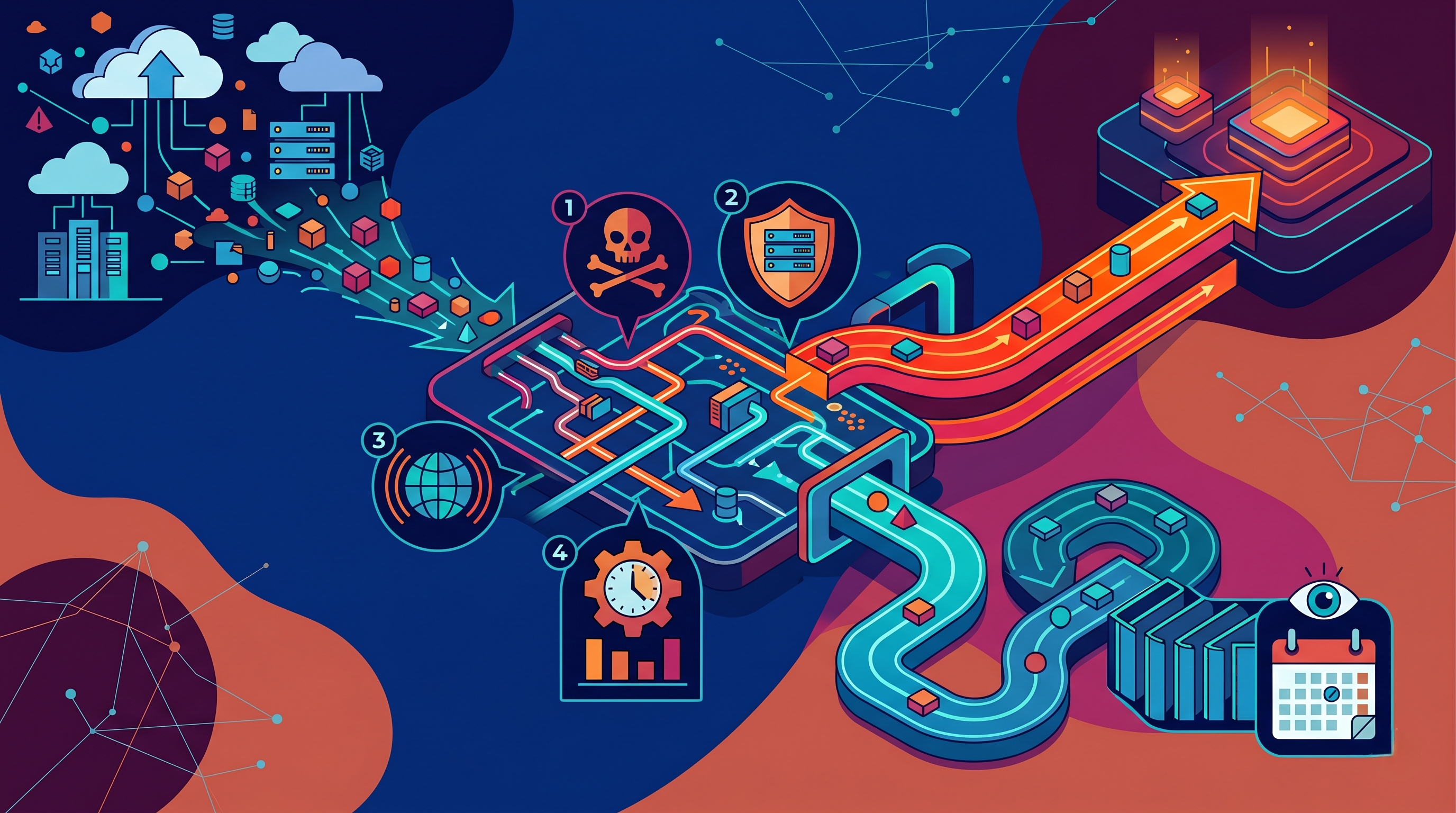
Patching used to be straightforward. Updates were periodic, systems were fewer, and the decision was simple: apply patches as soon as possible.
Today, that approach no longer works.
Modern cloud environments are dynamic, distributed, and always changing. Applications run across containers, virtual machines, serverless services, and third-party integrations. Updates arrive constantly, and not all of them carry the same level of urgency.
Applying every patch immediately can introduce instability. Delaying the wrong patch can expose systems to risk.
This creates a critical challenge for engineering and security teams: how do you decide what to update now and what can safely wait?
This is where patch intelligence becomes essential.
Why Traditional Patching Fails in Modern Environments
Many teams still follow a blanket approach that is to patch everything as quickly as possible. While this may seem safe, it often creates unintended consequences.
Frequent patching can disrupt production systems, introduce compatibility issues, and increase operational overhead. At the same time, not all patches address critical vulnerabilities. Some are minor improvements or non-urgent fixes.
In large environments, this leads to inefficiency. Teams spend time applying low-impact updates while potentially overlooking high-risk vulnerabilities.
The result is a patching strategy that is busy, but not effective.
What is Patch Intelligence?
Patch intelligence is not about applying more patches. It is about applying the right patches at the right time.
It involves evaluating updates based on context like risk level, system criticality, exposure, and potential impact. Instead of treating all patches equally, teams prioritize based on what truly matters.
This approach shifts patching from a reactive task to a strategic decision-making process.
Start with Risk, Not Volume
The first step in patch intelligence is understanding risk.
Not all vulnerabilities are equal. Some may have high severity scores but limited real-world impact in your environment. Others may be actively exploited and require immediate attention.
Teams should evaluate patches based on:
Severity of the vulnerability
Exploitability in real-world scenarios
Exposure of the affected system
Availability of public exploits
Focusing on risk ensures that critical issues are addressed first, rather than getting lost in volume.
Consider System Criticality
A patch affecting a non-critical internal tool does not carry the same urgency as one impacting a customer-facing service.
Patch decisions should always be aligned with system importance.
For example, vulnerabilities in production systems handling sensitive data require faster action than those in development environments. Similarly, systems with high uptime requirements may need carefully planned patching windows to avoid disruption.
Context matters as much as the vulnerability itself.
Evaluate Operational Impact
Every patch introduces change, and change carries risk.
Before applying an update, teams should consider potential side effects. Will the patch affect performance? Could it break dependencies? Does it require downtime?
In some cases, the operational risk of applying a patch immediately may outweigh the security risk of delaying it briefly.
Patch intelligence involves balancing these trade-offs rather than defaulting to immediate action.
Understand Exposure and Accessibility
Exposure plays a critical role in prioritization.
A vulnerability in an internet-facing service is far more urgent than one in an isolated internal system. Similarly, systems with open access or high traffic are more likely to be targeted.
Understanding how accessible a system is helps determine the urgency of patching.
The more exposed the system, the higher the priority.
Use Time-Based Prioritization
Not all patches need to be applied immediately, but they should not be ignored indefinitely.
A structured timeline helps teams manage updates effectively.
Critical patches: Immediate or within hours
High-priority patches: Within days
Medium-priority patches: Scheduled in regular cycles
Low-priority patches: Deferred with monitoring
This approach ensures that urgent issues are addressed quickly while maintaining stability for less critical updates.
Automate Where Possible, But Not Blindly
Automation is essential in modern environments, but it should be guided by intelligence.
Automating patch deployment for low-risk or well-tested updates can reduce workload. However, high-impact patches should still involve review and validation.
Blind automation can introduce instability if not managed carefully.
The goal is controlled automation, not uncontrolled change.
Continuous Monitoring is Key
Patch intelligence is not a one-time decision.
Threat landscapes evolve, new exploits emerge, and system conditions change. A patch that was safe to defer yesterday may become critical tomorrow.
Continuous monitoring ensures that priorities remain aligned with current risk.
Teams should regularly reassess deferred patches and update their strategy accordingly.
Making Patch Intelligence Practical with Atler Pilot
Understanding patch priorities is one thing. Managing them consistently across complex environments is another.
This is where Atler Pilot brings practical value.
With its Patch Intelligence capabilities, teams gain structured visibility into patching needs across systems, along with context around risk, impact, and priority. Instead of manually analyzing updates, they can focus on what truly requires attention.
It helps reduce noise, highlight critical actions, and support more confident decision-making, especially in environments where patch volume is high and time is limited.
If patching today feels more reactive than strategic, introducing clearer intelligence into the process can make a meaningful difference.
Common Mistakes to Avoid
Some teams treat all patches as equally urgent, leading to unnecessary workload and potential instability. Others delay too many updates, increasing risk exposure.
Another common mistake is ignoring context. Without considering system criticality and exposure, prioritization becomes inaccurate.
Effective patching requires balance, not extremes.
Conclusion
Patching is no longer just a maintenance task. It is a critical component of both security and operational stability.
In modern environments, success depends on making informed decisions about what to update and when. Patch intelligence provides the framework for those decisions.
By focusing on risk, context, and impact, teams can move beyond reactive patching and adopt a more strategic approach.
Because in today’s cloud environments, the goal is not to patch everything.
It is to patch what matters at the right time.
All in One Place
Atler Pilot decodes your cloud spend story by bringing monitoring, automation, and intelligent insights together for faster and better cloud operations.