
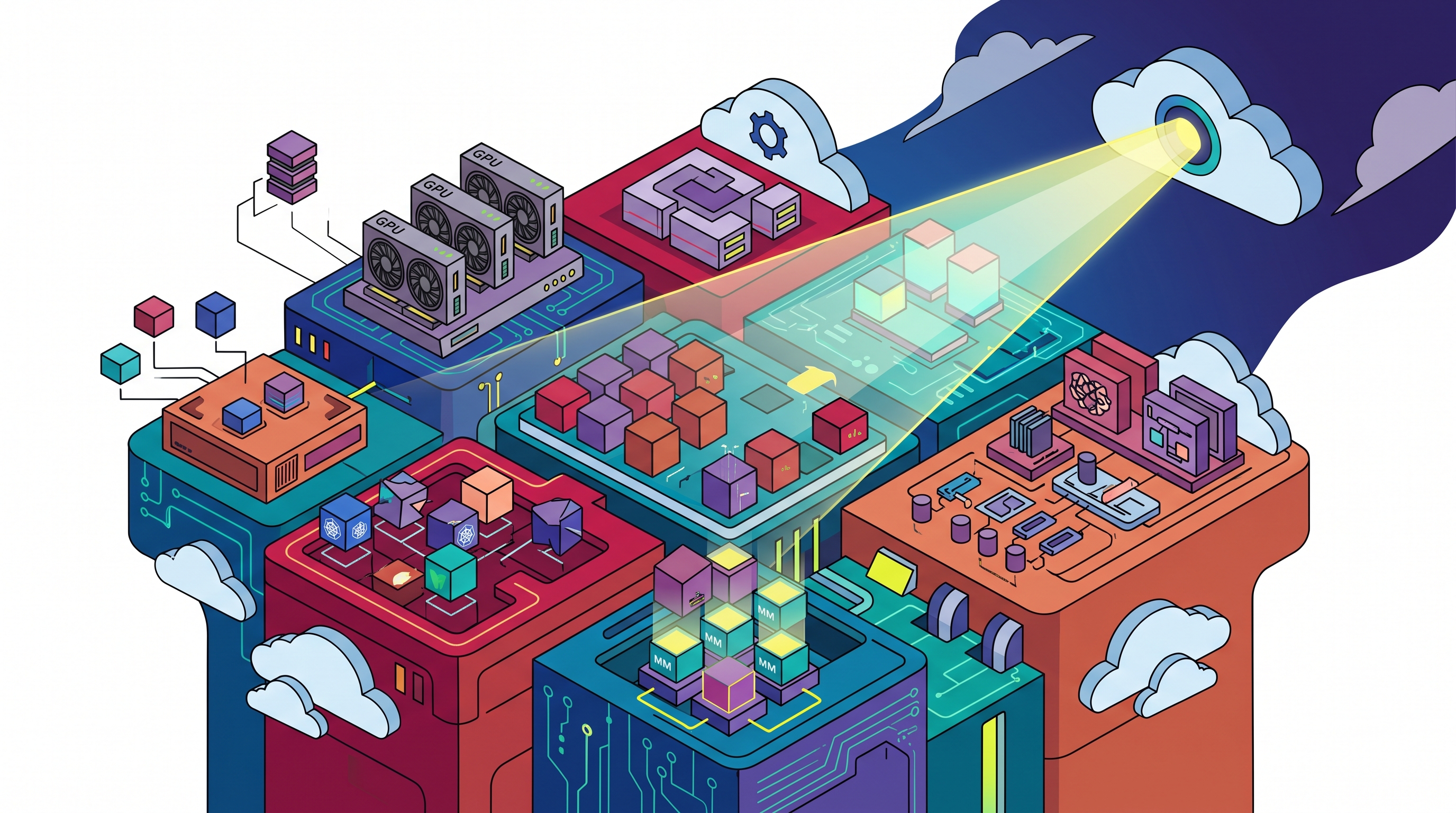
Sandbox environments have become an essential part of modern cloud-native software development. Engineering teams rely on isolated development environments to test applications, validate infrastructure changes, experiment with AI workloads, deploy Kubernetes services, and accelerate innovation without affecting production systems.
These environments enable faster development cycles, safer experimentation, and improved engineering agility across distributed cloud-native ecosystems. Teams can provision infrastructure rapidly, launch temporary workloads, simulate operational scenarios, and validate deployment pipelines independently.
But while sandbox environments improve operational flexibility, they also introduce one of the most overlooked infrastructure efficiency problems in modern cloud operations.
Across many organizations, sandbox environments quietly consume substantial cloud resources without strong governance visibility, workload accountability, or operational optimization. Containers remain idle, Kubernetes clusters become fragmented, temporary AI workloads persist indefinitely, observability systems continue generating telemetry, and underutilized infrastructure quietly scales operationally beneath development ecosystems.
The problem is not that sandbox environments are unnecessary. The problem is that they are often treated as operationally low-risk while becoming financially high-impact over time.
Because sandbox infrastructure typically exists outside strict production governance controls, inefficiencies can accumulate rapidly without triggering immediate operational concern. Organizations may focus heavily on optimizing production workloads while large amounts of hidden infrastructure waste continue growing across development and experimentation environments.
This creates one of the most underestimated cloud allocation problems in modern infrastructure operations: inefficient resource allocation hidden inside sandbox ecosystems.
In this blog, we will explore why sandbox environments create major cloud allocation challenges, how hidden inefficiencies scale operationally across cloud-native ecosystems, and the strategies organizations can use to improve governance, utilization visibility, and infrastructure sustainability across non-production environments.
Sandbox Environments Often Operate Outside Governance Visibility
Production infrastructure environments typically operate under strict governance policies involving resource monitoring, workload ownership, operational accountability, and cloud financial oversight. Sandbox environments rarely receive the same level of governance attention.
Development and experimentation systems are often provisioned rapidly to maximize engineering agility. Teams create temporary Kubernetes clusters, AI testing environments, distributed APIs, storage systems, and observability pipelines without long-term infrastructure planning or utilization accountability.
The challenge is that these environments frequently remain active far longer than originally intended operationally. Temporary workloads evolve into persistent infrastructure ecosystems while remaining outside centralized optimization workflows.
As a result, organizations commonly lose visibility into:
Which teams own sandbox resources
Which environments remain actively used
How infrastructure utilization behaves operationally
Where idle resources accumulate
Which workloads consume excessive shared capacity
Without workload-level visibility, sandbox environments gradually become fragmented infrastructure ecosystems operating with limited governance awareness.
Kubernetes Sandboxes Frequently Accumulate Idle Capacity
Kubernetes has become foundational to modern development workflows because it allows engineering teams to simulate production-like environments quickly and flexibly. However, sandbox Kubernetes clusters are also one of the largest sources of hidden infrastructure waste across cloud-native ecosystems.
Development clusters often maintain:
Oversized node pools
Excessive CPU and memory reservations
Idle namespaces
Underutilized workloads
Persistent test environments
Fragmented cluster allocation
The problem is that sandbox Kubernetes environments are rarely optimized with the same operational discipline applied to production systems. Teams prioritize deployment speed and experimentation flexibility rather than long-term infrastructure efficiency.
Over time, clusters accumulate idle resources operationally while remaining partially active enough to avoid automated cleanup systems.
Because Kubernetes environments scale dynamically, these inefficiencies frequently compound across distributed development ecosystems without centralized operational visibility into actual utilization patterns.
Temporary Infrastructure Rarely Remains Temporary
One of the most common operational problems inside sandbox environments is infrastructure persistence.
Engineering teams frequently create temporary resources for short-term testing, validation, AI experimentation, or infrastructure simulation. However, many of these resources continue running indefinitely after development activity ends operationally.
Organizations commonly encounter:
Unused virtual machines
Persistent Kubernetes workloads
Orphaned storage volumes
Idle databases
Abandoned AI inference systems
Forgotten observability pipelines
The challenge is that cloud-native infrastructure is extremely easy to provision but much harder to track consistently across distributed engineering organizations.
Without strong lifecycle governance, temporary sandbox resources gradually evolve into long-term infrastructure overhead that continues consuming cloud capacity operationally without delivering meaningful business value.
This creates silent infrastructure growth across development ecosystems that often remains financially invisible until cloud spending escalates significantly.
AI Experimentation Environments Increase Allocation Complexity
AI adoption is dramatically increasing infrastructure allocation challenges inside sandbox environments.
Engineering teams now frequently provision GPU clusters, vector databases, distributed inference systems, model training pipelines, and AI observability environments for experimentation and testing purposes.
The challenge is that AI infrastructure consumes highly expensive resources operationally, especially GPUs and distributed compute systems. Sandbox AI workloads often involve:
Oversized GPU allocation
Idle inference endpoints
Persistent training environments
Duplicate model-serving systems
Unused vector databases
Because AI experimentation environments evolve rapidly and unpredictably, traditional governance systems often struggle to maintain visibility into actual workload utilization operationally.
Many organizations optimize production AI infrastructure carefully while underestimating how much hidden cloud waste accumulates inside experimental AI sandbox ecosystems.
As AI adoption scales, unmanaged sandbox experimentation can become a major contributor to infrastructure inefficiency across cloud-native operations.
Shared Sandbox Platforms Create Resource Fragmentation
Many enterprises centralize development workflows through shared sandbox platforms designed to support multiple engineering teams simultaneously. These platforms improve operational flexibility and simplify environment provisioning, but they also introduce significant resource allocation complexity.
Shared sandbox ecosystems frequently experience:
Fragmented workload placement
Competing infrastructure reservations
Idle shared capacity buffers
Unclear resource ownership
Duplicate testing environments
Inconsistent utilization patterns
The challenge is that shared development platforms optimize heavily for flexibility and availability, often at the expense of infrastructure efficiency.
Without workload-level allocation visibility, organizations struggle to understand which teams or services actually consume shared sandbox resources operationally. Infrastructure may appear heavily provisioned but operationally underutilized beneath the surface.
Shared sandbox environments, therefore, often scale infrastructure complexity faster than actual development requirements.
Observability Systems Quietly Scale Alongside Sandbox Workloads
Modern development environments increasingly include production-grade observability tooling involving logs, metrics, traces, distributed monitoring systems, and AI telemetry pipelines.
While observability is essential for testing infrastructure behavior accurately, these systems also generate significant operational overhead across sandbox ecosystems.
Organizations frequently overlook the cost impact of:
Sandbox telemetry retention
Duplicate monitoring pipelines
High-cardinality test metrics
Idle observability environments
Experimental AI telemetry systems
The challenge is that observability infrastructure frequently remains active even after development workloads become idle operationally.
As sandbox ecosystems scale across Kubernetes environments, AI testing platforms, and distributed development systems, observability overhead often grows continuously underneath operational workflows without sufficient governance visibility.
Monitoring infrastructure itself increasingly becomes part of the hidden resource allocation problem inside cloud-native sandbox environments.
Multi-Cloud Sandbox Environments Increase Visibility Gaps
Most modern enterprises now operate development environments across AWS, Azure, Google Cloud, Kubernetes ecosystems, edge environments, and hybrid infrastructure simultaneously.
This introduces substantial fragmentation because sandbox visibility becomes distributed across multiple operational domains with different:
Provisioning systems
Governance policies
Observability platforms
Resource allocation models
Infrastructure behaviors
Traditional cloud financial reporting systems frequently analyze environments independently rather than understanding sandbox utilization holistically across distributed ecosystems.
As a result, organizations often lose centralized visibility into:
Shared development infrastructure consumption
Cross-environment idle resources
Distributed sandbox ownership
Experimental AI workload utilization
Multi-cloud sandbox ecosystems therefore significantly complicate operational governance and cloud allocation optimization.
Delayed Financial Visibility Weakens Accountability
One of the biggest reasons sandbox inefficiencies persist is delayed operational visibility.
Traditional cloud reporting systems often identify spending increases only after infrastructure waste has already scaled significantly across development environments. By the time financial anomalies become visible operationally, unused workloads and fragmented sandbox resources may already be deeply embedded across distributed ecosystems.
Without real-time workload visibility, engineering teams frequently remain disconnected from how sandbox infrastructure affects cloud economics operationally.
This weakens accountability because development environments are often perceived as temporary or operationally low-priority despite continuously consuming infrastructure resources underneath.
Real-time operational awareness is becoming essential for managing sandbox ecosystems sustainably at cloud-native scale.
Intelligent Lifecycle Governance is Becoming Essential
The future of sandbox infrastructure management increasingly depends on intelligent lifecycle governance capable of understanding workload behavior continuously across development ecosystems.
Organizations now require systems capable of identifying:
Idle sandbox workloads
Unused Kubernetes namespaces
Underutilized GPU environments
Persistent temporary infrastructure
Fragmented resource allocation
Orphaned observability systems
Static cleanup policies alone are often insufficient because sandbox environments evolve too dynamically across modern engineering organizations.
Intelligent governance increasingly requires workload-level operational awareness capable of understanding how sandbox infrastructure behaves operationally in real time rather than relying solely on periodic financial reviews or manual cleanup processes.
The future of cloud efficiency depends heavily on improving visibility into the hidden infrastructure ecosystems operating outside production environments.
Build Sandbox Infrastructure Visibility with Atler Pilot
As cloud-native development ecosystems become more distributed and operationally complex, maintaining visibility into sandbox workload behavior, Kubernetes utilization, AI infrastructure efficiency, observability growth, and shared resource allocation becomes increasingly important for sustainable infrastructure governance. This is where Atler Pilot helps organizations gain deeper operational understanding across modern sandbox and development environments through a unified operational view.
By connecting infrastructure insights, workload intelligence, operational visibility, utilization awareness, and governance context together, Atler Pilot helps organizations identify idle workloads, fragmented infrastructure behavior, underutilized sandbox resources, autoscaling inefficiencies, and operational waste earlier across distributed development ecosystems. Instead of relying solely on delayed billing analysis or fragmented monitoring systems, engineering and platform teams gain more contextual operational awareness into how sandbox environments behave and what drives hidden cloud resource allocation inefficiencies operationally.
This allows organizations to improve Kubernetes governance, optimize AI experimentation environments, strengthen workload accountability, reduce idle infrastructure waste, and build more sustainable development ecosystem strategies without limiting engineering agility or innovation speed.
Modern cloud optimization must extend beyond production environments alone. Atler Pilot helps organizations simplify infrastructure complexity, improve operational visibility, and make more informed decisions around sandbox governance, Kubernetes optimization, AI infrastructure efficiency, workload accountability, and cloud operational sustainability.
Sign up for Atler Pilot and explore how unified operational visibility can help your teams uncover and reduce the hidden cloud allocation inefficiencies scaling inside sandbox environments.
Conclusion
Sandbox environments are essential for modern cloud-native innovation, but they have also become one of the largest hidden sources of cloud resource allocation inefficiency across Kubernetes ecosystems, AI experimentation platforms, observability systems, and distributed development environments.
Organizations that succeed in sustainable cloud governance will not focus solely on optimizing production infrastructure while ignoring development ecosystems operating underneath. They will build infrastructure strategies centered around workload visibility, intelligent lifecycle governance, Kubernetes operational awareness, AI infrastructure efficiency, and real-time utilization understanding across all cloud-native environments.
Because the future of cloud optimization is no longer only about managing production workloads efficiently. It is about understanding and governing the hidden infrastructure ecosystems scaling continuously inside modern development and sandbox operations.
All in One Place
Atler Pilot decodes your cloud spend story by bringing monitoring, automation, and intelligent insights together for faster and better cloud operations.