
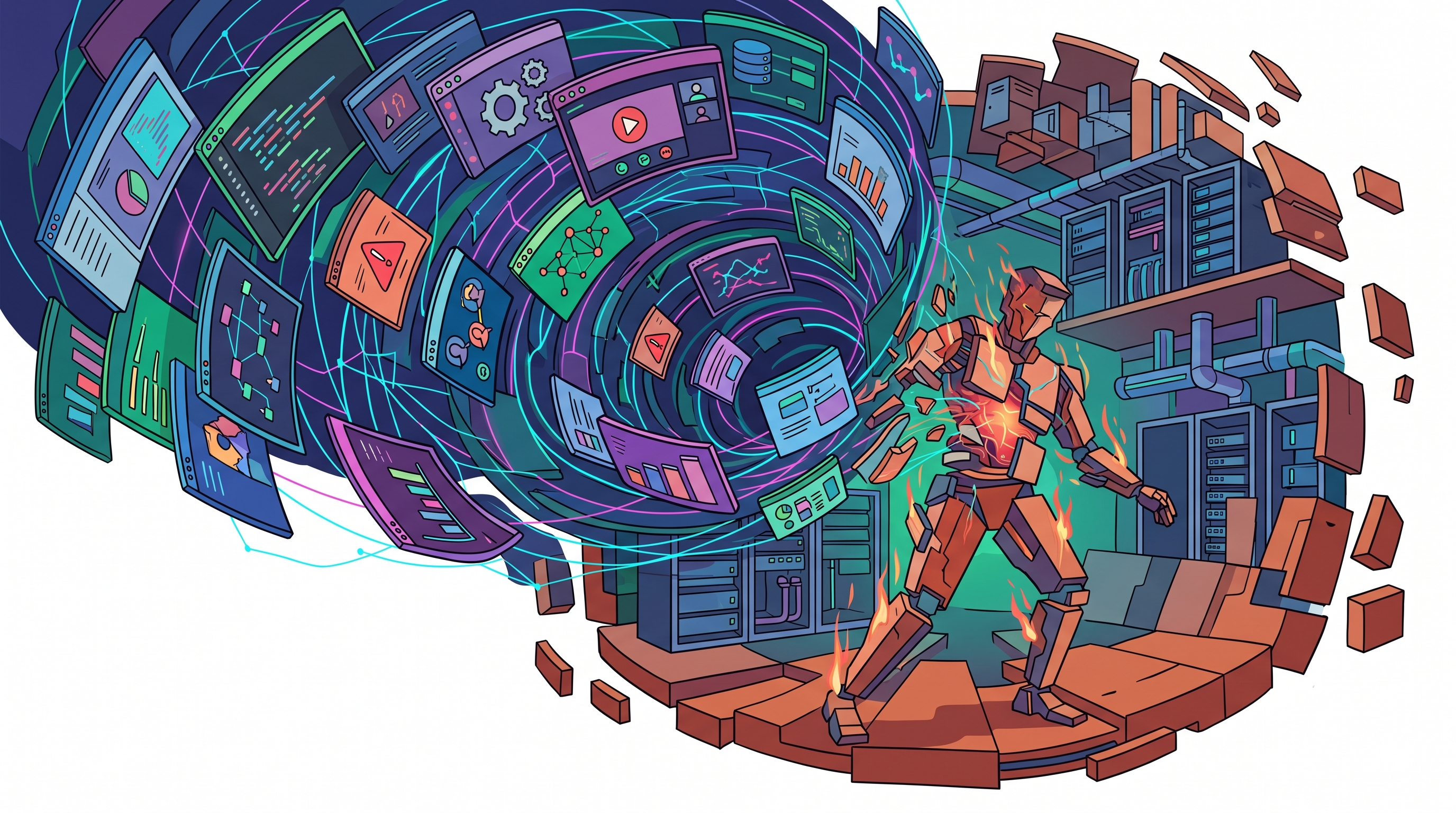
Modern engineering teams operate in some of the most complex environments in the history of software development. Cloud-native infrastructure, Kubernetes ecosystems, AI-powered applications, distributed microservices, observability platforms, DevOps pipelines, security requirements, and continuous delivery processes have dramatically increased the scope of responsibilities placed on engineers.
While these technologies have accelerated innovation and scalability, they have also created a hidden productivity challenge that many organizations underestimate: constant context switching.
Engineers today rarely spend an entire day focused on a single task. Instead, they move continuously between feature development, infrastructure troubleshooting, production incidents, cloud optimization efforts, code reviews, deployment pipelines, security alerts, observability dashboards, documentation updates, and cross-team meetings.
Each transition may seem relatively minor in isolation. However, the cumulative impact can significantly reduce productivity, slow innovation, increase operational risk, and create substantial hidden costs across engineering organizations.
The problem is that context switching often remains invisible in traditional productivity metrics. Teams may appear busy, deployment pipelines may continue running, and projects may continue progressing. Yet beneath the surface, engineering efficiency gradually declines as attention becomes fragmented across competing priorities.
As cloud-native systems grow increasingly complex, reducing unnecessary context switching is becoming just as important as optimizing infrastructure, improving deployment speed, or reducing cloud costs.
In this blog, we will explore why context switching has become such a significant challenge for modern engineering teams, how it affects productivity and operational performance, and what organizations can do to create more focused and sustainable engineering environments.
Modern Engineering Roles Have Expanded Dramatically
A decade ago, engineering responsibilities were often more clearly separated. Developers primarily focused on application development, operations teams managed infrastructure, and security teams handled governance.
Today, cloud-native operating models have blurred many of these boundaries. Engineers are now expected to understand application architecture, Kubernetes operations, CI/CD pipelines, observability tooling, cloud resource management, security best practices, infrastructure-as-code, and, increasingly, AI systems.
As a result, a single engineer may move between writing code, investigating performance issues, reviewing deployment configurations, responding to alerts, optimizing cloud costs, and collaborating with multiple teams throughout the same day.
While this broader ownership model improves agility and accountability, it also increases cognitive load significantly. Every shift between responsibilities requires engineers to rebuild context, understand new information, and adjust their mental focus. Over time, these transitions become a major source of productivity loss across engineering organizations.
Deep Work Becomes Difficult in Fragmented Environments
Many engineering tasks require deep concentration. Designing system architectures, solving complex technical problems, debugging distributed applications, optimizing Kubernetes environments, or developing AI-powered systems often requires extended periods of uninterrupted focus.
Context switching disrupts this process. Every interruption forces engineers to pause one mental model and load another. Even when interruptions last only a few minutes, it often takes considerably longer to fully regain focus on the original task.
In highly fragmented work environments, engineers may spend more time rebuilding context than performing meaningful work. A day filled with alerts, meetings, messages, and operational requests can leave little room for sustained problem-solving or innovation.
The result is not simply slower task completion. It is a reduction in the quality of thinking that complex engineering work requires. Organizations often focus on improving technical efficiency while overlooking the importance of protecting engineers’ ability to work deeply and consistently.
Operational Interruptions Create Hidden Productivity Costs
One of the biggest drivers of context switching in modern engineering organizations is operational noise. Cloud-native environments generate continuous streams of alerts, notifications, monitoring signals, deployment updates, security warnings, and infrastructure events.
Many of these signals are valuable. However, when teams receive excessive notifications or poorly prioritized alerts, engineers are frequently pulled away from planned work to investigate issues that may not require immediate attention.
The challenge is that operational interruptions rarely appear in productivity reports. An engineer who spends twenty minutes investigating a false alarm may still appear productive from a workload perspective. Yet the interruption may disrupt hours of focused work by breaking concentration and forcing repeated context transitions.
As infrastructure complexity increases, reducing unnecessary operational noise becomes essential for protecting engineering productivity. Teams that manage alerts effectively often gain significant productivity advantages without adding additional resources.
Kubernetes and Cloud-Native Complexity Increase Cognitive Load
Kubernetes and cloud-native architectures have improved scalability and operational flexibility, but they have also increased the amount of information engineers must manage simultaneously.
Modern systems involve interconnected services, shared infrastructure, autoscaling policies, observability platforms, networking layers, security controls, and deployment pipelines. Understanding how these components interact requires substantial mental effort.
When engineers switch between tasks in these environments, they often need to rebuild complex mental models repeatedly. Investigating a Kubernetes issue, for example, may require understanding cluster behavior, workload dependencies, networking configurations, and resource utilization patterns. Shifting immediately from that investigation to feature development or AI infrastructure management creates additional cognitive strain.
The more complex the infrastructure becomes, the greater the cost of frequent context switching. Organizations that invest heavily in cloud-native technologies without addressing cognitive load may unintentionally reduce the productivity gains those technologies were meant to deliver.
Meetings Often Multiply Context Switching
Collaboration is essential for modern engineering organizations, but excessive meetings can significantly increase context switching.
Engineers frequently move between technical work and meetings involving planning, project updates, architecture discussions, stakeholder communication, incident reviews, and cross-functional coordination. While each meeting may have a legitimate purpose, frequent interruptions fragment the workday and reduce opportunities for focused execution.
The issue is not simply the time spent in meetings. The larger challenge is the mental transition required before and after each discussion. Engineers often need to pause technical work, shift attention to a new topic, and then later reconstruct the context they left behind.
Organizations that optimize collaboration without considering attention management often create environments where engineers spend large portions of their day switching between conversations rather than solving problems.
Constant Switching Increases Error Rates
Engineering accuracy depends heavily on attention and context. Whether writing code, reviewing infrastructure configurations, managing deployments, or analyzing cloud environments, mistakes become more likely when concentration is repeatedly interrupted.
Context switching increases the risk of overlooking important details, misinterpreting system behavior, or making configuration errors. This is especially true in cloud-native environments where small mistakes can have widespread operational consequences.
For example, an engineer moving rapidly between deployment tasks, incident response activities, and infrastructure changes may be more likely to introduce configuration drift, overlook security settings, or miss critical dependencies.
These errors create additional operational costs because they often require troubleshooting, remediation, and incident management later. In many cases, reducing context switching improves reliability as much as improving technical processes themselves.
Engineering Burnout Often Begins With Cognitive Overload
Context switching is not only a productivity challenge. It is also a major contributor to engineering burnout.
When engineers continuously move between competing priorities, operational interruptions, urgent requests, and complex technical responsibilities, cognitive fatigue accumulates rapidly. The feeling of being busy without making meaningful progress can become particularly frustrating over time.
Burnout often emerges not because engineers are unwilling to work hard, but because their attention is constantly fragmented. They spend significant energy managing interruptions rather than solving problems.
Organizations that fail to address context switching may experience increased turnover, reduced engagement, lower innovation capacity, and declining team morale. Protecting focus is therefore not only an operational concern but also a critical component of sustainable engineering culture.
Better Visibility Reduces Unnecessary Interruptions
Many context-switching problems originate from uncertainty. Engineers are frequently pulled into investigations because teams lack sufficient visibility into infrastructure behavior, workload dependencies, or operational conditions.
When observability systems, deployment pipelines, cloud governance platforms, and operational dashboards provide fragmented information, engineers often need to gather context manually across multiple tools and teams.
Improving visibility can significantly reduce these interruptions. When teams have access to clear operational insights, they can identify issues faster, prioritize work more effectively, and avoid unnecessary investigations.
The goal is not to eliminate collaboration or operational awareness. It is reducing the number of attention shifts required to understand what is happening across complex cloud-native environments.
Focused Teams Build Better Systems
Organizations often measure engineering performance through deployment frequency, velocity metrics, and delivery timelines. While these indicators are valuable, sustainable engineering success depends heavily on creating environments where teams can focus effectively.
Focused engineers are more likely to solve complex problems, improve system reliability, optimize infrastructure efficiently, and develop innovative solutions. They spend less time rebuilding context and more time applying expertise where it creates the greatest value.
As cloud-native ecosystems continue growing in complexity, attention management will become an increasingly important competitive advantage. Organizations that protect engineering focus will often outperform those that simply increase workload expectations.
Reducing context switching is not about slowing down. It is about enabling teams to work at a higher level of effectiveness while maintaining operational resilience and long-term sustainability.
Improving Engineering Focus with Atler Pilot
As cloud-native ecosystems become more distributed and operationally complex, engineers often spend significant time switching between monitoring tools, infrastructure dashboards, Kubernetes environments, cloud reports, and operational workflows. This fragmentation increases cognitive load and makes it harder for teams to maintain focus on high-value engineering work.
Atler Pilot helps organizations reduce operational complexity by providing a unified view of infrastructure behavior, workload utilization, Kubernetes performance, cloud resource efficiency, and operational intelligence. By bringing critical infrastructure insights into a single operational context, teams spend less time gathering information across multiple systems and more time solving meaningful problems.
With improved visibility into infrastructure behavior, operational anomalies, resource utilization, and workload dependencies, engineering teams can prioritize work more effectively, reduce unnecessary investigations, and minimize the interruptions that contribute to constant context switching.
Modern engineering productivity depends on more than technical skill alone. It depends on clarity, focus, and operational visibility. Atler Pilot helps organizations simplify infrastructure complexity, improve decision-making, and create environments where engineers can spend more time building and less time chasing context.
Sign up for Atler Pilot and discover how unified operational intelligence can help your teams work more efficiently across modern cloud-native environments.
Conclusion
Constant context switching has become one of the most underestimated productivity challenges facing modern engineering organizations. As cloud-native systems, Kubernetes environments, AI workloads, and distributed infrastructure continue growing in complexity, engineers are increasingly required to divide their attention across a wide range of operational responsibilities.
While these interruptions may appear manageable individually, their cumulative impact affects productivity, reliability, innovation, accuracy, and team well-being. Organizations that ignore context switching often find that engineering velocity slows despite significant investments in technology and automation.
The most effective engineering teams are not necessarily the busiest. They are the teams that can maintain focus, preserve context, and apply their expertise without unnecessary interruption. Because in modern cloud-native operations, protecting attention may be just as important as optimizing infrastructure.
All in One Place
Atler Pilot decodes your cloud spend story by bringing monitoring, automation, and intelligent insights together for faster and better cloud operations.