
What began as a wave of adoption quickly turned into a race for optimization, automation, and intelligence. Yet, for all the innovation we’ve seen, the surface has barely been scratched. The next chapter of cloud evolution is only beginning.
Organizations are embracing multi-cloud strategies, integrating AI-driven operations, and rethinking FinOps, security, and sustainability, all while preparing for the rise of edge computing and industry-specific cloud platforms.
Forrester predicts that global public cloud revenues will cross 1 trillion dollars by 2026, while Grand View Research expects the overall market to reach 2.39 trillion dollars by 2030, growing at a rate of more than 20 percent annually. This momentum is undeniable.
Interestingly, the future of cloud will only belong to those who master it and treat it as an intelligent, automated, and measurable system that drives real outcomes for businesses. Let’s dive deep into the defining cloud trends of 2026 and what mastering the cloud will truly mean for modern enterprises.
Rise of Hybrid and Multi-Cloud Environments
The days of single-cloud dependency are fading fast. By 2026, most enterprises will be operating across multiple cloud providers, using a combination of AWS, Microsoft Azure, Google Cloud Platform, and even private or edge data centers.
This shift is boosted by a mix of regulatory requirements, workload optimization, and risk diversification. For example, a fintech firm might use AWS for transaction processing due to scalability, Azure for analytics because of its integration with Power BI, and a local private cloud for compliance with data sovereignty laws.
This multi-cloud approach is more about vendor neutrality and workload portability, instead of just spreading workload randomly. Organizations now design architectures that can move data and applications freely, based on performance, cost, or compliance needs.
Cloud Atler, an intelligent Skyscanner for clouds, helps in reducing complexity by giving teams a single dashboard to compare pricing, manage workloads, and optimize deployments across different providers.
The Convergence of Cloud and Artificial Intelligence
The line between cloud computing and artificial intelligence is rapidly disappearing. Cloud service providers are embedding AI capabilities directly into their infrastructure, making it easier for organizations to use machine learning for cloud cost forecasting, predictive maintenance, and workload optimization, and more.
The future of cloud will not be about monitoring manually but about systems that can learn, adapt, and optimize themselves in real time. For example, Atler Pilot, part of the Cloud Atler ecosystem, already applies this approach by continuously analyzing resource utilization, suggesting cost-saving adjustments, and automating scaling decisions.
By 2026, most enterprise workloads will be AI-enabled from the start, allowing organizations to manage performance and cost through intelligent automation rather than constant manual oversight.
The Expansion of Edge and Distributed Cloud Architectures
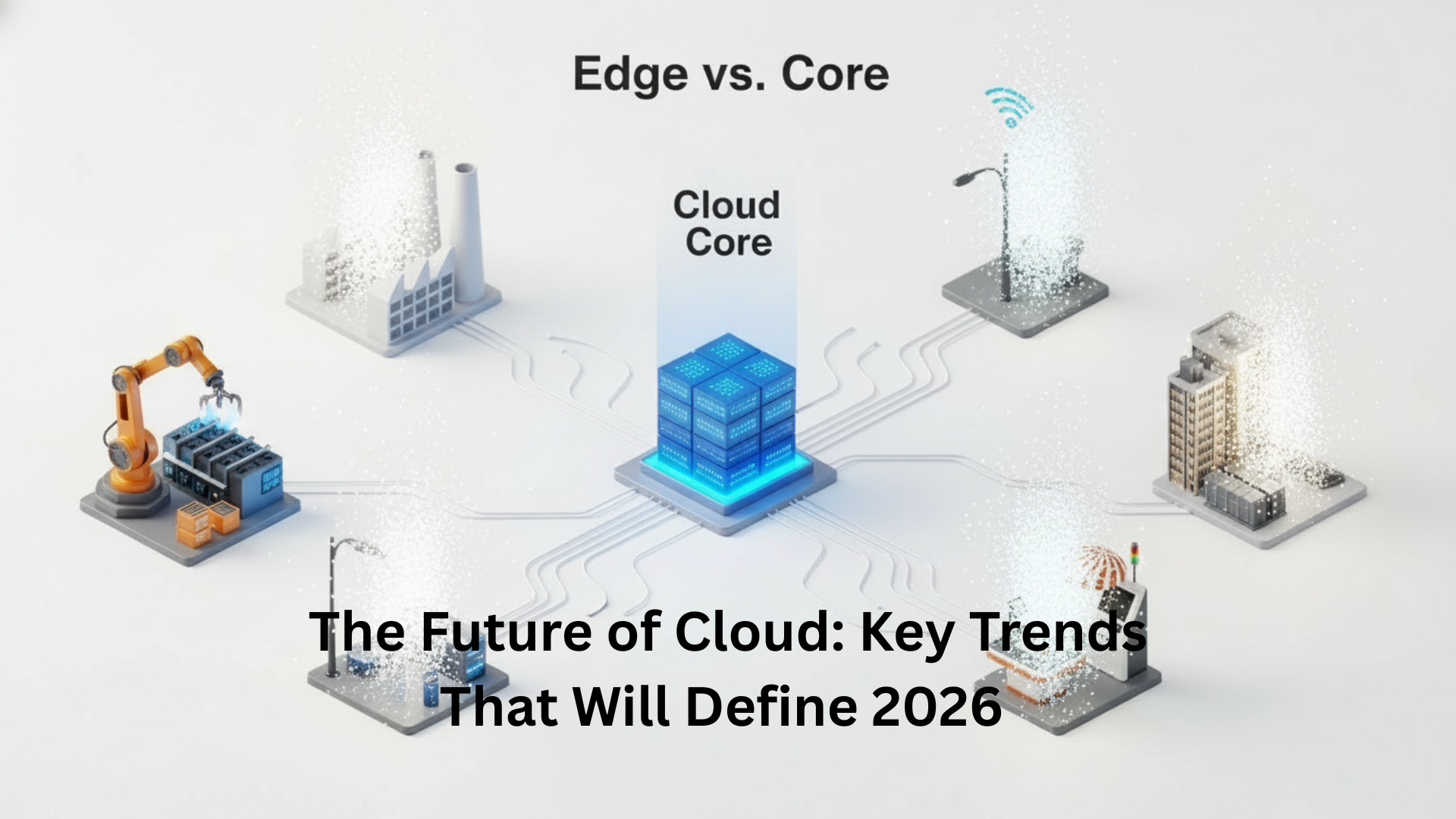
The explosion of data has made it impractical to process everything in centralized data centers. Businesses are now moving computing power closer to where data is created, whether it is on a factory floor, a retail branch, or a smart city sensor network. This is the promise of edge computing, which significantly reduces latency and enables faster decision-making.
Gartner estimates that by 2026, nearly three-quarters of enterprise data will be processed at or near the edge. In such an environment, enterprises will rely on hybrid architectures that connect centralized cloud systems with localized compute nodes. Our cloud optimization platform, Cloud Atler, is beginning to integrate this distributed reality to help users evaluate regional availability, latency performance, and cost trade-offs when deploying workloads that require both cloud and edge resources.
The Maturity of Cloud-Native Development
The way software is built has fundamentally changed. Cloud-native architecture, which relies on containers, microservices, and serverless computing, has become the standard for modern application development. Developers can now release new features in days rather than months, while businesses can scale dynamically to match demand.
By 2026, this approach will be the default for nearly all digital enterprises. What is particularly interesting is how financial accountability is now merging with operational agility. DevOps and FinOps teams are starting to work in tandem, ensuring that automation pipelines not only deliver code quickly but also manage spending intelligently.
Atler Pilot is already enabling this convergence by embedding cost visibility and optimization checks directly within deployment workflows, ensuring that innovation remains sustainable.
Increasing Demand for Governance, Security, and Sustainability
As the reliance on cloud grows, so does the responsibility to secure it. Data privacy laws such as India’s Digital Personal Data Protection Act and the European Union’s GDPR have made compliance a critical element of any cloud strategy.
At the same time, sustainability has become a board-level priority as enterprises seek to reduce energy consumption and carbon footprints associated with data center operations. The future of cloud governance will involve intelligent automation rather than manual checks.
Atler Pilot stands out as an innovative cloud monitoring tool that is demonstrating this evolution by enforcing security and compliance policies automatically, tracking energy usage, and providing organizations with sustainability dashboards. By embedding these controls into daily workflows, enterprises can balance innovation with accountability.
The Emergence of Industry-Specific Clouds
Different industries have distinct challenges, and by 2026, cloud solutions will increasingly reflect that. Financial institutions require environments that meet strict compliance standards, healthcare providers need systems that protect patient data, and manufacturers rely on analytics tailored for supply chain and IoT operations.
The rise of vertical-specific clouds will give organizations pre-configured environments that include the regulatory, analytical, and operational tools suited to their domain. Cloud Atler’s approach already aligns with this evolution by offering customizable packages that combine infrastructure management, compliance tools, and cost optimization, all within a single framework. This helps organizations to deploy cloud solutions that fit their specific business realities without rebuilding systems from scratch.
The Next Phase of FinOps and Cloud Cost Intelligence
Despite years of cloud adoption, waste remains one of the biggest challenges. Studies suggest that roughly a third of all cloud spending delivers little to no value, often due to idle resources, mismanagement, or lack of visibility.
The evolution in cloud cost management will help FinOps focus on turning cost data into real-time intelligence. Instead of reviewing monthly invoices, teams will have dynamic dashboards showing spending by department, application, or project, supported by predictive alerts that identify anomalies as they happen. Our platform, Atler Pilot, sets the standard by converting complex billing data into actionable insights, allowing teams to rightsize workloads, automate savings, and make informed purchasing decisions. This shift from reactive reporting to proactive optimization will redefine how organizations view cloud economics.
Conclusion
The future of cloud computing seems like it will be the digital nervous system of every successful enterprise. The organizations that excel will be those that treat the cloud not as a service provider but as a strategic partner in innovation. They will combine multi-cloud flexibility with AI-driven intelligence, build systems that are both resilient and cost-aware, and embed governance and sustainability into every layer of operation. This is where our cloud management platform with Atler Pilot becomes invaluable and is playing a key role in shaping the future of cloud. They are designed to give teams control, clarity, and confidence in an increasingly complex environment and help businesses move from visibility to true command over their cloud infrastructure. The coming years will not be defined by who uses the cloud but by who understands it deeply enough to make it work intelligently.
All in One Place
Atler Pilot decodes your cloud spend story by bringing monitoring, automation, and intelligent insights together for faster and better cloud operations.