
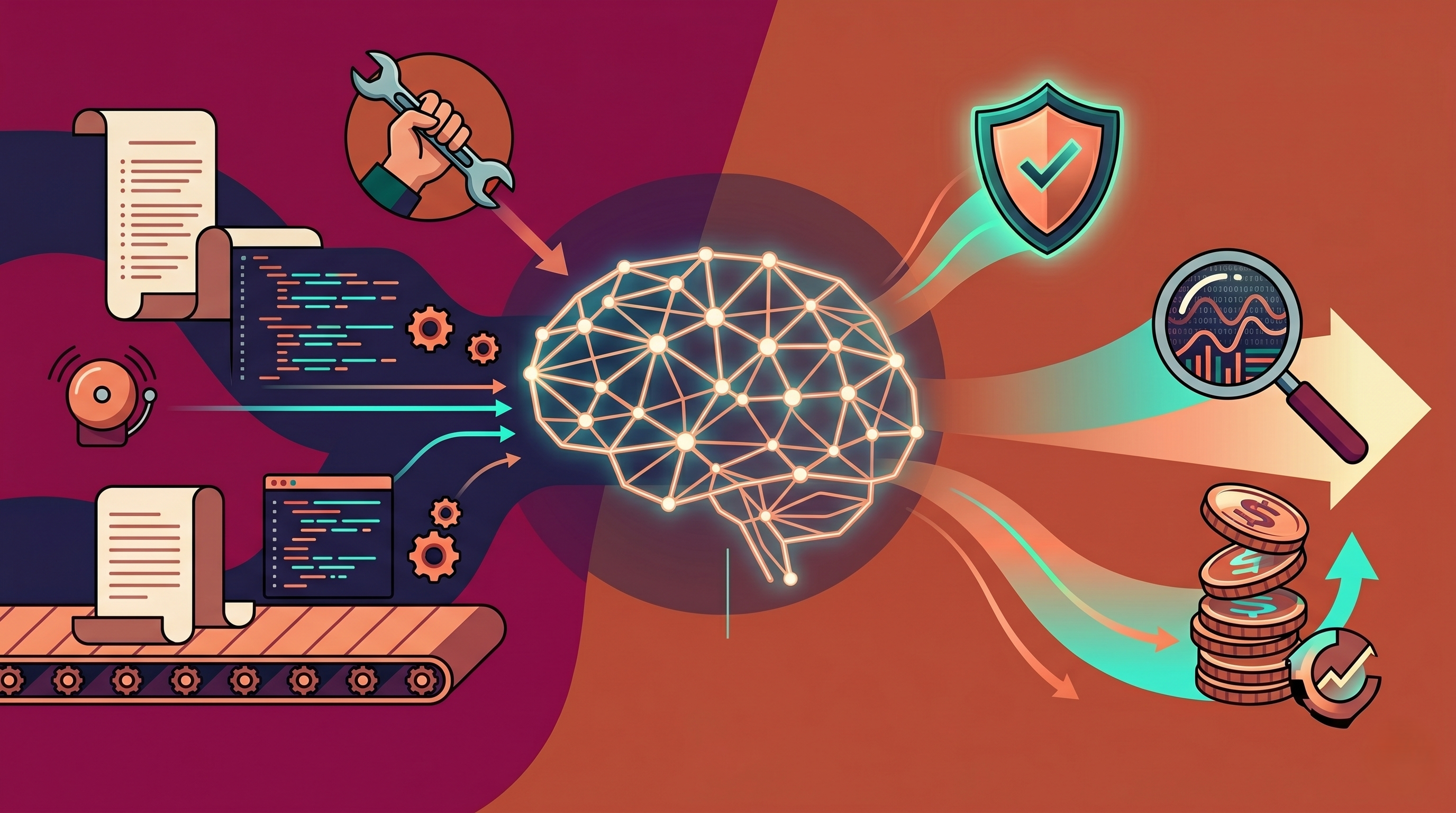
DevOps has always been about speed, efficiency, and collaboration. Over the years, teams have built pipelines, automated deployments, and relied heavily on scripts to manage infrastructure and operations. These scripts became the backbone of modern DevOps by handling everything from provisioning to monitoring.
But as systems grow more complex, something is becoming clear: scripts alone are no longer enough.
In this blog, we will explore how DevOps is evolving beyond manual scripting, why traditional automation is reaching its limits, and how intelligent decision support systems are shaping the next phase of DevOps.
The Era of Script-Driven DevOps
For a long time, scripts have been the foundation of DevOps automation. Tools like Bash, Python, and infrastructure-as-code frameworks allowed teams to automate repetitive tasks and reduce manual effort.
This approach worked well when environments were relatively stable and predictable. Scripts could define workflows, execute tasks, and ensure consistency across deployments.
However, scripts are inherently static. They follow predefined logic and cannot adapt to changing conditions without manual updates.
As environments become more dynamic, this limitation becomes more apparent.
Where Manual Scripts Start to Break
Modern cloud environments are no longer static systems. They are constantly evolving with new deployments, scaling events, configuration changes, and user behavior.
In such environments, scripts begin to struggle.
They require continuous maintenance, as even small changes in infrastructure can break existing workflows. They also lack context. They execute commands but do not understand why something is happening or whether an action is optimal.
This leads to increased operational overhead. Teams spend time updating scripts, debugging failures, and managing exceptions instead of focusing on higher-value work.
Over time, the complexity of managing scripts can outweigh their benefits.
The Shift from Automation to Intelligence
Automation focuses on executing predefined tasks efficiently. Intelligence focuses on making decisions. This distinction is critical.
Traditional DevOps automation answers the question: How do we do this faster?
Modern DevOps needs to answer a different question: What should we do next?
Intelligent decision support systems introduce this capability. They analyze data, identify patterns, and provide recommendations that guide actions rather than simply executing them. This represents a shift from task execution to decision enablement.
What is Intelligent Decision Support in DevOps?
Intelligent decision support systems use data from across the DevOps ecosystem, such as metrics, logs, cost data, performance signals, and system behavior, to provide context-aware insights.
Instead of requiring engineers to interpret multiple dashboards, these systems synthesize information and highlight what matters most. They can:
Identify anomalies in real time
Recommend optimization actions
Prioritize incidents based on impact
Provide context around system behavior
Suggest improvements for cost and performance
This reduces the need for manual analysis and speeds up decision-making.
Reducing Cognitive Load on Teams
One of the biggest challenges in modern DevOps is cognitive overload.
Engineers are expected to monitor multiple systems, respond to alerts, analyze data, and make decisions quickly. The volume of information can be overwhelming.
Manual scripts do not solve this problem, but they often add additional layers of complexity to it.
Intelligent decision support reduces cognitive load by filtering noise and focusing attention on high-impact issues. It provides clarity, allowing teams to act faster and with greater confidence.
Moving from Reactive to Proactive Operations
Traditional DevOps workflows are often reactive. Teams respond to incidents, investigate issues, and apply fixes after problems occur.
Intelligent systems enable a proactive approach.
By analyzing patterns and trends, they can identify potential issues before they escalate. For example, they can detect inefficient resource usage, predict cost spikes, or highlight configuration risks early.
This shift reduces downtime, improves efficiency, and creates more stable systems.
The Role of AI in DevOps Evolution
Artificial intelligence plays a central role in enabling intelligent decision support.
AI models can process large volumes of data, identify patterns, and continuously learn from system behavior. This allows them to adapt to changing environments and provide more accurate insights over time.
Unlike static scripts, AI-driven systems evolve. They improve as they gather more data, making them increasingly valuable in complex environments.
This adaptability is key to managing modern infrastructure.
Integrating Intelligence into Existing Workflows
Transitioning to intelligent decision support does not mean abandoning existing tools or workflows.
Instead, it involves adding an intelligence layer that enhances current systems. Scripts and automation still play a role, but they are guided by insights rather than operating in isolation.
This integration allows teams to retain the benefits of automation while gaining the advantages of intelligent decision-making.
Bridging Technical and Business Outcomes
DevOps is no longer just about infrastructure. Now it is also about delivering business value.
Intelligent decision support systems help bridge the gap between technical operations and business outcomes. They connect metrics like resource usage and performance with cost, user experience, and business impact.
This alignment helps teams prioritize actions that matter most to the organization.
Supporting Smarter Operations with Atler Pilot
As DevOps evolves, the need for clearer insight becomes more important.
This is where Atler Pilot contributes to the transition. By bringing together operational, cost, and performance data into a unified view, it helps teams understand how their systems behave and where improvements are needed.
Instead of relying solely on scripts and manual analysis, teams can use this insight to make more informed decisions and operate more efficiently.
This kind of structured visibility supports the shift toward intelligent, proactive DevOps practices.
Challenges in the Transition
Moving from manual scripts to intelligent systems is not without challenges.
Teams may need to adapt to new workflows and trust automated recommendations. Data quality becomes critical, as insights depend on accurate information. Integration with existing tools may also require effort.
However, these challenges are part of the evolution process and can be addressed with the right approach.
The Road Ahead
The future of DevOps is not about eliminating automation. It is about enhancing it.
Scripts will continue to play a role, but they will be complemented by systems that provide context, insight, and guidance.
As environments become more complex, the ability to make informed decisions quickly will become the defining factor of successful DevOps teams.
All in One Place
Atler Pilot decodes your cloud spend story by bringing monitoring, automation, and intelligent insights together for faster and better cloud operations.