
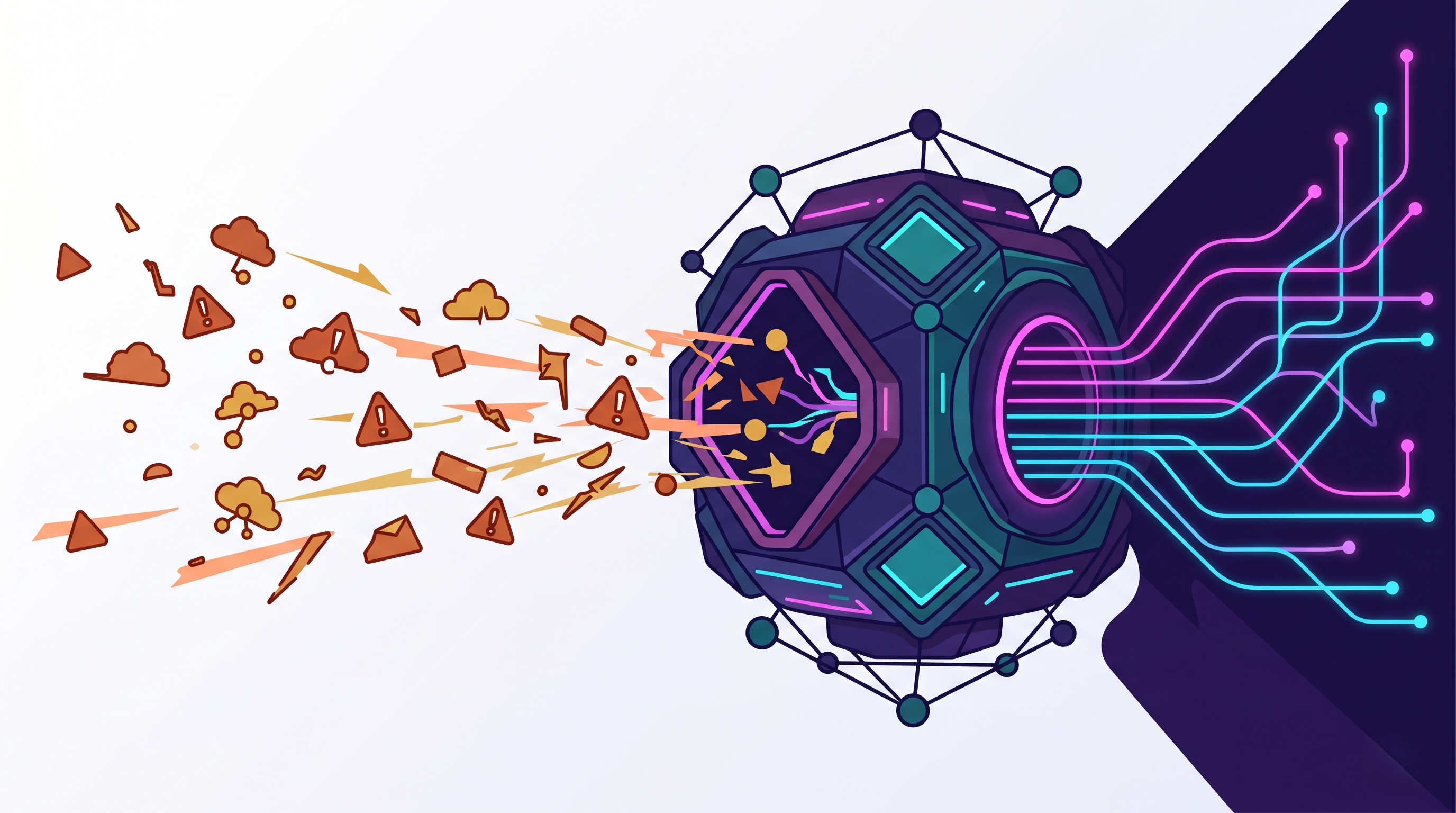
Modern cloud-native environments generate an enormous volume of alerts every day. Kubernetes clusters, distributed applications, AI workloads, observability platforms, security systems, cloud services, databases, networking layers, and infrastructure monitoring tools continuously produce notifications designed to help teams identify operational issues before they become major incidents.
For many organizations, alerting remains one of the most important components of operational visibility. Alerts provide early warning signals when infrastructure behaves unexpectedly, workloads experience performance degradation, resources become constrained, or services begin showing signs of instability.
However, there is a growing challenge that many engineering and operations teams face: alerts are often treated as isolated events rather than connected signals within a larger operational system.
An alert arrives, a team investigates it, a response is initiated, and attention moves to the next notification. While this approach may resolve immediate symptoms, it frequently overlooks the broader context surrounding infrastructure behavior.
The reality is that modern cloud-native systems are highly interconnected. Kubernetes workloads influence one another, autoscaling systems affect resource utilization, AI workloads impact infrastructure demand, observability platforms generate operational overhead, and deployment changes can create cascading effects across multiple environments.
In these ecosystems, alerts rarely exist in isolation. Most are part of larger patterns, relationships, or operational conditions that span multiple services, teams, and infrastructure layers.
When organizations treat every alert as a separate event, they often miss opportunities to identify root causes, prevent recurring incidents, reduce operational noise, and improve overall system reliability.
Understanding alerts as part of a broader operational narrative is becoming increasingly important as infrastructure complexity continues to grow.
In this blog, we will explore why isolated alert management creates challenges, how interconnected infrastructure changes the nature of operational signals, and why context-driven alert intelligence is becoming essential for modern operations.
Modern Infrastructure Behaves as an Interconnected System
Traditional infrastructure environments were often easier to analyze because systems were more centralized and dependencies were relatively limited. A server issue typically affected a specific application or service, making root-cause identification more straightforward.
Modern cloud-native architectures are fundamentally different. Kubernetes ecosystems, microservices platforms, AI workloads, APIs, observability systems, and shared cloud infrastructure operate as interconnected networks of dependencies.
A single operational change may influence multiple services simultaneously. Increased traffic may trigger autoscaling events, which affect resource allocation, which in turn influences application performance, observability workloads, and infrastructure utilization.
In these environments, alerts are often symptoms of broader operational conditions rather than standalone events. Treating them independently can obscure the relationships that explain why those alerts occurred in the first place.
Understanding infrastructure requires seeing how systems interact, not simply responding to each notification individually.
Isolated Alerts Often Hide Shared Root Causes
One of the most common problems with event-based alert management is that multiple alerts frequently originate from the same underlying issue.
For example, a resource allocation problem in a Kubernetes cluster may trigger alerts related to:
Increased latency
Pod restarts
CPU utilization spikes
Autoscaling activity
Application errors
Service degradation
If teams investigate each alert separately, they may spend significant time addressing symptoms without identifying the root cause.
The result is duplicated effort, longer resolution times, and increased operational complexity. Teams become busy responding to alerts while the underlying issue continues affecting the environment.
High-performing operations teams focus on understanding relationships between alerts because clusters of notifications often reveal much more than individual events alone.
Root-cause visibility becomes significantly easier when alerts are analyzed as connected signals rather than isolated incidents.
Alert Volume Increases When Context is Missing
Many organizations experience alert overload not because infrastructure is unstable, but because operational context is fragmented.
Monitoring systems generate notifications whenever predefined thresholds are exceeded. However, without contextual awareness, these systems often treat related events as separate alerts even when they are part of the same operational pattern.
For example, a deployment issue may generate dozens of notifications across infrastructure, application performance, observability systems, and workload health metrics. Each alert appears independently despite originating from a single operational event.
This fragmentation increases alert volume dramatically. Engineers receive more notifications than necessary, making it harder to distinguish meaningful signals from operational noise.
As cloud-native environments scale, contextual understanding becomes essential for reducing alert fatigue and improving operational focus.
Teams that understand relationships between alerts often require fewer notifications because they gain greater insight from each signal.
Kubernetes Complexity Makes Event-Based Alerting Less Effective
Kubernetes environments illustrate the limitations of isolated alert management particularly well.
Clusters continuously adapt to changing conditions through autoscaling, workload scheduling, resource allocation adjustments, and infrastructure rebalancing. As a result, individual alerts often reflect broader cluster behavior rather than discrete operational failures.
A node experiencing resource pressure, for example, may generate alerts across multiple workloads simultaneously. Similarly, inefficient resource requests may trigger autoscaling events that affect infrastructure utilization throughout the cluster.
If each notification is evaluated independently, teams may overlook the systemic factors influencing cluster behavior.
Understanding Kubernetes requires visibility into workload relationships, resource dependencies, scheduling decisions, and autoscaling patterns. These factors provide the context necessary to interpret alerts accurately.
Without this context, teams risk spending significant effort treating symptoms while missing the operational dynamics driving those symptoms.
AI Workloads Create New Categories of Connected Signals
AI infrastructure introduces additional complexity because workloads often exhibit highly dynamic resource consumption patterns.
GPU utilization, model-serving performance, inference latency, vector database activity, and AI observability systems generate large volumes of operational telemetry. Changes in one area frequently influence behavior across multiple infrastructure layers.
For example, increased inference demand may affect GPU utilization, networking performance, application latency, autoscaling activity, and cloud spending simultaneously.
Traditional alerting systems may surface these conditions as separate notifications even though they originate from the same operational trend.
Organizations that continue treating alerts independently may struggle to understand how AI workloads influence broader infrastructure behavior.
As AI environments become more common, operational intelligence that connects signals across systems will become increasingly valuable for maintaining efficiency and reliability.
Event-Based Response Encourages Reactive Operations
When alerts are treated as isolated events, operational workflows naturally become reactive.
Teams focus on responding to individual notifications as they appear rather than understanding the conditions that generate those notifications. This creates a cycle where engineers continuously manage symptoms instead of addressing broader infrastructure patterns.
Reactive operations consume significant engineering time because issues are investigated repeatedly rather than prevented systematically. Similar alerts may reappear across environments because root causes remain unresolved.
By shifting attention from individual alerts to operational relationships, organizations can identify recurring patterns, improve infrastructure design, and reduce the number of issues that generate alerts in the first place.
The goal is not simply to respond faster, but it is to create systems that require fewer interventions over time.
Operational Context Improves Prioritization
Not all alerts carry the same level of importance. Some represent immediate risks to reliability, while others indicate routine operational activity.
Without context, determining priority becomes difficult. Engineers may spend valuable time investigating low-impact notifications while more significant issues remain hidden within larger patterns.
Operational context helps teams evaluate:
Business impact
Infrastructure dependencies
Service criticality
Workload behavior
Historical trends
Potential downstream effects
This broader understanding enables more effective prioritization because alerts can be evaluated based on their relationship to overall system health rather than their individual characteristics alone.
Organizations that improve contextual awareness often respond more effectively because they focus attention where it creates the greatest operational value.
Understanding Relationships Improves Reliability
Reliability depends on understanding how systems behave collectively.
Modern cloud-native environments are composed of interconnected services, shared infrastructure, Kubernetes clusters, AI workloads, observability platforms, and distributed operational processes. Failures rarely occur in isolation because systems continuously influence one another.
When teams analyze alerts within the context of these relationships, they gain deeper visibility into operational behavior. This makes it easier to identify emerging risks, predict potential failures, and strengthen infrastructure resilience proactively.
Instead of viewing reliability as a series of isolated incidents, organizations begin viewing it as the outcome of complex interactions between systems.
This perspective supports better decision-making and enables more sustainable operational practices.
The Future of Alert Management is Relationship Awareness
As cloud-native environments continue growing in complexity, alert management must evolve beyond event-based workflows.
The future lies in understanding relationships between alerts, workloads, dependencies, infrastructure conditions, and business outcomes. Rather than generating more notifications, operational systems need to provide greater context and actionable intelligence.
Relationship-aware operations help teams identify root causes faster, reduce alert fatigue, improve prioritization, and focus on preventing issues rather than repeatedly responding to them.
The objective is not simply to see more alerts. It is understanding what those alerts collectively reveal about infrastructure behavior.
Organizations that embrace this approach will be better positioned to manage increasingly complex environments while maintaining reliability, efficiency, and operational clarity.
Build Context-Driven Visibility with Atler Pilot
As cloud-native environments become more interconnected, engineering teams need more than isolated alerts and fragmented monitoring systems. They need visibility into workload behavior, Kubernetes utilization, AI infrastructure efficiency, operational dependencies, and the relationships that influence infrastructure performance.
Atler Pilot helps organizations move beyond event-based operations by providing a unified operational view of cloud-native environments. By connecting infrastructure telemetry, workload intelligence, utilization insights, and governance visibility, teams can better understand how alerts relate to broader operational conditions and identify meaningful patterns across distributed systems.
This enables engineering, platform, and operations teams to reduce operational noise, improve root-cause analysis, strengthen reliability, and make more informed decisions based on infrastructure context rather than isolated signals.
Modern operations require more than alert visibility. They require an alert understanding. Atler Pilot helps organizations simplify infrastructure complexity, improve operational awareness, and transform disconnected signals into actionable intelligence. Sign up to Atler Pilot for free and discover how deeper infrastructure context can help your teams manage cloud-native environments more effectively.
Conclusion
Treating every alert as an isolated event may seem practical in simple environments, but modern cloud-native systems no longer operate that way. Kubernetes clusters, AI workloads, observability platforms, distributed services, and shared infrastructure create operational relationships that influence how alerts are generated and what they actually mean.
Organizations that focus solely on individual notifications often find themselves overwhelmed by operational noise while still struggling to identify root causes. In contrast, teams that understand relationships between alerts gain deeper visibility into system behavior, improve reliability, and reduce the burden of reactive operations.
As infrastructure complexity continues increasing, the future of alert management will depend less on generating notifications and more on understanding the interconnected systems behind them. Because the most valuable operational insight rarely comes from a single alert. It comes from the story that multiple alerts tell together.
All in One Place
Atler Pilot decodes your cloud spend story by bringing monitoring, automation, and intelligent insights together for faster and better cloud operations.