
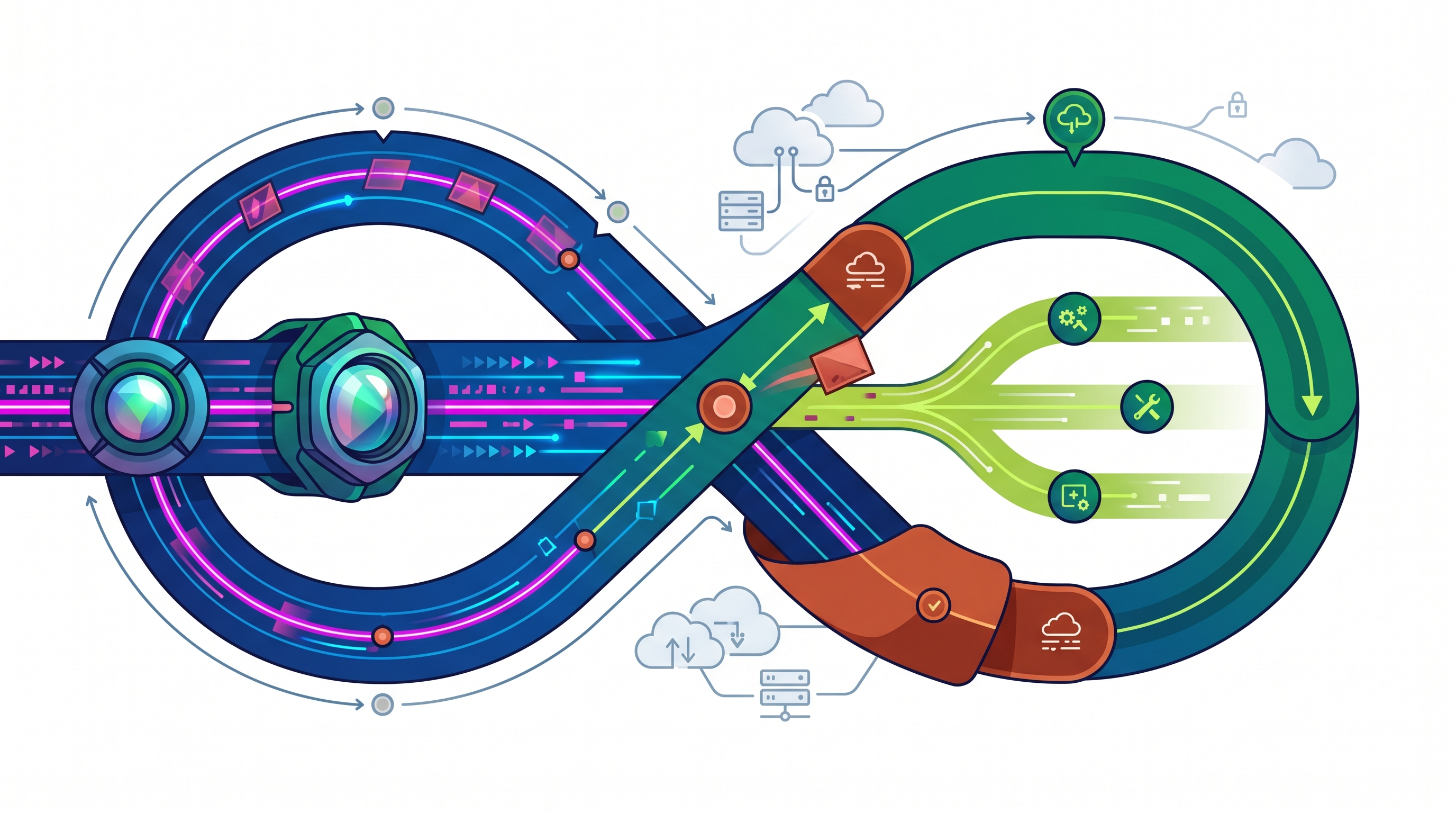
Compliance used to be a periodic exercise. Teams prepared for audits, collected evidence, checked configurations, and ensured policies were followed at least at that moment in time.
In modern cloud environments, that model no longer works. Infrastructure is dynamic, deployments are continuous, and even small configuration changes can introduce compliance risks within minutes. In this context, compliance is no longer a snapshot. It has to be continuous.
In this blog, we will explore why traditional compliance approaches fail in cloud-native environments, how intelligent automation enables continuous compliance, and where it creates the most value, from real-time policy enforcement and audit readiness to risk reduction and operational efficiency. We will also look at how organizations can balance compliance with agility and manage complexity across hybrid and multi-cloud environments.
Why Traditional Compliance Approaches Fall Short
Traditional compliance models rely heavily on manual checks, periodic audits, and static policies. These approaches assume that systems change slowly and predictably.
Cloud environments break that assumption.
A compliant system today can become non-compliant tomorrow due to a simple configuration change or a new deployment. Manual processes cannot keep up with this pace. By the time an issue is detected, it may have already created risk exposure.
This creates a gap between compliance intent and operational reality.
Compliance as a Continuous State
In regulated environments, compliance is not optional. It is tied to security, trust, and legal obligations.
However, sustaining compliance requires more than enforcing rules. It requires maintaining a continuous state of alignment between infrastructure and policy. This means:
Monitoring configurations in real time
Detecting deviations as they occur
Responding quickly to restore compliance
Maintaining clear audit trails
Achieving this manually is nearly impossible at scale.
What is Intelligent Automation?
Intelligent automation goes beyond basic scripts or scheduled tasks.
It combines automation with contextual awareness of understanding not just what to do, but when and why to do it. It uses real-time data, predefined policies, and adaptive logic to manage systems dynamically.
In the context of compliance, intelligent automation enables systems to:
Continuously monitor configurations
Identify policy violations instantly
Trigger corrective actions automatically
Provide contextual insights for decision-making
This transforms compliance from a reactive process into a proactive system.
Real-Time Policy Enforcement
One of the most critical roles of intelligent automation is enforcing policies in real time.
Instead of waiting for periodic reviews, systems can detect non-compliant configurations as soon as they occur. For example, if a storage bucket becomes publicly accessible or an encryption setting is disabled, the system can flag or even correct the issue immediately.
This reduces the window of exposure significantly.
Real-time enforcement ensures that compliance is maintained continuously, not just during audits.
Reducing Human Error
Manual processes are prone to error, especially in complex environments. Misconfigurations, overlooked updates, and inconsistent enforcement can all lead to compliance gaps.
Intelligent automation reduces reliance on manual intervention. It ensures that policies are applied consistently across environments, regardless of scale or complexity.
This does not eliminate the need for human oversight, but it minimizes the risk of oversight failures.
Consistency is one of the strongest benefits of automation.
Accelerating Audit Readiness
Audits are a reality in regulated environments. Preparing for them can be time-consuming, especially when evidence must be collected from multiple systems.
Intelligent automation simplifies this process by maintaining continuous records of compliance status, policy enforcement, and system changes.
Instead of scrambling to gather information before an audit, teams can access structured, up-to-date data at any time.
This reduces preparation effort and improves confidence during audits.
Balancing Compliance and Agility
One of the biggest challenges in regulated environments is balancing compliance with speed.
Strict controls can slow down development, while rapid changes can introduce compliance risks.
Intelligent automation helps bridge this gap. By embedding compliance checks into workflows, it allows teams to move quickly without compromising standards.
For example, automated checks can validate configurations during deployment, ensuring that new changes meet compliance requirements before they go live.
This enables both agility and control.
Managing Multi-Cloud and Hybrid Complexity
Regulated environments often span multiple cloud providers and on-premise systems. Each environment may have its own tools, policies, and configurations.
Without a unified approach, maintaining compliance across these environments becomes difficult.
Intelligent automation provides a consistent layer of policy enforcement and monitoring across all environments. It ensures that compliance standards are applied uniformly, regardless of where workloads run.
This reduces fragmentation and improves overall governance.
Continuous Risk Assessment
Compliance is closely tied to risk management.
Intelligent automation enables continuous assessment of risk by analyzing system configurations, access controls, and usage patterns. It can identify areas where risk is increasing and prioritize actions accordingly.
This proactive approach helps organizations address issues before they escalate into incidents or violations.
Risk awareness becomes part of everyday operations rather than an occasional review.
Enhancing Visibility and Accountability
In complex environments, visibility is essential for maintaining compliance. Teams need to understand what is happening across systems and who is responsible for different components.
Intelligent automation improves visibility by consolidating data and presenting it in a structured way. It also supports accountability by linking actions and configurations to specific teams or services.
This clarity helps organizations maintain control even as systems scale.
Bringing Practical Compliance Intelligence with Atler Pilot
Sustaining compliance is not just about enforcing rules. It is about understanding how systems behave and where risks emerge.
This is where Atler Pilot adds meaningful value.
By bringing together operational, cost, and security signals into a unified view, it helps teams see where compliance risks may be building and where attention is needed most. Instead of navigating fragmented tools, teams gain a clearer understanding of their environment.
This clarity supports more informed decisions and helps maintain alignment between infrastructure and compliance requirements.
In regulated environments, where visibility and consistency are critical, having a system that simplifies complexity can make a significant difference.
Common Challenges to Watch For
Some organizations rely too heavily on manual processes, which cannot scale with modern cloud environments. Others implement automation without proper context, leading to incorrect or unnecessary actions.
Another challenge is treating compliance as a one-time goal rather than an ongoing process.
Sustainable compliance requires continuous monitoring, adaptation, and improvement.
Conclusion
Compliance in regulated cloud environments is no longer about passing audits. It is about maintaining a continuous state of alignment between systems and policies.
Intelligent automation makes this possible. It reduces manual effort, improves consistency, accelerates response, and enables organizations to operate confidently at scale. As cloud environments continue to evolve, the role of automation will only become more critical.
Because in modern infrastructure, compliance is not something you achieve once. It is something you sustain every day.
All in One Place
Atler Pilot decodes your cloud spend story by bringing monitoring, automation, and intelligent insights together for faster and better cloud operations.