
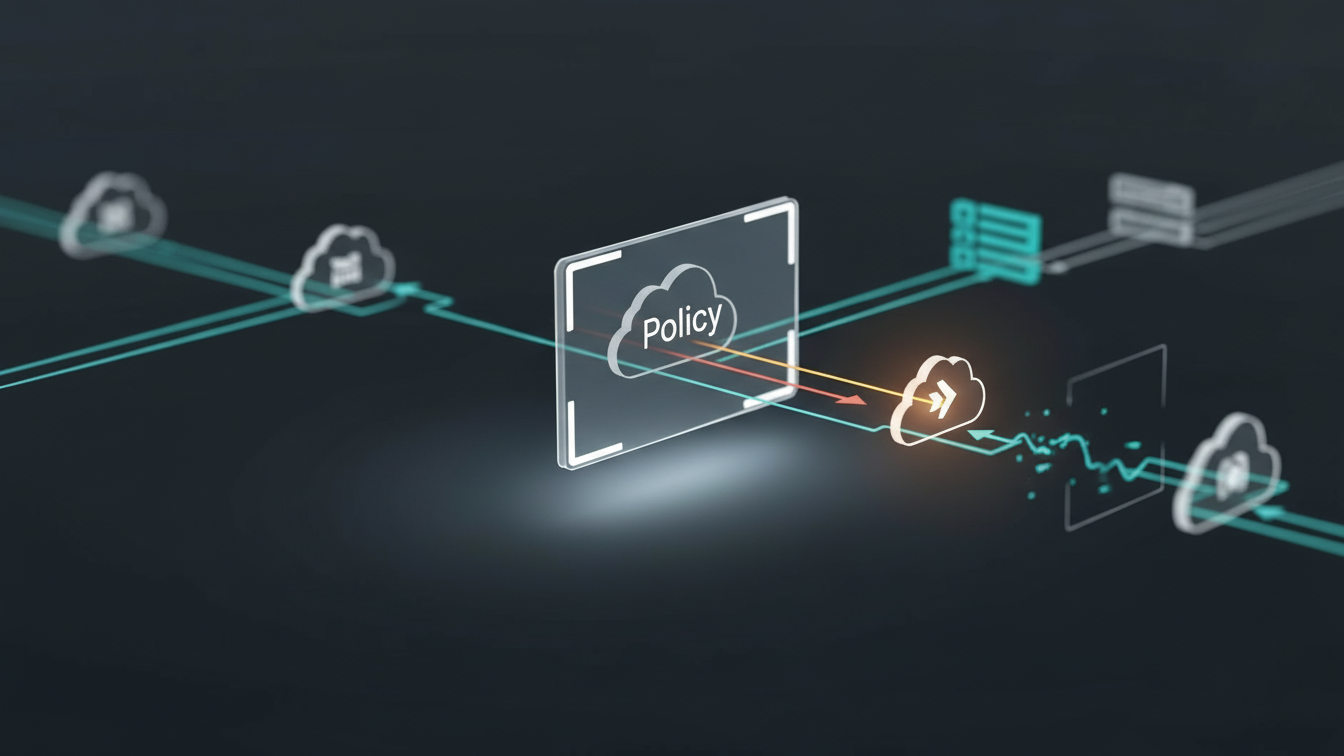
Most cloud cost problems don’t start with reckless spending. They start with reasonable engineering decisions made in isolation. An instance size that feels safe, a region chosen for latency, a managed service enabled for convenience, each of these decisions makes sense on its own. Together, they quietly compound into a cloud bill no one feels fully responsible for. This is why writing Sentinel policies for cost management has become a critical practice for DevOps and platform teams. As infrastructure has become programmable, so have the financial consequences of deploying it. Yet cost governance often remains reactive, that is, reviewed after deployment, debated in meetings, and enforced inconsistently.
Sentinel changes that dynamic by allowing teams to express financial intent as code and enforce it automatically, at the same point where infrastructure decisions are made. Instead of asking engineers to “be mindful of costs,” Sentinel policies make cost awareness part of the deployment workflow itself. This article examines how Sentinel integrates into modern cost governance, highlighting its effectiveness for DevOps-led organizations, and provides guidance on crafting policies that control costs without hindering delivery.
Why Cost Governance Fails Without Policy as Code?
Cloud environments move too fast for manual oversight. According to the Flexera 2024 State of the Cloud Report, 82% of enterprises cite managing cloud spend as their top cloud challenge, yet most still rely on dashboards and post-deployment reviews to address it.
The problem is not a lack of visibility. It is timing. Cost feedback arrives days or weeks after decisions are made, long after the context has faded, and rollback is impractical. Engineers rarely ignore cost intentionally; they simply lack immediate, actionable signals. Policy as code shifts cost governance left. Instead of flagging issues after deployment, policies evaluate infrastructure changes before they are applied. This makes cost control preventive rather than corrective, which is the only approach that scales in continuous delivery environments.
Understanding Sentinel’s Role in Cost Management
HashiCorp Sentinel is a policy-as-code framework designed to enforce rules across the infrastructure lifecycle. While it is commonly associated with security and compliance, its architecture makes it equally effective for cost management.
Sentinel operates by evaluating policies against data exposed during Terraform plans, applies, and runs. This data can include resource types, configurations, metadata, and even external inputs such as pricing thresholds or approved instance catalogs. From a cost perspective, this means policies can reason about what is being deployed before it exists. What makes Sentinel particularly powerful for cost governance is that it does not require cost visibility to be perfect. Policies can enforce guardrails even when exact pricing is variable, by focusing on known risk factors such as instance families, regions, service classes, or scaling limits.
Cost Management as a DevOps Responsibility
One of the most important shifts in modern FinOps is the recognition that cost is no longer owned solely by finance. The FinOps Foundation emphasizes that high-performing organizations treat cloud cost as a shared responsibility, with engineering playing a central role
Sentinel aligns naturally with this model because it speaks the language engineers already use. Instead of budgets and reports, it deals in configuration, constraints, and enforcement. Cost policies become part of the same governance fabric that already controls security and reliability. This is also why cost policies enforced through Sentinel are often better received than manual approvals. Engineers are far more likely to accept automated guardrails than subjective reviews that appear disconnected from delivery realities.
Writing Sentinel Policies That Engineers Don’t Resist
The success of Sentinel policies for cost management depends less on technical complexity and more on how policies are framed. Overly restrictive rules quickly become obstacles, encouraging teams to bypass governance rather than embrace it. Effective cost policies start by addressing high-confidence cost risks rather than edge cases. For example, limiting certain instance families or enforcing region allowlists targets decisions that are both expensive and predictable. These policies reduce risk without constraining innovation.
Another best practice is to encode intent, not just limits. A policy that enforces “approved instance families for production” communicates architectural standards, not arbitrary cost ceilings. This makes policies easier to justify and maintain over time.
Enforcing Instance and Resource Guardrails
One of the most common and effective Sentinel cost policies is controlling instance selection. Instance families differ dramatically in cost characteristics, and unrestricted access often leads to overprovisioning.
Sentinel can evaluate Terraform plans to ensure that only approved instance families or sizes are used in certain environments. This approach is particularly effective in production, where predictability matters more than experimentation. According to AWS pricing analysis, compute costs account for over 50% of total cloud spend in many production environments. By enforcing instance guardrails early, organizations prevent cost creep before it becomes operational debt.
Region and Service Restrictions as Cost Controls
Geographic decisions often have hidden financial consequences. Certain regions carry significantly higher pricing due to demand, energy costs, or limited capacity. Sentinel policies can prevent deployments into unapproved regions unless explicitly justified. Similarly, managed services with usage-based pricing, such as NAT Gateways or data transfer-heavy services are frequent sources of unexpected cost overruns. Policies that restrict or flag these services force teams to consider architectural alternatives before committing.
This is where Sentinel complements cost intelligence platforms. When teams can compare pricing patterns across regions or services during planning, policy enforcement feels informed rather than restrictive. Platforms like Atler Pilot can provide this broader context without interrupting engineering workflows.
Mandatory Tagging and Cost Attribution Policies
Cost allocation remains one of the most persistent challenges in cloud environments. Without consistent tagging, even the best optimization efforts lose effectiveness. Sentinel policies can enforce mandatory tags for cost attribution, ensuring that every resource is traceable to a team, service, or environment. This is not merely an accounting exercise. It is foundational to accountability and optimization.
The Google Cloud Architecture Framework highlights that organizations with strong tagging discipline achieve significantly higher cost optimization maturity. By enforcing tagging at deployment time, Sentinel eliminates the need for retroactive cleanup, which is rarely successful at scale.
Integrating Cost Signals into Sentinel Policies
While Sentinel itself does not calculate real-time cloud pricing, it can consume external data sources. This enables advanced use cases where policies reference approved cost thresholds, pricing catalogs, or internal benchmarks.
For example, organizations can maintain a reference list of approved configurations derived from historical cost analysis or multi-cloud comparisons. Sentinel policies then enforce alignment with these benchmarks, keeping infrastructure decisions grounded in a real financial context. This is where cost comparison and intelligence platforms quietly enhance governance. When teams have access to normalized pricing data across providers, Sentinel policies become smarter without becoming brittle.
Avoiding Over-Engineering Cost Policies
A common mistake is attempting to encode every possible cost scenario into Sentinel policies. This approach quickly becomes unmaintainable and counterproductive.
Effective cost governance focuses on preventing the most common and expensive mistakes, not predicting every billing nuance. Policies should be reviewed regularly and evolve alongside architecture, not fossilize outdated assumptions. The goal of Sentinel is not to eliminate cost discussions, but to ensure those discussions happen before deployment, when change is still easy.
Measuring the Impact of Sentinel-Based Cost Governance
Organizations that implement policy-as-code for cost management consistently report faster feedback cycles and fewer post-deployment surprises. While exact ROI varies, the qualitative benefits are clear: fewer emergency optimizations, less friction between finance and engineering, and more predictable cloud spend. Sentinel policies contribute directly to this outcome by making governance continuous rather than episodic.
Sentinel as a Foundation for FinOps as Code
Sentinel is not a complete FinOps solution on its own. It is a critical enforcement layer within a broader FinOps as Code strategy. Cost visibility, allocation, and optimization still require complementary systems and processes. However, without enforcement, visibility remains advisory. Sentinel provides the mechanism that turns cost intent into action, ensuring that financial discipline survives contact with real-world delivery pressure.
When combined with platforms that surface cost insights, comparisons, and automation signals in a DevOps-friendly way, Sentinel becomes part of a cohesive cost governance system rather than an isolated control.
Conclusion: Making Cost Governance Predictable
Writing Sentinel policies for cost management is ultimately about acknowledging a simple truth: cloud cost is an outcome of engineering decisions, not financial oversight. When those decisions are automated, governance must be automated as well. Sentinel allows organizations to express cost constraints in the same language they use to define infrastructure, making financial discipline a natural extension of DevOps practices rather than an external imposition. For teams looking to move beyond reactive cost management, Sentinel is not just a policy engine. It is a way to make cloud economics predictable, enforceable, and aligned with how modern engineering teams actually work.
All in One Place
Atler Pilot decodes your cloud spend story by bringing monitoring, automation, and intelligent insights together for faster and better cloud operations.