
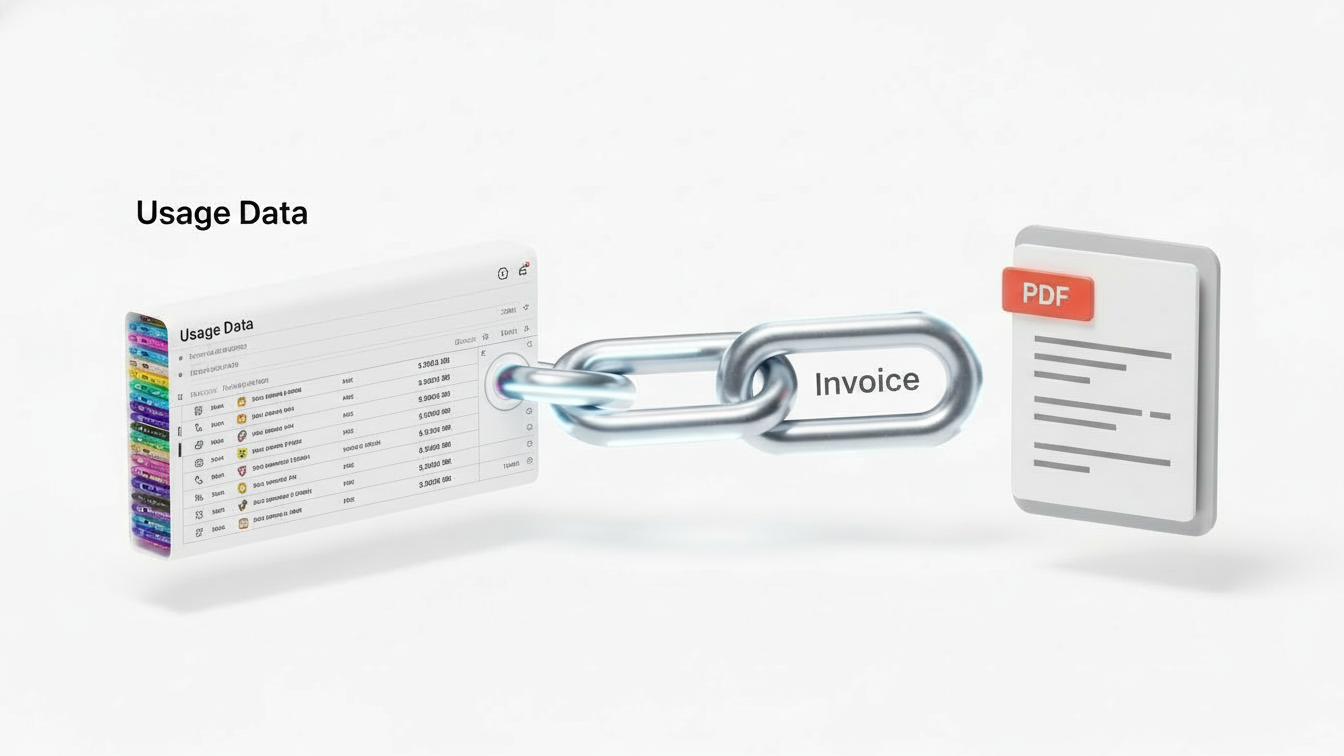
For years, multi-cloud financial management has been an exercise in data translation. AWS calls it a "Data Transfer Out" charge; GCP calls it "Network Egress." Azure groups tags one way, while OCI groups them another. FinOps analysts have historically spent countless hours writing custom Python scripts to parse millions of disparate Cost and Usage Report (CUR) line items just to answer a simple question: "How much did our network cost across all providers?"
The release of the FinOps Open Cost & Usage Specification (FOCUS) 1.2 changes everything. It is a vendor-neutral, open-source specification designed to normalize cloud billing data into a single, predictable schema. Here is a technical guide to implementing and mastering FOCUS 1.2 in your financial operations platform.
1. The Core Schema: Translating Provider Jargon
The primary value of FOCUS is its standardized schema. Instead of dealing with provider-specific columns, FOCUS mandates a unified set of dimensions and metrics. For instance:
Provider Name: Unifies
Amazon Web Services,AWS, andAmazoninto a single string.Resource ID: Standardizes the ARN (AWS), Resource URI (Azure), and Instance ID (GCP) into a single queryable column.
Charge Type: Categorizes every line item as
Usage,Purchase(e.g., upfront payment for a Reserved Instance),Tax, orDiscount. This instantly solves the headache of amortizing upfront multi-cloud commitments.
2. Standardizing Amortization Logic
One of the most complex tasks in FinOps is calculating the effective daily cost of a resource covered by a multi-year discount plan (like an AWS Savings Plan or Azure Reserved VM Instance). Previously, each cloud provider calculated amortization differently in their billing exports.
FOCUS 1.2 standardizes amortization columns natively. It provides EffectiveCost (the actual cost after discounts are applied) and BilledCost (the literal cash out the door). By querying the EffectiveCost column across all providers, FinOps teams can instantly calculate the true unit economics of a microservice spanning both AWS and GCP without writing complex, provider-specific amortization logic.
3. Implementing FOCUS via Data Warehousing
To master FOCUS 1.2, organizations must treat their cloud billing data like any other critical engineering telemetry. You cannot manage multi-cloud spend in Excel.
The standard architectural pattern involves exporting the raw billing files (AWS CUR, Azure Cost Management Exports) into a central data lake (like Amazon S3 or Google Cloud Storage). From there, a data pipeline (using dbt or Apache Spark) transforms the raw provider schemas into the FOCUS 1.2 schema, loading the normalized data into a warehouse like Snowflake or BigQuery.
Once the data is normalized, setting up cloud cost anomaly detection becomes universally scalable. You can write a single SQL query that triggers an alert if EffectiveCost for the Database category spikes by 20%, and it will automatically apply to AWS RDS, Azure SQL, and GCP Cloud Spanner simultaneously.
4. Standardized Schema Ingestion Strategies
The technical elegance of the FOCUS 1.2 specification lies in its strict schema validation. Historically, ingesting cloud billing data into a centralized data warehouse required brittle, custom Python scripts that frequently broke whenever a cloud provider updated their CSV column headers. FOCUS eliminates this fragility by enforcing an immutable schema definition (e.g., standardizing ProviderName, BilledCost, and ChargeDescription).
To master FOCUS, data engineers must leverage modern ELT (Extract, Load, Transform) pipelines like dbt (data build tool) or Snowflake's Snowpipe. By mapping the raw AWS CUR and Azure Cost Management exports directly into the standardized FOCUS tables within a Snowflake or BigQuery data lake, organizations create a single source of truth. Data analysts can then utilize native BI tools (like Tableau or Looker) to write unified SQL queries that instantly aggregate Kubernetes pod costs alongside Datadog metric ingestion fees, achieving the holy grail of multi-vendor FinOps visibility.
5. Handling Tag Governance within FOCUS
Even the most perfectly structured FOCUS pipeline will fail if the underlying data lacks context. A massive line item of ,000 in BilledCost for an EC2 instance is financially useless if it isn't mapped to a specific business unit. FOCUS 1.2 relies heavily on the Tags column (typically represented as a JSON key-value object) to provide this context. However, engineering teams are notoriously inconsistent with tagging (e.g., using Environment=Prod, env=production, and ENV=PROD interchangeably). To master FOCUS, organizations must implement strict Tag Governance policies via Infrastructure as Code (IaC) tools like Checkov or OPA. If a developer attempts to deploy a Terraform module without the exact, case-sensitive CostCenter tag, the pipeline must fail immediately. Only by combining the structural standardization of the FOCUS specification with draconian, automated tagging hygiene can an organization achieve 100% accurate, zero-waste cloud allocation.
Conclusion
FOCUS 1.2 is not just a reporting improvement; it is the foundational data model required to scale a mature FinOps practice. By normalizing the billing schema, it frees FinOps analysts from the drudgery of data cleaning, allowing them to focus on high-value tasks like architectural optimization and negotiating enterprise discounts.
All in One Place
Atler Pilot decodes your cloud spend story by bringing monitoring, automation, and intelligent insights together for faster and better cloud operations.