
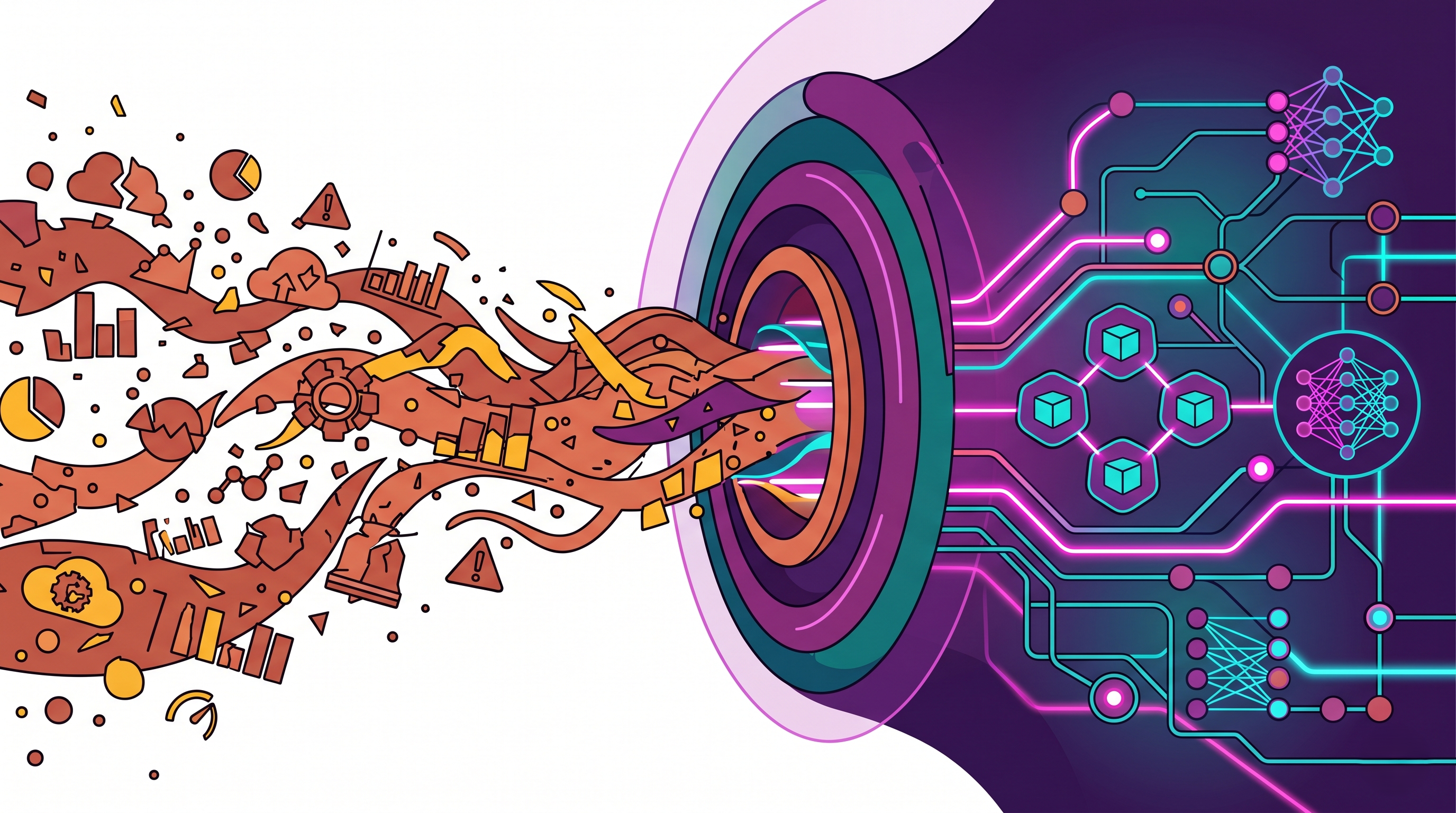
Operations have always been at the heart of reliable technology systems. From traditional data centers to modern cloud-native environments, organizations have relied on operational teams to maintain availability, manage infrastructure, resolve incidents, and ensure that applications continue running smoothly.
For many years, the primary goal of operations was visibility. Teams focused on monitoring servers, tracking infrastructure metrics, observing application performance, and responding to alerts when something went wrong. Monitoring systems became the foundation of operational decision-making because they provided the information needed to detect failures and maintain service continuity.
However, modern infrastructure environments have evolved dramatically. Kubernetes ecosystems, AI workloads, multi-cloud architectures, distributed applications, observability platforms, and automated deployment pipelines have created operational complexity that extends far beyond what traditional monitoring was designed to manage.
Today, organizations are collecting more data than ever before. Metrics, logs, traces, events, alerts, telemetry streams, and infrastructure signals flow continuously across cloud-native environments. Yet despite this abundance of information, many teams still struggle to understand why systems behave the way they do.
This challenge highlights a major shift taking place across modern operations. The focus is moving beyond monitoring infrastructure toward understanding infrastructure.
Monitoring answers questions such as what happened and when it happened. Understanding helps answer why it happened, what it means, how systems are connected, and what is likely to happen next.
As cloud-native ecosystems become increasingly dynamic, operational success depends less on collecting more telemetry and more on transforming infrastructure data into actionable intelligence.
In this blog, we will explore how operations have evolved from monitoring-driven workflows to understanding-driven decision-making and why this transition is becoming essential for modern cloud-native organizations.
Traditional Monitoring Was Built Around Infrastructure Visibility
The first generation of operational monitoring focused primarily on infrastructure visibility. Organizations needed to know whether servers were online, applications were available, storage systems were functioning, and network connections remained healthy.
In relatively stable environments, this approach worked well. Infrastructure changed slowly, application architectures were simpler, and operational dependencies were easier to understand. Monitoring systems provided a centralized view of system health, enabling teams to identify outages and respond effectively when issues occurred.
The primary objective was observation. Teams monitored CPU usage, memory consumption, disk capacity, network traffic, and service availability because these metrics provided useful signals about infrastructure conditions.
However, these systems were designed for environments where infrastructure behavior remained relatively predictable. As cloud-native architectures emerged, the limitations of purely monitoring-focused operations became increasingly apparent.
Knowing that something had changed was no longer enough. Teams also needed to understand the operational context surrounding those changes.
Cloud-Native Architectures Increased Operational Complexity
Modern cloud-native environments behave very differently from traditional infrastructure models. Kubernetes clusters continuously rebalance workloads, autoscaling systems adjust capacity dynamically, AI workloads create unpredictable resource demands, and distributed services communicate across multiple environments simultaneously.
In these ecosystems, operational behavior is shaped by thousands of interconnected decisions occurring continuously in real time. A small infrastructure change may influence application performance, resource allocation, networking behavior, observability systems, and cloud spending across multiple operational domains.
The challenge is that monitoring systems often present these signals separately. Teams may see resource utilization metrics, latency graphs, deployment logs, and alerts, but still struggle to understand how these signals relate to one another.
As complexity increases, operational teams spend more time investigating relationships between events rather than simply detecting events themselves. The real challenge is no longer collecting information. It is interpreting it accurately.
This shift is driving organizations toward operational models that emphasize understanding rather than observation alone.
More Data Does Not Automatically Create More Insight
One of the most common misconceptions in modern operations is that collecting more telemetry automatically improves visibility.
Organizations today gather enormous amounts of operational data through logs, metrics, traces, events, alerts, observability platforms, AI monitoring systems, and cloud-native telemetry pipelines. While this data is valuable, volume alone does not guarantee understanding.
In many environments, additional telemetry simply increases noise. Engineers are presented with more dashboards, more alerts, and more reports without gaining a clearer picture of system behavior.
The problem is that data without context rarely supports effective decision-making. A spike in CPU utilization, an increase in latency, or an unexpected scaling event may indicate a problem, but understanding requires connecting those signals to workload behavior, infrastructure dependencies, deployment activity, and operational conditions.
High-performing operations teams increasingly focus on extracting meaning from data rather than maximizing data collection itself.
Understanding Requires Context
Metrics are essential for operations, but they rarely tell the complete story on their own.
For example, an increase in resource utilization may appear concerning. However, the significance of that change depends on workload demand, application behavior, autoscaling activity, resource allocation policies, and business priorities.
Without context, teams often spend significant time investigating whether operational changes actually require action. This process becomes increasingly difficult as cloud-native ecosystems grow more distributed and interconnected.
Understanding emerges when infrastructure signals are connected to operational context. Teams need visibility into why changes occurred, which systems are affected, how workloads interact, and what consequences may follow.
This contextual awareness allows organizations to move beyond reactive troubleshooting and toward proactive decision-making based on a deeper understanding of infrastructure behavior.
Kubernetes Demands a New Operational Mindset
Kubernetes has become one of the strongest drivers behind the evolution from monitoring to understanding.
Traditional monitoring approaches often focus on infrastructure resources such as nodes, pods, CPU utilization, and memory consumption. While these metrics remain valuable, Kubernetes environments are fundamentally dynamic. Workloads move continuously, resource allocation changes automatically, and operational relationships evolve in real time.
As a result, understanding Kubernetes requires visibility into workload behavior, dependency relationships, scheduling decisions, autoscaling patterns, and resource efficiency, not just infrastructure status.
A cluster may appear healthy from a monitoring perspective while still experiencing resource fragmentation, inefficient scaling, workload contention, or hidden reliability risks.
Organizations that rely solely on traditional monitoring often discover issues only after they begin affecting performance or cloud costs. Teams that focus on operational understanding can identify emerging risks earlier and make more informed decisions about infrastructure management.
For a detailed breakdown of how these cost drivers emerge within Kubernetes environments, see The Cost Structure of Kubernetes Platforms Explained
AI Workloads are Accelerating the Need for Operational Intelligence
AI-powered systems are introducing new layers of complexity that make operational understanding even more important.
GPU utilization, inference performance, model-serving behavior, vector database activity, and AI observability pipelines all create operational dynamics that differ significantly from traditional application workloads.
Monitoring systems can report utilization metrics and performance indicators, but understanding requires deeper visibility into how AI workloads consume resources, respond to demand, and interact with broader infrastructure ecosystems.
Without this context, organizations may struggle to optimize GPU utilization, manage inference scalability, control cloud spending, or identify operational inefficiencies across AI environments.
As AI adoption continues expanding, operational intelligence will become increasingly important for managing infrastructure effectively and sustainably.
Incident Response is Shifting Toward Prediction
Historically, operations teams focused heavily on incident detection and response. Monitoring systems identified failures, alerts notified engineers, and teams worked to restore services as quickly as possible.
While incident response remains essential, leading organizations are increasingly prioritizing prevention over reaction.
This shift requires understanding the operational conditions that lead to incidents rather than simply responding after failures occur. Teams are paying closer attention to workload behavior, dependency changes, infrastructure drift, autoscaling anomalies, resource fragmentation, and other leading indicators of operational risk.
By understanding how systems behave over time, organizations can identify patterns that predict instability before customer impact occurs. This approach reduces downtime, improves reliability, and enables more proactive infrastructure management.
The future of operations depends not only on detecting incidents but also on understanding the conditions that create them.
Operational Intelligence Connects Technical and Business Decisions
Modern operations no longer exist in isolation from broader business objectives. Infrastructure decisions affect cloud spending, customer experience, product performance, engineering productivity, and organizational scalability.
Understanding infrastructure behavior therefore provides value beyond technical operations alone. It helps organizations evaluate trade-offs, prioritize investments, improve resource utilization, and align engineering efforts with business outcomes.
Operational intelligence connects infrastructure signals with business context, enabling leaders to make decisions based on both technical realities and strategic priorities.
This broader perspective represents a significant evolution from traditional monitoring models that focused primarily on infrastructure status without considering operational consequences.
As cloud-native environments continue expanding, organizations that understand infrastructure behavior deeply will be better positioned to scale efficiently and sustainably.
The Future of Operations is Understanding Systems
Monitoring remains an essential component of modern operations, but it is no longer sufficient on its own.
The most successful organizations are moving toward operational models that emphasize understanding relationships, identifying patterns, predicting outcomes, and improving decision-making. Instead of asking only what happened, they are asking why it happened, what it means, and what actions should be taken next.
This transition represents a fundamental shift in how operations teams create value. The focus is moving from infrastructure observation to infrastructure intelligence.
As systems become more distributed, automated, and interconnected, organizations that prioritize understanding will gain significant advantages in reliability, efficiency, scalability, and operational resilience.
The future of operations belongs not to those who collect the most data, but to those who can transform data into understanding.
Build Operational Understanding with Atler Pilot
As cloud-native ecosystems become increasingly complex, teams need more than dashboards, alerts, and isolated monitoring tools. They need visibility into workload behavior, Kubernetes utilization, AI infrastructure efficiency, resource allocation patterns, and operational dependencies across distributed environments.
Atler Pilot helps organizations move beyond traditional monitoring by providing a unified operational view of infrastructure behavior. By connecting telemetry, workload intelligence, utilization insights, and governance visibility, teams can understand not only what is happening across their environments but also why it is happening and how it affects operational performance.
This enables engineering, platform, and operations teams to identify inefficiencies earlier, improve infrastructure decision-making, strengthen reliability, and optimize cloud-native operations with greater confidence.
The future of operations is built on understanding, not observation alone. Atler Pilot helps organizations simplify infrastructure complexity, improve operational visibility, and turn infrastructure data into actionable intelligence.
Sign up to Atler Pilot for free and discover how deeper operational understanding can help your teams manage modern cloud-native environments more effectively.
Conclusion
Operations has evolved significantly from the days when monitoring server health and uptime metrics was enough to maintain reliable systems. Modern cloud-native environments generate unprecedented amounts of data, but data alone does not create understanding.
As Kubernetes ecosystems, AI workloads, distributed architectures, and multi-cloud platforms continue increasing operational complexity, organizations need deeper visibility into how systems behave, how infrastructure components interact, and how operational decisions influence outcomes.
The most successful teams are moving beyond monitoring toward operational intelligence that provides context, predicts risk, and supports better decision-making. Because in today’s cloud-native world, understanding infrastructure has become just as important as observing it.
All in One Place
Atler Pilot decodes your cloud spend story by bringing monitoring, automation, and intelligent insights together for faster and better cloud operations.