
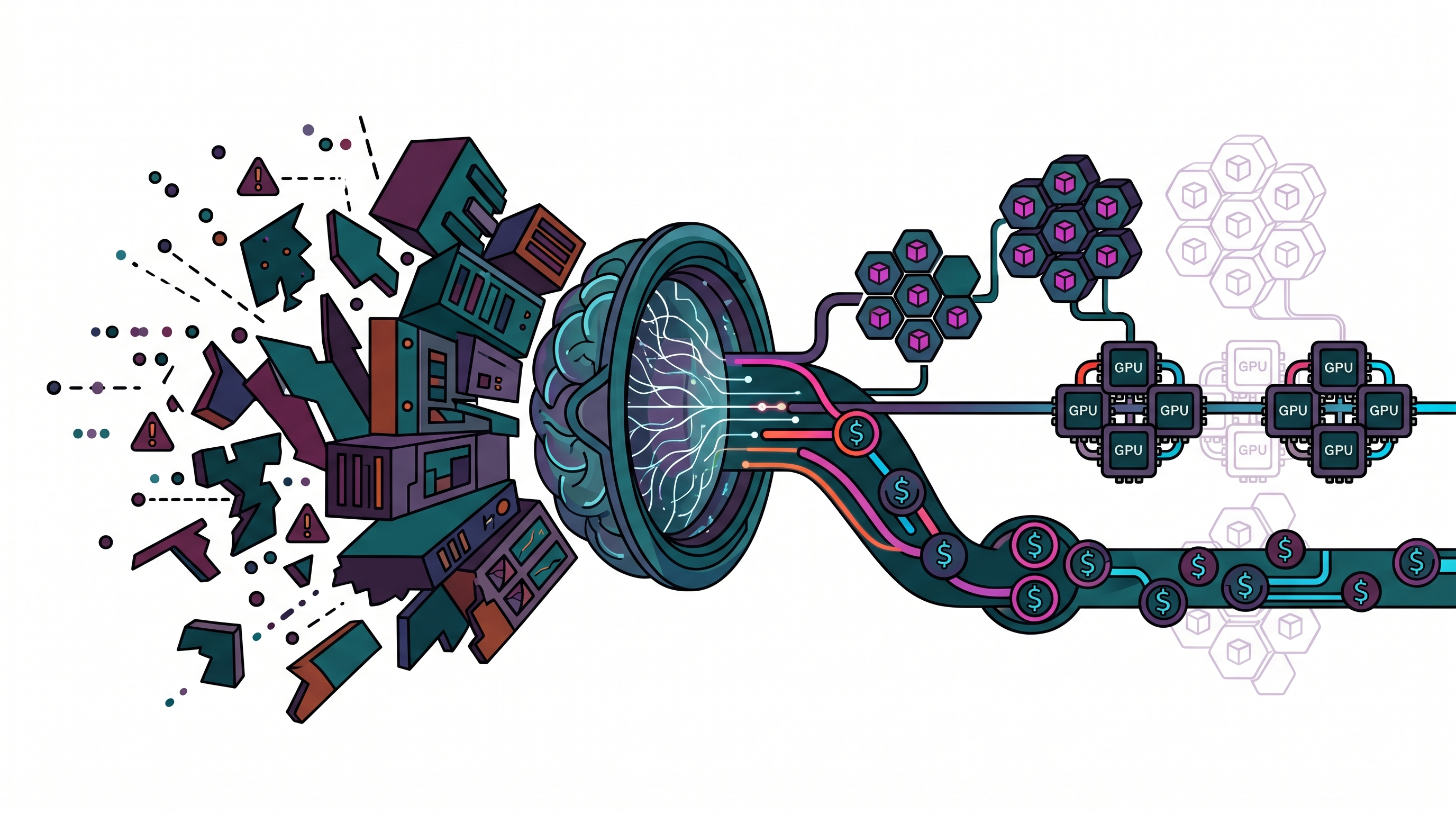
For decades, infrastructure management has been largely reactive. Organizations built monitoring systems to detect problems, created alerting workflows to notify teams when issues occurred, and developed operational processes designed to restore stability after disruptions emerged.
This model worked reasonably well when infrastructure environments were relatively predictable. Applications were less distributed, deployment cycles were slower, and operational complexity was easier to manage manually.
Today, cloud-native ecosystems operate very differently. Kubernetes clusters continuously rebalance workloads, AI systems consume dynamic resources, observability platforms generate massive telemetry streams, and distributed applications evolve across multiple cloud environments simultaneously.
In these environments, waiting for problems to happen before responding is becoming increasingly inefficient. By the time alerts are triggered, performance may already be affected, costs may already be rising, and operational risks may already be spreading across infrastructure ecosystems.
This reality is driving a major shift in how infrastructure is managed. Modern infrastructure is gradually moving from reacting to events toward anticipating them.
Advances in automation, operational intelligence, predictive analytics, AI-driven observability, and infrastructure awareness are enabling systems to identify patterns, forecast risks, recognize inefficiencies, and recommend actions before problems become operationally visible.
Infrastructure is not becoming intelligent in the human sense. But it is becoming increasingly capable of understanding historical behavior, recognizing emerging conditions, and helping organizations make better decisions before disruptions occur.
This evolution raises an important question: what happens when infrastructure starts thinking ahead?
The answer extends far beyond reliability improvements. Predictive infrastructure has the potential to reshape cloud operations, engineering productivity, cost optimization, capacity planning, and the way organizations govern increasingly complex cloud-native environments.
Reactive Operations Reach Their Limits in Dynamic Environments
Traditional operations are built around response. Monitoring systems detect anomalies, alerts notify engineers, incidents are investigated, and corrective actions are taken.
While these processes remain important, they become increasingly difficult to scale as infrastructure complexity grows. Modern cloud-native environments generate thousands of operational signals continuously. Kubernetes workloads move dynamically, autoscaling systems adjust resources automatically, and AI workloads introduce unpredictable patterns of resource consumption.
The challenge is that reactive workflows often identify issues only after operational impact begins. Teams spend significant time investigating symptoms, coordinating responses, and restoring stability rather than preventing problems altogether.
As environments become more dynamic, organizations are discovering that operational efficiency depends not only on responding quickly but also on identifying conditions that indicate future risk. Predictive awareness helps reduce the number of problems that require reactive intervention in the first place.
Infrastructure Begins Recognizing Patterns Instead of Events
Traditional monitoring focuses on individual events. A resource threshold is exceeded, latency increases, or an application generates an error. The system identifies a specific occurrence and generates a corresponding notification.
Predictive infrastructure operates differently. Instead of focusing solely on isolated events, it analyzes patterns across workloads, infrastructure behavior, deployment activity, resource utilization, and operational history.
For example, a Kubernetes cluster may not currently be experiencing resource shortages, but historical trends may indicate that fragmentation is increasing and capacity constraints are likely to emerge in the near future. Similarly, an AI inference platform may appear healthy today while exhibiting utilization patterns that suggest future scaling challenges.
By recognizing patterns rather than waiting for failures, infrastructure systems can provide earlier visibility into operational risks and optimization opportunities.
This shift transforms operational management from event detection to behavioral understanding.
Reliability Moves from Incident Response to Risk Prevention
One of the most significant impacts of predictive infrastructure is the way organizations approach reliability.
Historically, reliability efforts focused heavily on minimizing downtime and reducing recovery times after incidents occurred. Success was measured by how effectively teams responded to operational disruptions.
When infrastructure starts thinking ahead, the focus shifts toward preventing incidents altogether. Systems can identify leading indicators of instability such as dependency changes, resource contention, autoscaling anomalies, workload imbalance, or infrastructure drift before these conditions affect production environments.
This proactive approach allows engineering teams to address risks earlier and reduce the frequency of operational disruptions.
Instead of asking how quickly teams can recover from incidents, organizations begin asking how many incidents can be prevented through better visibility and earlier intervention.
The result is not only improved reliability but also reduced operational stress and greater engineering efficiency.
Cloud Cost Optimization Becomes Continuous
Traditional cloud cost management is often retrospective. Organizations review billing reports, identify spending anomalies, and implement optimization initiatives after inefficiencies become visible financially.
Predictive infrastructure changes this dynamic significantly.
By analyzing workload behavior, resource allocation patterns, autoscaling activity, Kubernetes utilization, and AI infrastructure consumption continuously, systems can identify emerging inefficiencies before they translate into higher cloud spending.
For example, infrastructure may detect increasing resource fragmentation, underutilized GPU environments, oversized workloads, or expanding observability overhead long before monthly billing reports reveal cost increases.
This allows optimization to become a continuous operational process rather than an occasional financial exercise.
As cloud-native environments continue growing in scale and complexity, continuous cloud cost optimization practices will become increasingly important for maintaining sustainable infrastructure economics.
Capacity Planning Becomes More Accurate
Capacity planning has traditionally relied on historical data, growth projections, and manual forecasting. While these approaches provide useful guidance, they often struggle to account for rapidly changing workload behavior and dynamic infrastructure conditions.
Predictive infrastructure improves capacity planning by analyzing real-time operational patterns alongside historical trends.
Instead of estimating future requirements based solely on past usage, organizations gain visibility into how workloads are evolving, how demand patterns are changing, and where infrastructure constraints are likely to emerge.
This helps teams make more informed decisions about scaling Kubernetes environments, expanding AI infrastructure, allocating cloud resources, and planning future investments.
More accurate capacity planning reduces both overprovisioning and resource shortages, improving efficiency while supporting long-term growth.
Engineering Teams Spend Less Time Chasing Problems
A significant portion of engineering effort is often dedicated to investigating alerts, troubleshooting incidents, analyzing performance issues, and responding to operational surprises.
While these activities are necessary, they can divert attention away from innovation, architecture improvements, and product development.
When infrastructure provides earlier visibility into emerging risks, engineering teams can spend less time reacting to unexpected issues and more time working strategically.
For example, identifying resource allocation inefficiencies before they affect performance or detecting dependency risks before they trigger outages allows teams to address problems during planned work rather than emergency situations.
This shift improves productivity because engineers spend more time creating value and less time recovering from avoidable disruptions.
Kubernetes Operations Become More Predictive
Kubernetes environments are particularly well suited for predictive operational models because they generate large amounts of telemetry and exhibit highly dynamic behavior.
Clusters continuously adapt to workload demand, resource allocation changes, deployment activity, and autoscaling events. While this flexibility improves scalability, it also creates operational complexity that can be difficult to manage reactively.
Predictive infrastructure helps organizations understand how Kubernetes environments are likely to evolve over time. Teams gain visibility into potential resource bottlenecks, inefficient workload placement, scaling anomalies, and infrastructure fragmentation before these issues impact reliability or cloud costs.
This proactive awareness improves cluster efficiency and enables more confident infrastructure management across large-scale cloud-native environments.
AI Infrastructure Requires Predictive Intelligence
AI workloads are accelerating the need for infrastructure that thinks ahead.
GPU clusters, model-serving environments, vector databases, and distributed inference systems consume expensive resources that fluctuate based on workload demand and application behavior.
Traditional monitoring can identify utilization changes after they occur, but predictive infrastructure helps organizations understand how AI workloads are likely to behave in the future.
This visibility supports better GPU allocation, more efficient scaling decisions, improved resource utilization, and stronger cost governance across AI environments.
As AI adoption continues to expand, predictive intelligence will become essential for balancing performance, scalability, and infrastructure efficiency.
Infrastructure Becomes a Decision-Making Partner
Perhaps the most important shift occurs in the relationship between infrastructure and operations teams.
Historically, infrastructure systems primarily provided information. Engineers interpreted that information, identified problems, and decided what actions to take.
As predictive capabilities improve, infrastructure increasingly contributes to decision-making itself. Systems can highlight risks, recommend optimizations, identify anomalies, and surface opportunities that might otherwise remain hidden.
Human expertise remains essential, but infrastructure becomes a more active participant in operational strategy rather than simply a passive source of telemetry.
This collaboration enables faster decisions, better prioritization, and more effective governance across complex cloud-native environments.
Building Predictive Infrastructure Visibility with Atler Pilot
As cloud-native ecosystems become more dynamic and interconnected, organizations need more than traditional monitoring and alerting systems. They need visibility into workload behavior, Kubernetes utilization, AI infrastructure efficiency, autoscaling trends, and operational patterns that influence future outcomes.
Atler Pilot helps organizations move toward proactive infrastructure management by providing a unified operational view of cloud-native environments. By connecting workload intelligence, infrastructure telemetry, utilization insights, and governance visibility, teams gain a deeper understanding of how systems behave and where potential risks or optimization opportunities are emerging.
This allows engineering, platform, and FinOps teams to identify inefficiencies earlier, improve infrastructure planning, strengthen reliability, and make more informed operational decisions before issues become costly disruptions.
The future of infrastructure management is not just about reacting faster. It is about seeing further. Atler Pilot helps organizations simplify infrastructure complexity, improve operational awareness, and build the visibility needed to manage cloud-native environments proactively.
Sign up for Atler Pilot and discover how deeper infrastructure intelligence can help your teams stay ahead of change.
Conclusion
Infrastructure is entering a new phase of evolution. As cloud-native environments continue growing in complexity, operational success will depend less on reacting to problems and more on anticipating them.
Predictive infrastructure enables organizations to recognize patterns, identify risks, optimize resources, improve reliability, and make better decisions before operational challenges become visible. This shift transforms operations from a discipline centered on incident response into one focused on continuous awareness and proactive management.
Organizations that embrace this evolution will be better positioned to manage Kubernetes ecosystems, AI workloads, distributed applications, and multi-cloud environments efficiently at scale.
Because when infrastructure starts thinking ahead, operations can stop spending all of its time looking behind.
All in One Place
Atler Pilot decodes your cloud spend story by bringing monitoring, automation, and intelligent insights together for faster and better cloud operations.