
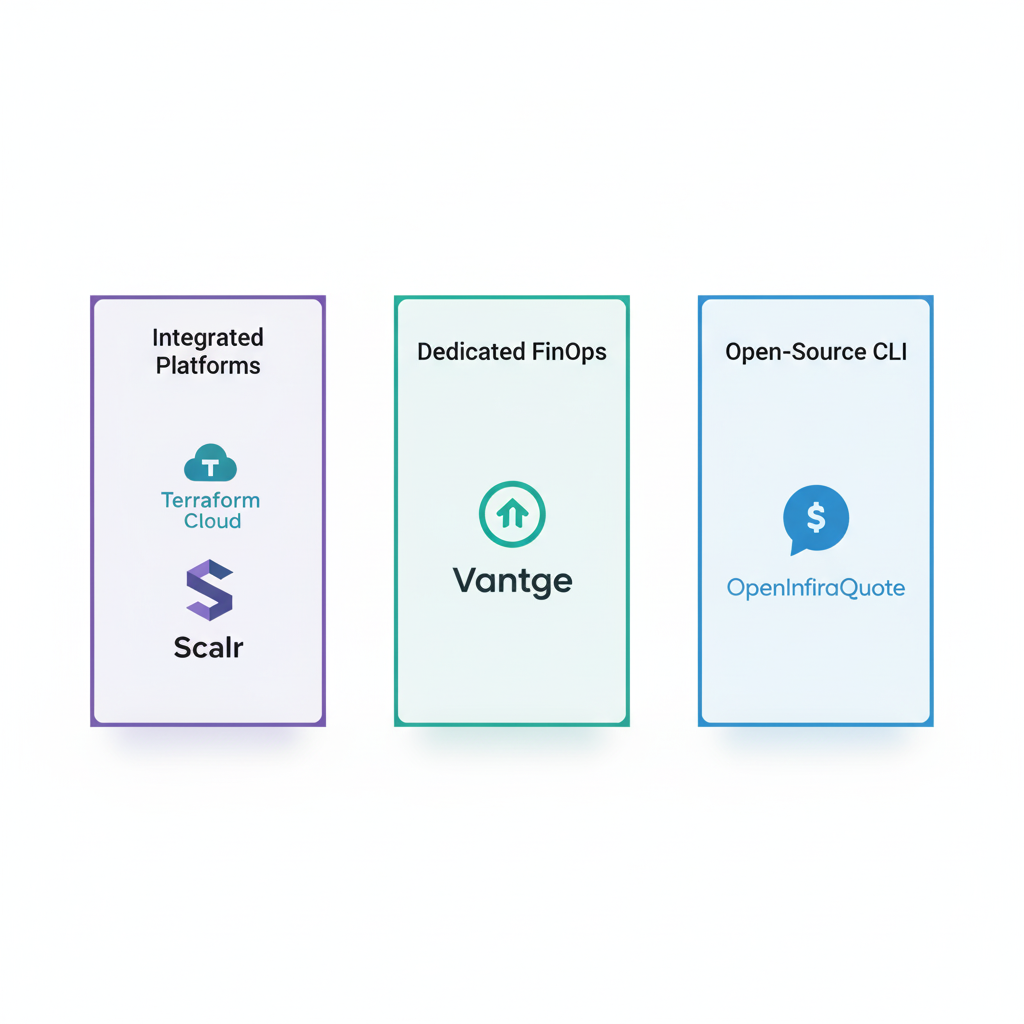
Why Terraform Cost Estimation Matters More Than Ever
There's a familiar pattern in platform engineering teams: a developer writes a Terraform plan, it passes code review, it gets applied — and three weeks later, finance is asking why the AWS bill jumped 40%.
Terraform cost estimation tools solve this by surfacing the financial impact of infrastructure changes before they're applied. In a world where a single misconfigured EC2 instance type or an extra NAT Gateway can cost thousands per month, shifting cost awareness left isn't just nice to have — it's essential engineering hygiene.
Infracost built the category. But it's not the only option, and for many teams, it's not the best fit. This post gives you an honest, technical comparison of every meaningful alternative, whether you're looking for something open-source, enterprise-grade, or deeply integrated into your existing CI/CD pipeline.
If you're not familiar with how Infracost itself works, read our hands-on guide: Infracost Explained: How to See Terraform Costs Before You Launch.
The Hidden Cost of No Estimation
According to Flexera's 2026 State of the Cloud report, 32% of cloud spend is wasted. Much of this originates at the IaC level — infrastructure provisioned based on estimates that turned out to be wrong by 5x or more.
How We Evaluated Each Tool
We tested each tool against a standardized Terraform repository including EC2, RDS, S3, NAT Gateways, and EKS clusters. Our criteria:
Coverage — how many Terraform resources it can price
Accuracy — how close estimates are to actual AWS bills
CI/CD integration — ease of adding to GitHub Actions, GitLab CI, etc.
Multi-cloud — support for Azure, GCP beyond AWS
Team features — PR comments, policy enforcement, dashboards
Pricing — total cost of ownership for a 10-developer team
Comparison Table
Tool | Type | AWS Coverage | Multi-Cloud | CI/CD | Price |
|---|---|---|---|---|---|
Infracost | Hybrid | Excellent | Yes | Native | Free / $30+/user/mo |
OpenInfraQuote | OSS | Good | AWS only | Manual | Free |
Terraform Cloud | Commercial | Good | AWS/Azure/GCP | Native | $20/user/mo+ |
Spacelift | Commercial | Basic | Yes | Native | $295+/mo |
Atlantis + Infracost | OSS Combo | Excellent | Yes | Good | Free (self-hosted) |
CloudAtler | Commercial | Excellent | Full multi-cloud | Native | Custom |
Pulumi Insights | Commercial | Good | Yes | Native (Pulumi) | With Pulumi Cloud |
env0 | Commercial | Basic | Yes | Native | $200+/mo |
Tool-by-Tool Review
OpenInfraQuote
Open Source
The most credible open-source-only Infracost alternative. Instead of parsing Terraform plan JSON, OpenInfraQuote reads state files and calculates costs against real-time AWS pricing APIs. This makes it less useful pre-apply, but extremely accurate for auditing existing infrastructure.
We have a detailed technical review in our post Open-Source FinOps: A Deep Dive into OpenInfraQuote.
Completely free, no API keys
Reads from real AWS pricing API
No data leaves your environment
Good accuracy for supported resources
AWS only, no GCP/Azure
Smaller resource coverage
No native CI/CD integration
Less active community
Best for: privacy-conscious teams on AWS-only stacks
Terraform Cloud (HashiCorp)
Commercial
Terraform Cloud's built-in cost estimation is good for teams already invested in the HashiCorp ecosystem. It shows estimated monthly costs for each resource in a plan, integrated directly into the workflow. The main limitation: you need to be using Terraform Cloud as your state backend and workflow platform.
If you're already on Terraform Cloud and just want basic cost estimates, you don't need an additional tool — you already have it. For teams on self-hosted Terraform or Terragrunt, this isn't an option without significant migration effort.
Zero additional setup if on TFC
Native PR/plan integration
Sentinel policy integration
Good resource coverage
Requires Terraform Cloud subscription
No custom pricing or discounts
Not portable to other IaC tools
Limited breakdown granularity
Best for: teams already on Terraform Cloud
Atlantis + Infracost Integration
OSS Combo
For teams using Atlantis for GitOps-based Terraform workflows, pairing it with the Infracost GitHub Action creates a powerful, fully self-hosted cost estimation pipeline. Atlantis handles plan/apply; Infracost generates cost diffs on every PR. Both are self-hosted.
This combination is more work to set up than using Infracost Cloud or a commercial platform, but gives complete control. Particularly appealing for compliance-heavy organizations that cannot send Terraform plan outputs to third-party services.
Fully self-hosted
Infracost's full resource coverage
No per-user pricing
Great for regulated environments
Significant setup complexity
Requires maintaining two systems
No managed dashboards
Self-managed updates
Best for: large teams with self-hosted Terraform workflows
Spacelift
Commercial
Spacelift is primarily a platform for managing IaC at scale — handling Terraform, Terragrunt, Pulumi, and CloudFormation from a single interface. Cost estimation is a secondary feature, integrated via the Infracost API. It's a platform with cost estimation bolted on, not the other way around.
For teams struggling with drift, compliance, and scale across many stacks, Spacelift is worth evaluating. For teams who specifically want better Terraform cost visibility and nothing else, it's overkill.
Multi-IaC support
Strong policy engine
Good audit trails
Active development
Expensive for smaller teams
Cost estimation is secondary
Vendor lock-in risk
Complex initial setup
Best for: enterprise platform teams managing many stacks
CloudAtler
Commercial
CloudAtler takes a different approach: rather than only estimating costs at plan time, it correlates IaC changes with your actual cloud bills to close the feedback loop. It shows what was estimated, what was actually spent, and the delta — across AWS, GCP, and Azure simultaneously.
The Budget Forecasting and Financial Command Center features are particularly useful for engineering managers who need to understand cost trends across multiple teams. The Atler AI surfaces anomalies and suggests resource right-sizing based on actual usage data.
Full multi-cloud coverage
Actuals vs. estimates feedback loop
AI-powered anomaly detection
Team and budget management
Enterprise pricing (custom quotes)
Broader than pure IaC estimation
SaaS model (data leaves environment)
More onboarding required
Best for: multi-cloud teams needing full FinOps visibility
How to Choose the Right Tool
Are you AWS-only or multi-cloud?
If you're AWS-only, you have more open-source options. If you're running workloads on GCP, Azure, or NeoClouds like CoreWeave, you need genuine multi-cloud support. Our post on the NeoCloud revolution explains why multi-cloud complexity is increasing rapidly for AI workloads.
Do you have a self-hosted or compliance requirement?
Some organizations cannot send Terraform plan outputs to third-party SaaS services. In this case, the Atlantis + Infracost self-hosted combo or OpenInfraQuote are your primary options. Be honest about this constraint early — retrofitting privacy controls into a SaaS-based workflow is painful.
Do you want IaC estimation only, or full FinOps?
This is the most important question. Tools like Infracost and Terraform Cloud's built-in estimator tell you the cost of what you're about to deploy. That's valuable. But it's only one input into your actual cloud spend. Most teams that get serious about cost optimization graduate to a platform that tracks actuals, enables chargebacks, and forecasts future spend based on roadmap changes.
If your team is at that stage, also look at our guide on building a FinOps dashboard that executives actually understand.
Practical Recommendation
Start with Infracost free tier in your CI/CD pipeline. It takes about an hour to set up and immediately adds value. Then evaluate paid alternatives once you know what you're missing — whether that's multi-cloud support, actual vs. estimate tracking, or team dashboards.
Policy-as-Code: The Next Level
The most mature teams don't just estimate costs — they enforce cost budgets as part of the deployment pipeline. If a Terraform plan would increase monthly costs by more than a set threshold, the plan is blocked until a human approves it.
Options for this:
Infracost + OPA — Write Open Policy Agent rules against Infracost JSON output
Terraform Cloud + Sentinel — HashiCorp's policy language, tight TFC integration
Spacelift Policies — Built-in policy engine based on Rego
For a deep comparison of policy-as-code options for cloud security and cost governance, read our analysis of Terraform Sentinel vs. OPA.
A Real-World Example: Catching a $4,000/Month Mistake
Here's how cost estimation tools pay for themselves. A developer adds a new RDS instance to a shared Terraform module. The instance type was appropriate for the workload, but they accidentally selected db.r6g.8xlarge (Multi-AZ) instead of db.r6g.large. The difference is about $3,900 per month.
Without a cost estimation step, this goes to review, gets approved, gets applied, and shows up on next month's bill. With Infracost or an equivalent tool, the PR comment immediately flags the $4,200 estimated monthly cost — prompting a double-check before a single dollar is spent.
Bottom Line Recommendations
Best free / OSS optionInfracost CLI + GitHub Actions
Best self-hosted OSS comboAtlantis + Infracost
Best for AWS-only with strict privacyOpenInfraQuote
Best for enterprise multi-cloud FinOpsCloudAtler
Best for HashiCorp-stack teamsTerraform Cloud built-in estimation
All in One Place
Atler Pilot decodes your cloud spend story by bringing monitoring, automation, and intelligent insights together for faster and better cloud operations.