
The Carbon Cost of Compute
The cloud is not a magical, ethereal entity; it is a collection of massive, hyper-scale data centers that consume staggering amounts of electricity and water. As global awareness of climate change intensifies and governments introduce stricter environmental regulations (like the EU's Corporate Sustainability Reporting Directive), organizations can no longer ignore the carbon footprint of their digital infrastructure.
Historically, sustainability and IT operations were siloed. Today, they are deeply integrated. The discipline of managing the environmental impact of cloud computing is known as GreenOps. Fortunately for engineering teams, the fundamental mechanics of GreenOps perfectly mirror the practices of FinOps.
This guide explores how to measure cloud carbon emissions, the architectural choices that drive sustainability, and how optimizing for cost naturally optimizes for the environment.
What is GreenOps?
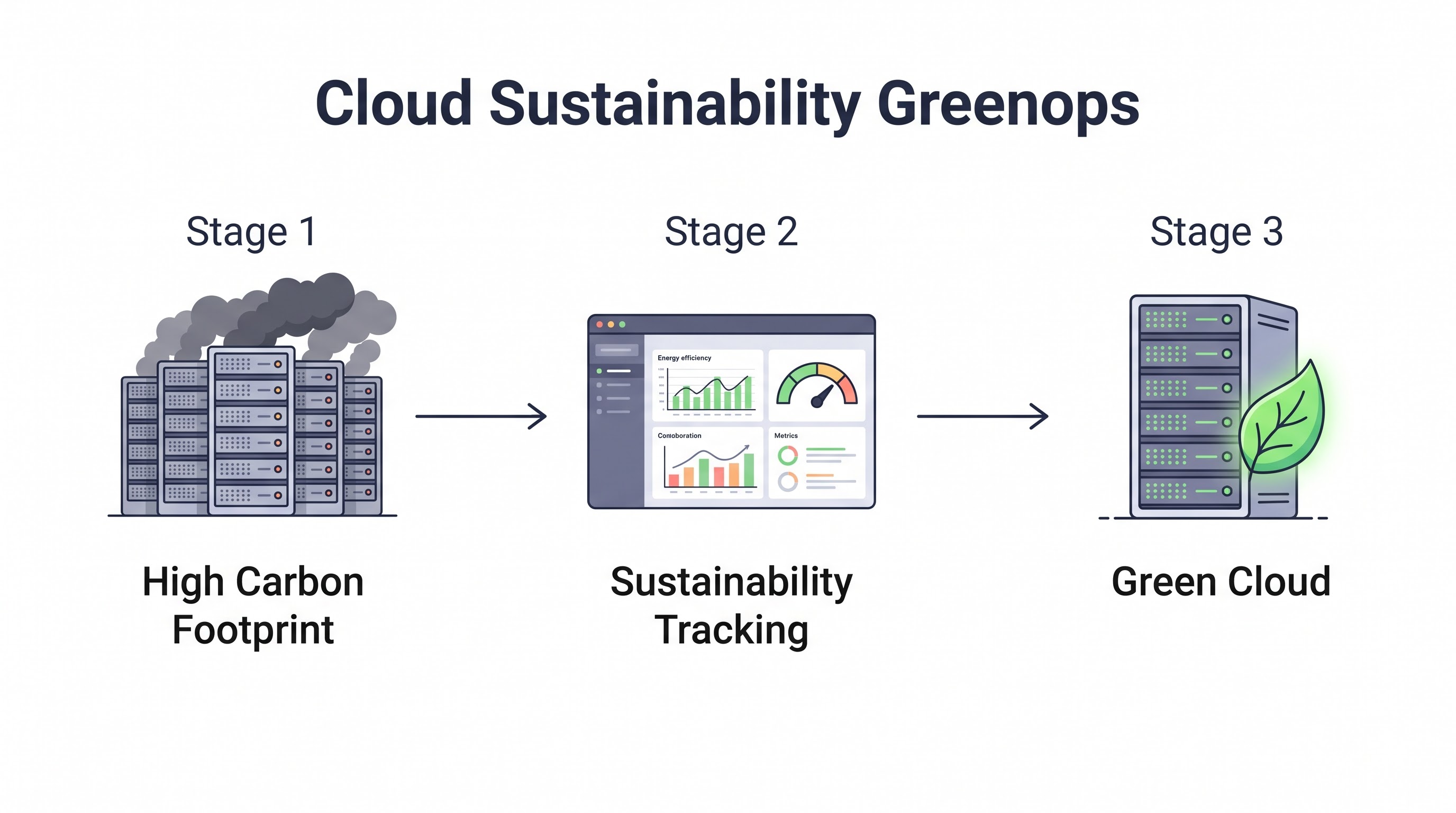
GreenOps (Green Operations) is the practice of embedding sustainability into cloud architecture and operational culture. Its goal is to maximize the energy efficiency of the cloud estate, minimizing the carbon emissions per unit of business value generated.
Just as FinOps shifts financial accountability to developers, GreenOps shifts environmental accountability to developers, ensuring that carbon impact is considered alongside latency, security, and cost during the system design phase.
The Synergy: FinOps = GreenOps
The greatest advantage of GreenOps is that it rarely requires a separate, competing initiative. The core tenet of GreenOps is the exact same as FinOps: Eliminate Waste.
If you run a massive EC2 instance at 5% CPU utilization, you are wasting money, and you are wasting the electricity required to power and cool that physical server. When a FinOps practitioner rightsizes that instance to save $500 a month, they simultaneously reduce the carbon emissions of the workload. The cleanest compute cycle is the one you never execute. A highly optimized, cost-efficient cloud architecture is inherently a highly sustainable architecture.
Measuring the Footprint (Scope 1, 2, 3)
You cannot optimize what you cannot measure. Cloud providers (AWS, Azure, GCP) now provide Carbon Footprint Tools within their billing consoles. These tools calculate emissions based on standard greenhouse gas protocols:
Scope 1 (Direct): Emissions from sources directly owned by the cloud provider (e.g., backup diesel generators at the data center).
Scope 2 (Indirect): Emissions from the generation of the electricity purchased by the cloud provider to run the servers.
Scope 3 (Value Chain): The embodied carbon of the physical hardware itself (the emissions generated manufacturing the servers and the concrete for the data center).
While Azure and GCP have been historically more aggressive in carbon reporting, all three major providers now allow you to track your emissions trendlines alongside your billing trendlines.
Strategy 1: Sustainable Region Selection
The single most impactful GreenOps decision is made before a single line of code is deployed: Region Selection.
Not all cloud regions are created equal. An AWS region powered by a coal-heavy electrical grid (like parts of Asia or the US Midwest) has a vastly higher carbon intensity per kilowatt-hour than a region powered by hydroelectric or geothermal energy (like AWS eu-north-1 in Sweden or us-west-2 in Oregon).
If data sovereignty laws and latency requirements permit, actively choose to deploy non-critical workloads (like staging environments or batch processing jobs) to the most sustainable cloud regions available. Many organizations now include "Carbon Intensity" as a primary variable in their multi-region architecture decisions.
Strategy 2: Architectural Efficiency (Serverless and ARM)
GreenOps relies heavily on modern cloud-native architecture.
Serverless Computing: Because serverless functions (Lambda, Azure Functions) scale to exactly match demand and scale to zero when idle, they maximize the utilization of the underlying hardware. High utilization across a shared tenant infrastructure is vastly more energy-efficient than thousands of organizations running idle VMs. (See the Serverless Cost Management Guide).
Processor Architecture: Migrating workloads from legacy x86 processors (Intel/AMD) to custom, ARM-based processors (like AWS Graviton) offers massive benefits. ARM processors are significantly more power-efficient. They consume less electricity and require less cooling to achieve the same performance, resulting in lower costs and lower emissions simultaneously.
Strategy 3: Terminating Zombie Resources
Just as unattached EBS volumes and forgotten dev environments drain the budget, they also needlessly consume electricity. Establishing aggressive, automated cleanup policies (e.g., shutting down all non-production instances at 6 PM on Friday) is a core GreenOps tactic.
Sustainability as a Metric
In 2026, sustainability is no longer a marketing buzzword; it is a board-level imperative and a regulatory requirement. By recognizing that FinOps and GreenOps are two sides of the same coin, organizations can leverage their existing cost-optimization workflows to drive massive reductions in their carbon footprint. Modern Cloud Operations must report not just on uptime and cost-per-transaction, but on carbon-per-transaction.
Key Takeaway
GreenOps aligns environmental sustainability with cloud economics. The most effective way to reduce your cloud carbon footprint is to apply rigorous FinOps discipline: rightsize instances, terminate zombie resources, and adopt highly efficient architectures like Serverless and ARM processors. Furthermore, for workloads without strict latency requirements, actively deploy infrastructure to cloud regions powered by renewable energy grids to achieve massive, immediate emissions reductions.
All in One Place
Atler Pilot decodes your cloud spend story by bringing monitoring, automation, and intelligent insights together for faster and better cloud operations.